

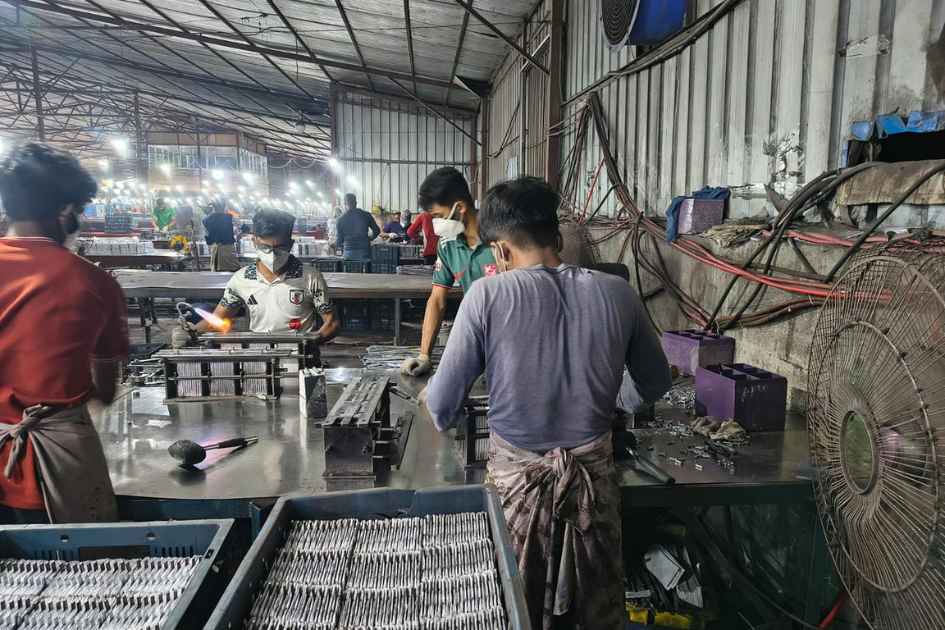



Bangladesh authorities shut several units of a Chinese battery recycling factory in Mymensingh after inspectors found toxic lead exposure risks, unsafe fire systems and hazardous working conditions threatening workers and nearby communities.
Bangladesh authorities have ordered the shutdown of several sections of a Chinese lead-acid battery recycling factory in Mymensingh over serious allegations of toxic exposure, fire hazards and unsafe working conditions, intensifying concerns over industrial pollution and worker safety in the country’s growing manufacturing sector.
The Department of Inspection for Factories and Establishments (DIFE) issued the order against Wan Xiang Industries Limited in Bhaluka, Mymensingh following a field inspection conducted on May 10.
According to official notices signed by Labour Inspector Md Abdullah Al Mamun on May 12, operations in the factory’s lead plate casting, welding, oxide production, lead recycling, finishing and assembly and lead melting units were ordered to shut down until corrective safety measures are implemented.
Inspectors documented multiple safety failures inside the facility, including exposed electrical systems, disorganized wiring, unsafe boiler units and poorly protected generators. Several generators were found installed side by side inside weak tin-shed structures without adequate fire-resistant barriers, creating what authorities described as a major explosion and fire risk.
The inspection report also described hazardous air conditions across several production units where workers were allegedly exposed to lead-contaminated smoke and dust during daily operations.
People familiar with the inspection said the factory environment was extremely difficult to tolerate because of excessive noise and heavy smoke inside the workspaces.
“The noise levels were extreme and most sections were covered in a haze of toxic smoke. It was difficult to remain inside for long,” said a person familiar with the inspection process.
Public health experts warn that prolonged lead exposure can cause respiratory illness, neurological disorders, kidney damage and developmental harm in children. Environmental advocates say emissions from poorly regulated lead recycling and lead-acid battery processing plants can contaminate surrounding air, soil and water sources, posing risks not only to workers but also to nearby communities.
DIFE instructed the factory authorities to conduct risk assessments, improve electrical and fire safety systems, ensure proper ventilation and arrange medical examinations for workers, including blood lead level testing. The company was also directed to conduct air quality assessments through approved institutions and submit compliance certificates to the authorities.
In a separate notice issued the same day, labour inspectors summoned factory attendance records, overtime documents and wage registers for March, April and part of May 2026 to examine compliance with Bangladesh labour laws.
Copies of the notices were sent to district administration officials, the Department of Environment, Fire Service and Civil Defence, industrial police and power authorities.
Environmental campaigners say informal and weakly regulated lead recycling operations often disproportionately affect low-income industrial communities and workers with limited occupational protections.
“This shutdown is necessary to protect workers, nearby communities and the environment from dangerous lead pollution and unsafe industrial practices. Authorities must ensure the factory remains shut until all safety and environmental standards are fully met,” said Sohanur Rahman, executive coordinator of YouthNet Global.
Attempts to obtain comments from Wan Xiang Industries Limited were unsuccessful.
The incident has intensified calls for stricter enforcement of occupational health, environmental protection and industrial safety regulations in Bangladesh’s manufacturing sector.




