

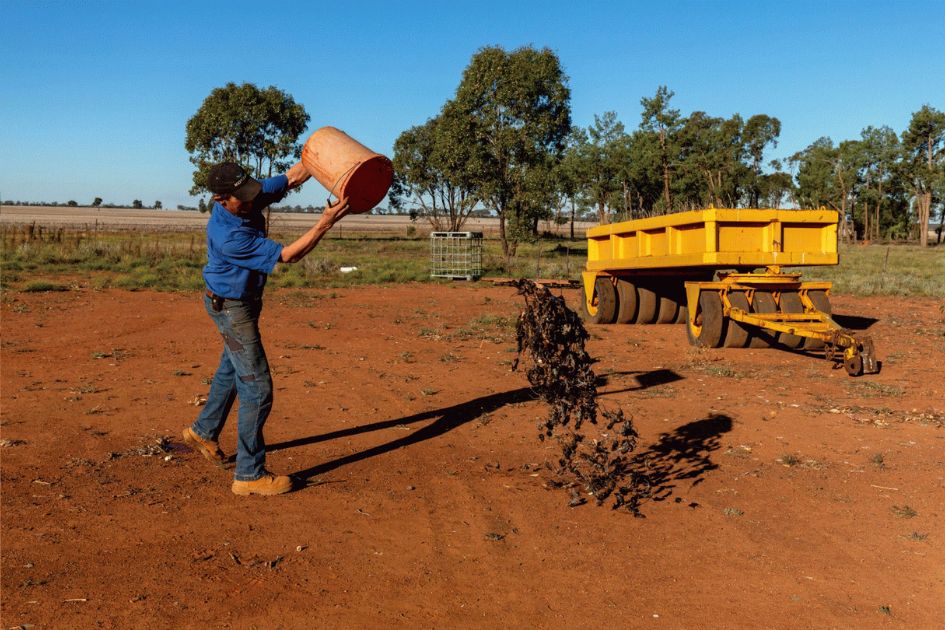



A massive mouse infestation is ravaging crops and homes across Western Australia, forcing farmers to spend heavily on pest control while coping with rising fuel and fertiliser costs.
Farmers across vast swathes of Australia are grappling with a severe mouse infestation that is ravaging crops, invading homes and adding fresh financial and psychological strain to an agricultural sector already under pressure from rising input costs linked to the ongoing conflict involving Iran, Israel and the United States.
The rodents have spread through grain-growing regions, destroying newly planted crops and forcing farmers to spend millions of dollars on replanting and pest control measures. Growers are also being compelled to scatter poisoned bait across their fields during critical planting periods to limit the damage.
“It’s a huge cost,” said Jeff Cosgrove, 43, who farms 14,000 hectares of wheat, canola, lupins and barley at Mingenew in Western Australia.
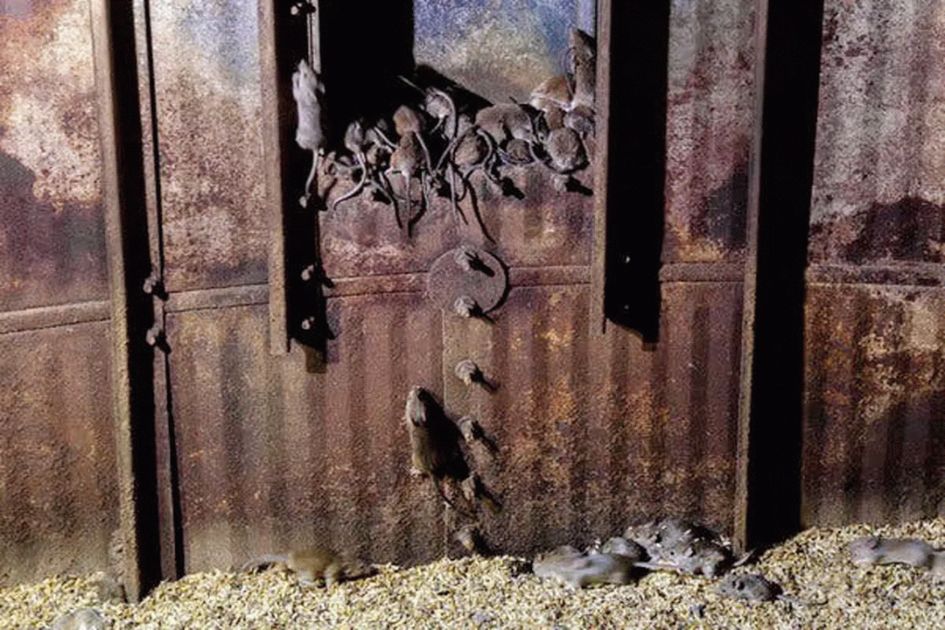
“The expense isn’t just the bait. They get inside your head. They’re in the house, in the ceiling, in the air conditioner. You hear them and smell them. It smells like a dead body,” he said.
Cosgrove, who has been farming for 25 years, said he had needed to use mouse bait in his fields only twice during that time. He described this year’s outbreak as “far worse” than the notorious mouse plague that swept large parts of Australia in 2021.
That outbreak affected extensive areas of the country, with large parts of New South Wales and sections of Queensland experiencing one of the worst infestations in living memory. In New South Wales, the situation became so severe that hundreds of prison inmates had to be relocated after rodents caused extensive damage to correctional facilities.
Further north from Cosgrove’s farm, another Western Australian farmer recalls similar scenes from five years ago.
Belinda Eastoe, 59, an agronomist and farmer, operates a 5,500-hectare property at Nolba, about 80 kilometres northeast of Geraldton, one of the regions hardest hit by the current infestation.
“Last time, mice even got into my handbag,” Eastoe said. “They were on the floors, in the walls and throughout the pantry. This year, at least, I haven’t seen them in the pantry.”
According to Eastoe, the rodents are staying where food is most abundant.
“They’re remaining in the paddocks. We had a record harvest last year and that has provided an enormous food supply for them,” she said.
The bumper harvest left significant quantities of grain scattered across fields during processing, creating an easily accessible food source. Summer rains then encouraged fresh green growth.
“They ended up with both steak and salad,” Eastoe said. “The mice were literally living in paradise.”
Eastoe, who has been farming for nearly 40 years, grows wheat, canola and lupins. The wheat is exported to Southeast Asia for noodle production and is also used domestically to make biscuits, bread and pasta.
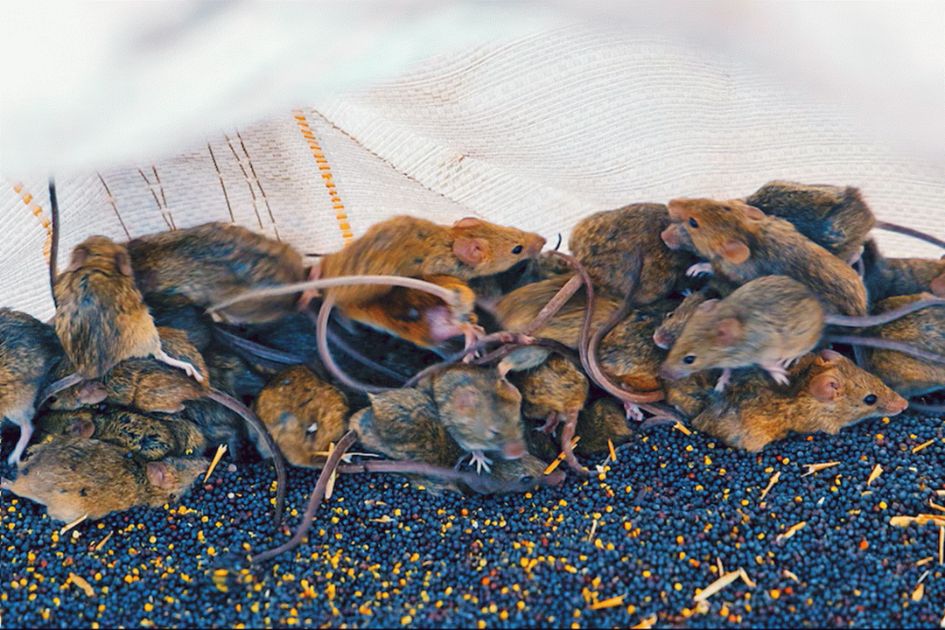
She estimates mouse populations in some paddocks could reach between 8,000 and 10,000 animals per hectare.
“We deal with mice from time to time. Usually their numbers drop once food becomes scarce. That hasn’t happened this year. It’s been a nightmare,” she said.
The infestation has arrived during autumn, one of the most important periods for grain growers because it is the main sowing season.
As an agronomist, Eastoe advises farmers to apply mouse bait immediately after planting.
“If you don’t spread bait straight after sowing, mice come overnight, dig up the soil and eat the seed,” she said. “You can finish planting at 8 pm and come back the next day to find entire rows gone.”
She added that farmers, while resilient, have been hit hard by rising costs since the conflict involving Iran escalated in February.
“Fuel prices have doubled compared with what we were paying two or three months ago and fertiliser costs have also increased. On top of that, we now have this mouse problem,” she said.
Steve Henry, a researcher with Australia’s national science agency CSIRO who studies mouse behaviour and control methods, said the scale of the outbreak was extraordinary.
“Normally, 800 mice per hectare is considered plague level,” Henry said. “In Western Australia, people are talking about thousands per hectare.”
The worst affected areas are concentrated in grain-growing belts in both the northern and southern parts of the state, he said.
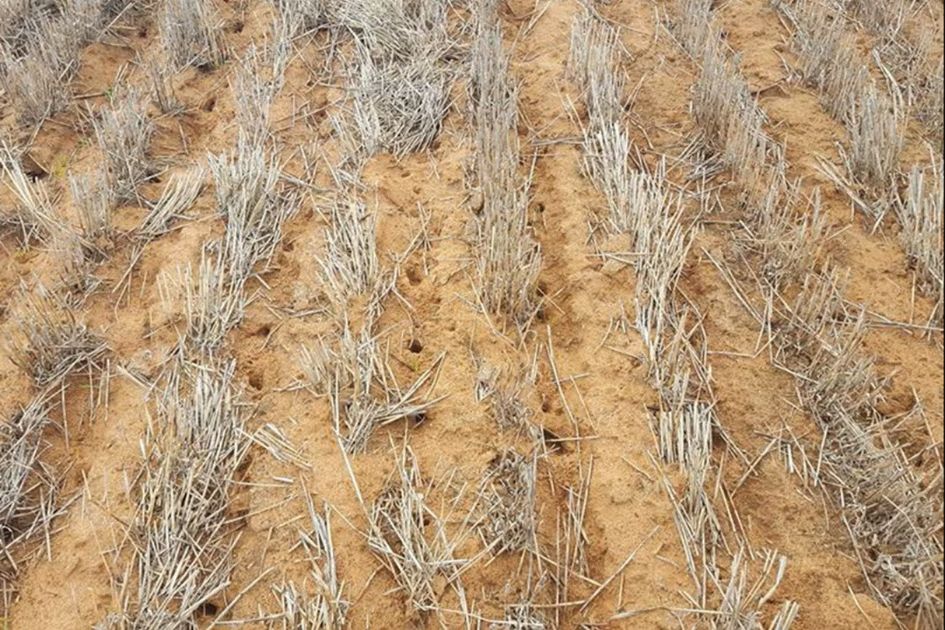
During a recent visit to Western Australia, Henry counted between 30 and 40 active mouse burrows while walking a 100-metre strip one metre wide through a field.
Farmers typically multiply that figure by 100 to estimate total numbers across a hectare, suggesting densities of at least 3,000 to 4,000 burrows per hectare. Similar conditions are being reported in South Australia.
“This is a critical time for farmers and the infestation is creating enormous challenges,” Henry said.
Mice reach breeding age at just six weeks old and produce litters of six to 10 pups every 19 to 21 days, he said.
“The remarkable thing is that females become pregnant again within two or three days of giving birth. They’re already carrying the next litter while raising the first one.”
Beyond the financial losses, Henry said the infestation was taking a heavy psychological toll on farming communities.
“When you’re dealing with drought, you can go inside, close the door and turn on the air conditioning,” he said. “With mice, that doesn’t work. You open a cupboard and there’s a mouse sitting there. You go to bed and they’re running across it.”
For months, farmers have been pressing for approval to use stronger rodenticides to combat the outbreak. They recently received approval from national regulators and the more potent poisons have now become available.
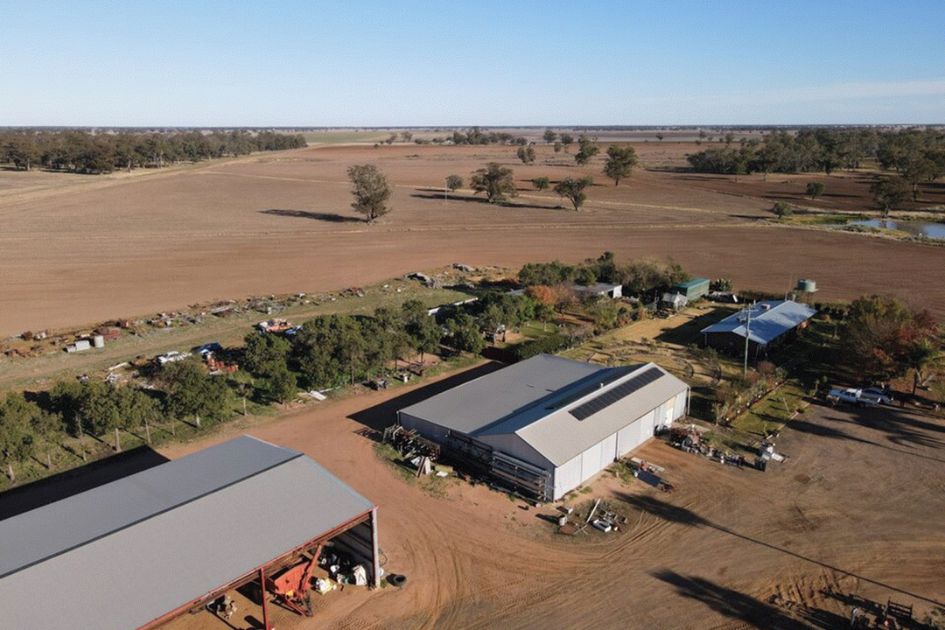
Retired farmer Damien Ryan, 67, welcomed the decision. Ryan owns a farm near Morawa, about 370 kilometres north of Perth.
He has spent recent weeks trapping rodents in his house and storage sheds.
“I catch 20 to 30 mice a day in the house and around 150 a day in the sheds,” Ryan said.
After 50 years of farming, he said mouse outbreaks were not unusual but the current situation was unlike anything he had previously experienced.
“It’s truly a plague. When you drive at night, all you see are mice running everywhere,” he said.
Farmers say cooler temperatures, forecast rainfall and the introduction of stronger poisons have begun to reduce mouse numbers in some areas.
With winter approaching, Cosgrove hopes relief is finally in sight.
“Once it gets really cold and damp, their numbers should eventually start to fall,” he said.
Source- BBC




