

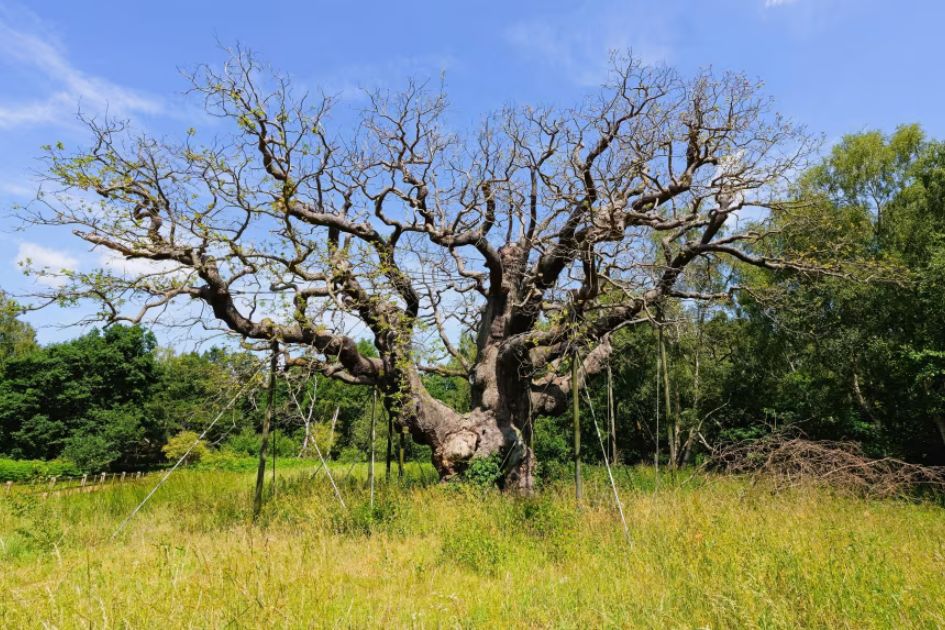



The iconic Major Oak of Sherwood Forest, long linked to Robin Hood, has died after centuries of survival, with experts citing climate-driven drought and severe soil degradation as key factors.
The Major Oak, a centuries-old tree in England’s Sherwood Forest long associated with the legend of Robin Hood, has died after more than 1,200 years, conservationists said, marking the end of one of Britain’s most famous natural landmarks.
Scientists concluded the giant oak had died after it failed to produce any new leaves this spring, according to the Royal Society for the Protection of Birds (RSPB), which manages the historic woodland in central England.
The tree, believed to be around 1,200 years old, has traditionally been linked to Robin Hood, the legendary outlaw said to have stolen from the rich and given to the poor while hiding in Sherwood Forest to evade the Sheriff of Nottingham.
With a canopy stretching 28 metres (92 feet) and a trunk circumference of 11 metres (36 feet), the Major Oak was among the largest trees in Britain. Its immense branches have been supported by beams since the early 20th century, while fencing was installed around the tree in the 1970s to protect it from damage.
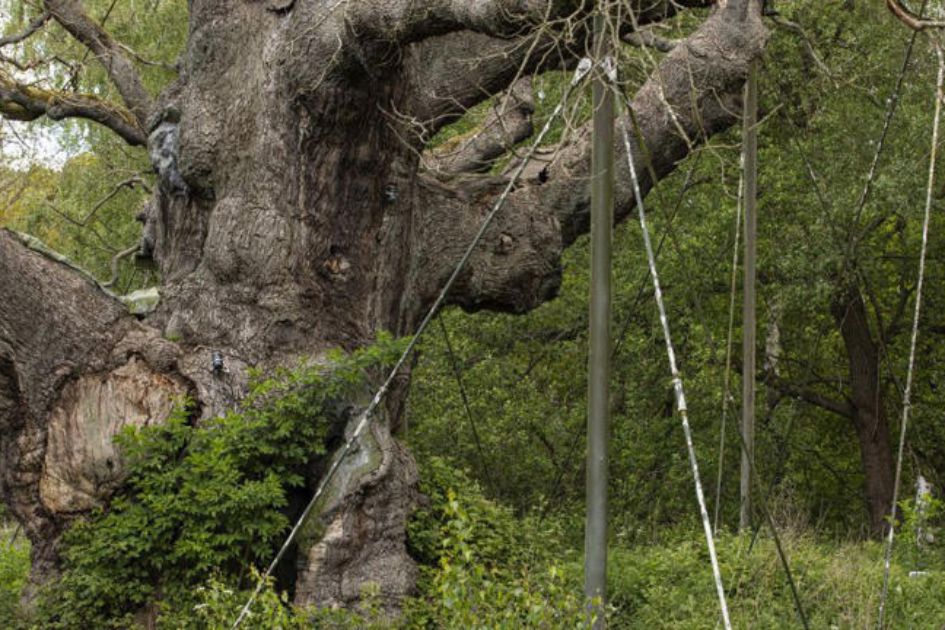
The RSPB said the tree’s decline was driven by a combination of soil compaction around its roots and increasingly hot, dry summers.
Simon Parfey, managing director of soil microbiology company SoilBioLab and a member of the team caring for the oak, said efforts had been made to restore the tree’s environment.
“While the Major Oak team worked tirelessly to revive the environment around this iconic tree and saw encouraging signs of life in some areas, the damage, it now seems, was already too deeply entrenched to fully reverse,” he said in an RSPB statement.
The oak became one of Britain’s best-known tourist attractions because of its connection to Robin Hood. However, conservationists said the millions of visitors it attracted over the years caused severe soil compression around the tree, leaving the ground as hard as concrete.
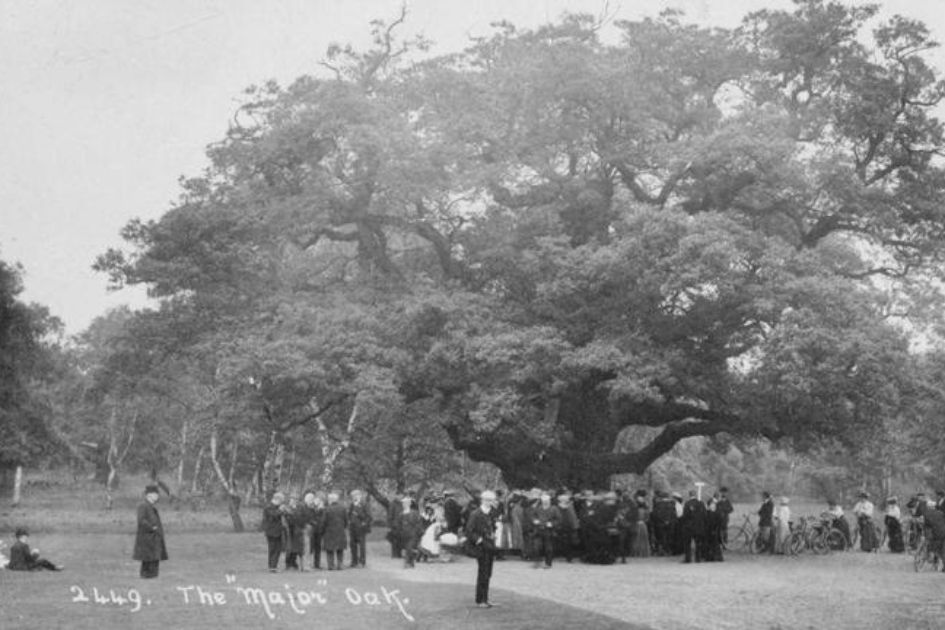
“It has seen an enormous amount of activity,” Chloe Ryder, the RSPB’s estate operations manager at Sherwood Forest, told CNN.
Experts also linked the tree’s final decline to a series of exceptionally hot summers.
“The most recent decline has corresponded with five very hot and droughty summers, most notably in July 2022 when the UK experienced record temperatures of 40 degrees Celsius,” said Reg Harris, director of arboriculture at tree surgery firm Urban Forestry, who has been monitoring the tree.
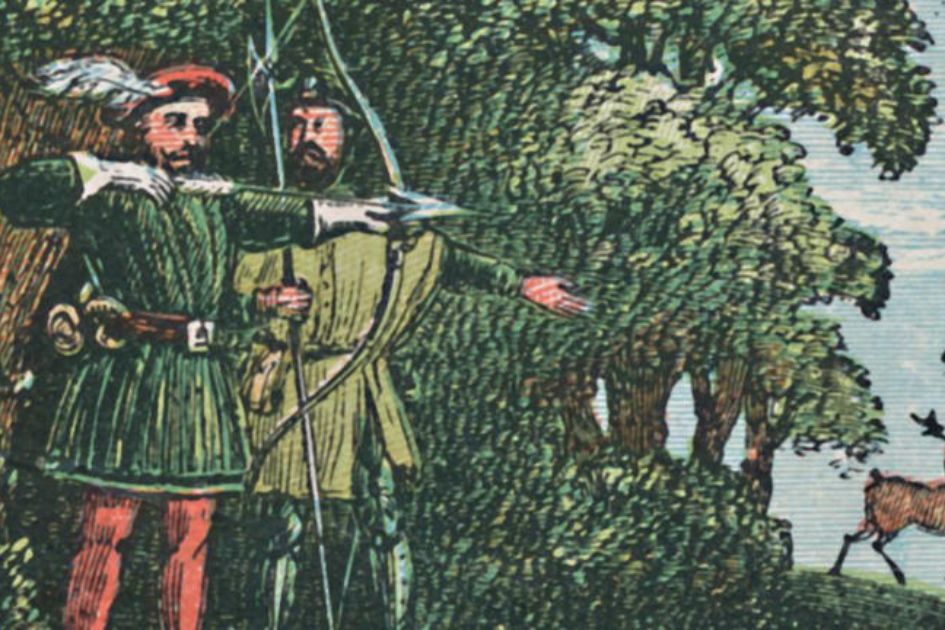
Sherwood Forest, near Nottingham, has long been associated with Robin Hood. References to the outlaw first appeared in the 14th century and he has since featured in countless books, films and television productions.
Although the Major Oak has become inseparable from the Robin Hood legend in the public imagination, historians say the connection cannot be confirmed in medieval sources.
“In terms of the earliest surviving medieval stories of Robin Hood, there are no specific mentions of the oak tree,” Alex Brown, associate professor of history at Durham University, told CNN in an email.
Brown noted that early Robin Hood stories do mention distinctive meeting places known as “trystle trees”, where people knew they could find Hood and his followers.
“It is, of course, possible that this meeting tree would have been associated with a distinctive tree within the Forest from a very early stage in the legend,” he said.
Despite its death, the Major Oak will remain standing in Sherwood Forest.
Hollie Drake, senior site manager at RSPB Sherwood Forest, said the tree would continue to serve both as a landmark and an ecological asset.
“The Major Oak will continue to stand at the heart of Sherwood as a natural monument for visitors to come and see, living on in the legend of Robin Hood and continuing to provide as much support to the forest’s ecosystem in death as in life,” she said.
Conservationists noted that acorns and cuttings taken from the Major Oak have already been used to grow saplings planted around the world, including at Winfield House, the London residence of the United States ambassador.
Ryder said that with continued care, the giant oak could remain standing for “decades, even centuries.”
This post is republished from CNN.




