




Ancient DNA from a 190-year-old museum specimen has resolved a long-standing taxonomic debate, with researchers warning the revised classification could affect Nepal’s conservation planning, wildlife forensics and legal protections.
A new genetic study has confirmed that the pangolin long identified in Nepal as the Chinese pangolin is in fact a distinct Himalayan species, prompting calls for nationwide genetic research to determine whether the true Chinese pangolin still exists in the country and highlighting potential implications for conservation policy and wildlife law.
The findings were published in the journal Nature Communications Biology. The study was led by Pokhara University Associate Professor Narayan Koju, who recently shared the research on social media, drawing attention to its significance for Nepal. Koju served as the lead author and worked with several genetics researchers as co-authors.
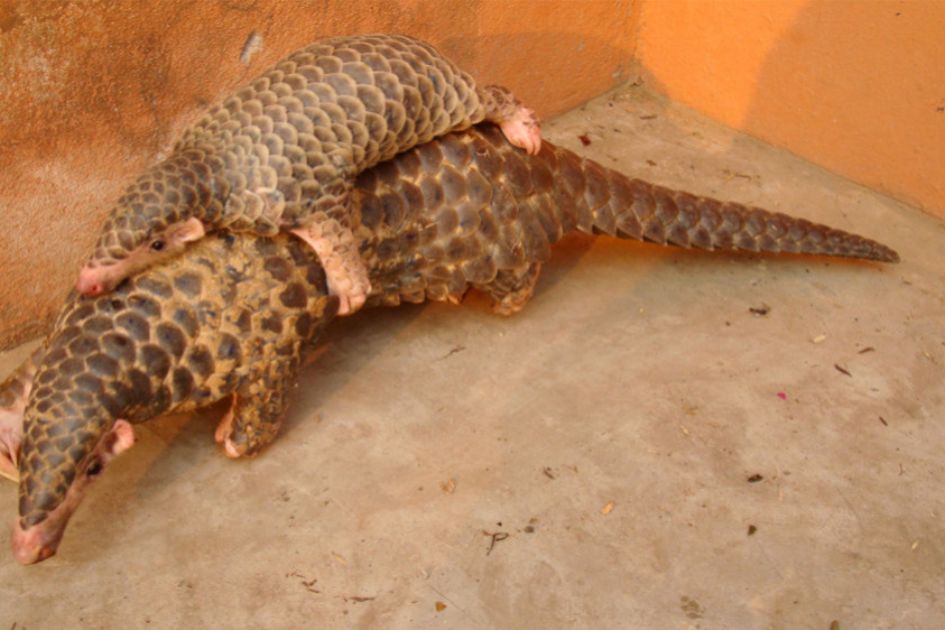
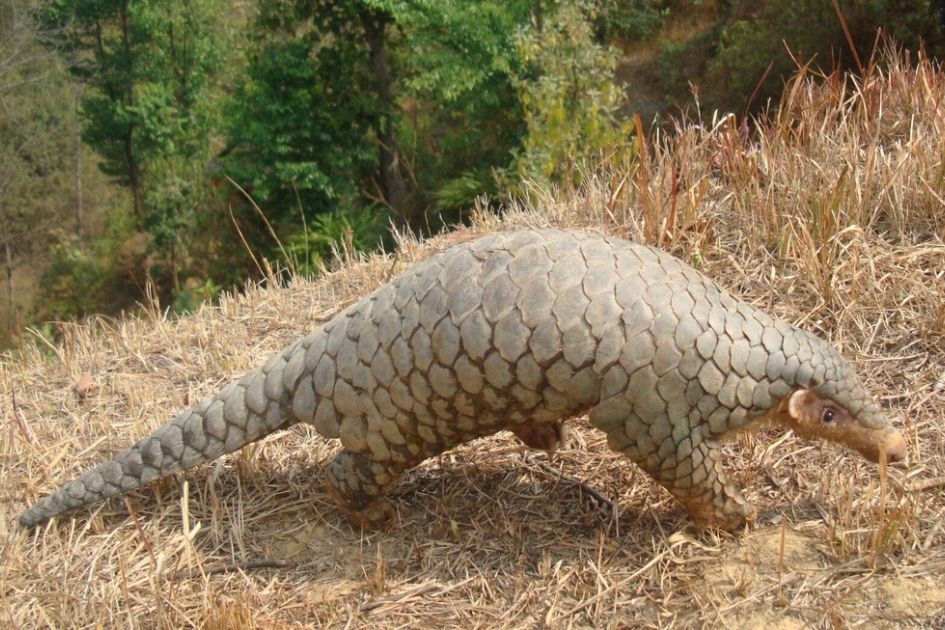
The research concluded that the animal commonly known in Nepal as the Chinese pangolin, locally called the black pangolin, should instead be recognized as the Himalayan pangolin. Its scientific name has been confirmed as Manis arita.
Nepal is home to two pangolin species, the black pangolin and the copper pangolin. The black pangolin is listed as Critically Endangered on the IUCN Red List, while the copper pangolin, also known as the Indian pangolin, is classified as Endangered.
Researchers had long suspected that the Chinese pangolin included two genetically distinct groups, but confirmation took time. The new study established that pangolins found in Nepal, Bhutan, northeastern India and southern Tibet belong to a separate species, while the true Chinese pangolin occurs only in China and Southeast Asia.
Pangolins are nocturnal mammals with clawed snouts that feed primarily on ants and termites. Their long tongues help regulate insect populations, but they are heavily targeted by poachers because of their scales.
The study also resolves a nearly two-century-old scientific dispute over the species’ identity.
The species was first named Manis arita by British researcher and diplomat Brian Houghton Hodgson after he collected a specimen while serving as the British Resident Representative in Kathmandu. During his work documenting Nepal’s flora and fauna, Hodgson collected more than 9,000 specimens and sent them to Britain about 200 years ago.
The pangolin specimen he collected around 1836 has remained in the Natural History Museum in London under the designation BNHM 43.1.12.85. Although Hodgson originally named it Manis arita, the designation was later forgotten and the animal came to be regarded as a subspecies of the Chinese pangolin.
In 2025, researchers proposed that pangolins from the Himalayan region represented a new species and named them Manis indo-burmanica, sparking debate among pangolin specialists over whether they were genuinely new or the same species described by Hodgson in 1836.
The question was resolved in 2026 with the publication of the Nature study.
Researchers extracted genetic material from the nearly 190-year-old museum specimen collected by Hodgson and found that its DNA matched present-day Himalayan pangolins.
The study then applied the rules of the International Code of Zoological Nomenclature (ICZN), which governs animal naming worldwide. Under the code’s Law of Priority, the earliest valid scientific name takes precedence when two names refer to the same species. As a result, Hodgson’s original 1836 name, Manis arita, became the official scientific name.
Scientists extracted DNA from the bones and teeth of the historic specimen, despite the challenges posed by degradation over time.
Using Next Generation Sequencing (NGS) technology, they reconstructed fragmented DNA to produce a genetic map of the animal and carried out genomic analysis. The researchers also collected blood, tissue, cell and other samples from living pangolins in Nepal and India and compared them with the museum specimen. The analysis showed both belonged to the same genetic group, allowing a museum specimen preserved for about two centuries to underpin a modern scientific conclusion.
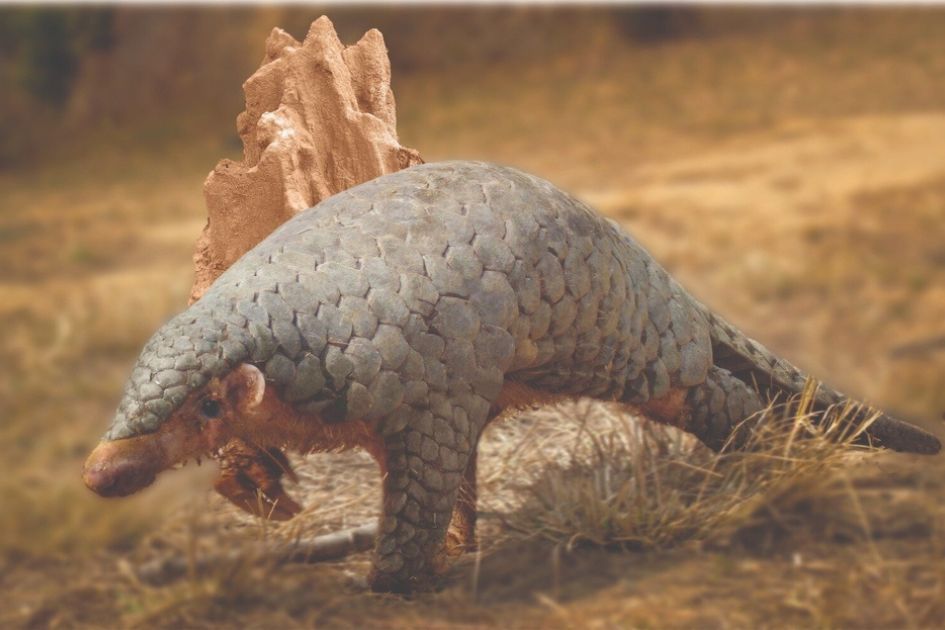
Although Himalayan and black pangolins appear broadly similar, the study found differences in body shape, tail length, ear shape, skull characteristics and the colour and structure of their scales. Researchers said these distinctions can generally be identified only through laboratory analysis, making the two species difficult to distinguish during fieldwork.
The study also suggests the two groups diverged approximately 1.8 million years ago during evolution.
Most pangolins recorded in Nepal are found in community forests rather than protected areas. More than 23,000 community forest user groups operate across the country, and some have undertaken conservation measures including documenting pangolin presence, forming basic anti-poaching units, conducting patrols and removing traps.
The study says existing literature, forest action plans and policies still refer to the species as the Chinese pangolin. As conservation plans are periodically revised, researchers say community members should be informed once the new classification is formally recognized.
The findings could also create legal challenges.
Schedule 1 of Nepal’s National Parks and Wildlife Conservation Act, 2029 currently lists only the copper pangolin and the black pangolin by scientific name. If the pangolin found in Nepal is confirmed to be exclusively the Himalayan pangolin rather than the Chinese pangolin, traffickers and other offenders could technically avoid prosecution because the newly recognized species is not explicitly listed in the legislation.
To address this, the study suggests amending Schedule 1 to include Manis arita. As a longer-term solution, it recommends protecting the entire Manis genus under the law so that any newly identified species would automatically receive legal protection.
The study notes that international protection already exists under CITES, where all pangolin species are included in Schedule 1 under the broader listing of Manis spp.
The research also underscores the growing importance of forensic science in Nepal. Existing genetic databases used by the country’s laboratories are based on the previous classification, meaning new genetic reference data will be required to determine the species origin of seized pangolin scales or meat. Researchers say updated reference material would strengthen court evidence and support anti-poaching efforts.
The study’s conclusions are based mainly on samples collected from central Nepal, leaving uncertainty about pangolin populations in districts bordering China.
Districts including Taplejung, Sankhuwasabha, Ilam and Panchthar lie close to the Chinese border, where a small population of the true Chinese pangolin could still exist. These districts are also known as wildlife smuggling routes.
Researchers therefore say further genetic studies are needed, including the collection and analysis of pangolin scales and other samples from Nepal’s border districts.
If the true Chinese pangolin is found in eastern Nepal, conservation policies would need to protect both species separately. If it is absent, national policies and legislation could instead focus on a single species.
The study says it would be premature to amend legal schedules or finalize a national action plan before additional research is completed. It concludes that the re-identification of the species has opened new opportunities for scientific study and research in Nepal.
This post is republished from Kantipur National Daily.




