




For Bangladesh’s Manta community, climate and livelihood pressures are eroding security, cultural continuity and dignity, revealing losses that conventional economic measures cannot capture.
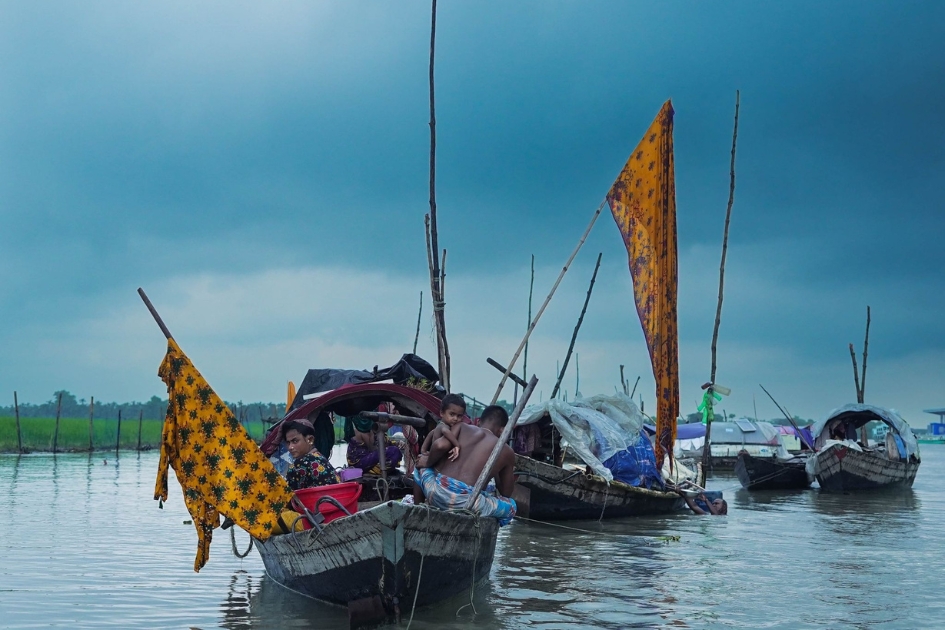
The row of small wooden boats tied along the riverbanks of Kalabadar in Laharhat, under Barishal Sadar Upazila, looks from a distance like ordinary river traffic. Walk closer, and you realize these boats are entire worlds. They are kitchens, bedrooms, places of birth and spaces where families raise their children. For the Manta community, a boat isn’t just a vehicle; it is the physical container of an entire life. The river sustains the community, but it also exposes them to uncertainty, danger and forms of loss that cannot be fully described in monetary terms.
Discussions of climate-related loss and damage often begin with what can be counted: homes destroyed, land lost, livelihoods disrupted or the financial cost of a disaster. The Manta community’s experiences reveal another side of loss. Declining fish catches, rising living costs, fragile boats and limited access to essential services create significant material hardship. But environmental and socioeconomic pressures can also affect things that are far harder to quantify; this includes the community’s sense of identity and dignity, emotional wellbeing, cultural knowledge, social relationships, safety and sense of belonging. These less tangible but deeply consequential impacts are increasingly understood through the lens of non-economic loss and damage (NELD).
Mobility as identity and survival
Mobility has shaped Manta life for generations. Community members spoke of being born and raised on boats, just as their parents and grandparents were. At the time of the field visit, 187 families were living on boats in this part of the river. Families generally move towards places where relatives live, where boats can be anchored safely and where fishing or other work may be available.
For the Manta, mobility is therefore more than movement from one place to another. It is part of how families sustain relationships, livelihoods and an intergenerational connection with the river. However, mobility is becoming more difficult and uncertain. Many families do not own motorized boats and must rent engine-powered boats when they need to travel longer distances. Familiar locations once visited by older generations are no longer accessible, and erosion removes riverbanks, anchoring space and tube wells. These changes matter because mobility carries meanings that extend beyond physical movement. Movement that once supported their familiar community life is now increasingly being shaped by necessity and uncertainty. Memories tied to place become harder to sustain, knowledge of the river becomes more difficult to pass between generations, and connections to familiar people and places can weaken. Seen through a NELD lens, the loss is not simply about where people can go, but what those patterns of movement have allowed them to preserve: continuity, relationships, knowledge, identity and belonging.
Economic pressure
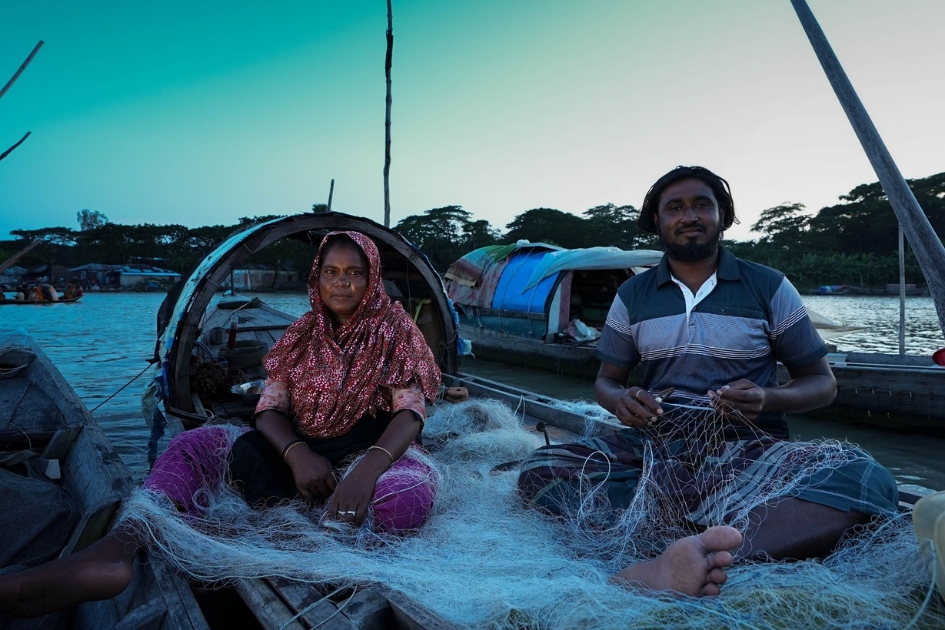
Fishing remains at the heart of the Manta economy and way of life. Fishers leave at dawn with small nets and traditional hooks and return by dusk with whatever the river provides. Community members explained that during the monsoon season, a season they traditionally associate with greater availability of fish, they catch only about two or three small fish on some days. A family may spend around BDT 500 on five litres of fuel but sell the day’s catch for only BDT 200 to 300, leaving too little for food or loan repayments.
These pressures are compounded by limited access to formal recognition and support systems. Although fishing sustains their lives, Manta families reported that they do not have government-issued fisher cards. During fishing bans, they may be excluded from rice rations and other government assistance. The cost of maintaining life on the river adds another layer of insecurity. A boat can cost approximately BDT 150,000 to 200,000, while repairs may cost BDT 8,000 to 10,000 and be needed every three months. Losing a boat would mean losing a home, livelihood and the centre of family life at the same time.
This is where the non-economic aspects of climate change-induced losses and damages add another dimension to the story. NELD does not replace the need to measure these financial losses. Instead, it reveals what conventional assessments may overlook: the fear attached to losing a boat, the erosion of occupational identity and the weakening of a way of life built around fishing and the river.
Women carry distinct and often invisible risks
Women experience the insecurity of boat-based life in particular ways. Women give birth and raise children on boats, while access to healthcare during pregnancy, childbirth or emergencies can require travelling to government health facilities. River water is used for drinking, cooking, washing and sanitation. Without reliable lighting, using sanitation facilities at night can be dangerous and offers little privacy. Women also fear that someone may photograph them while they wash or attend to personal needs near the boat.
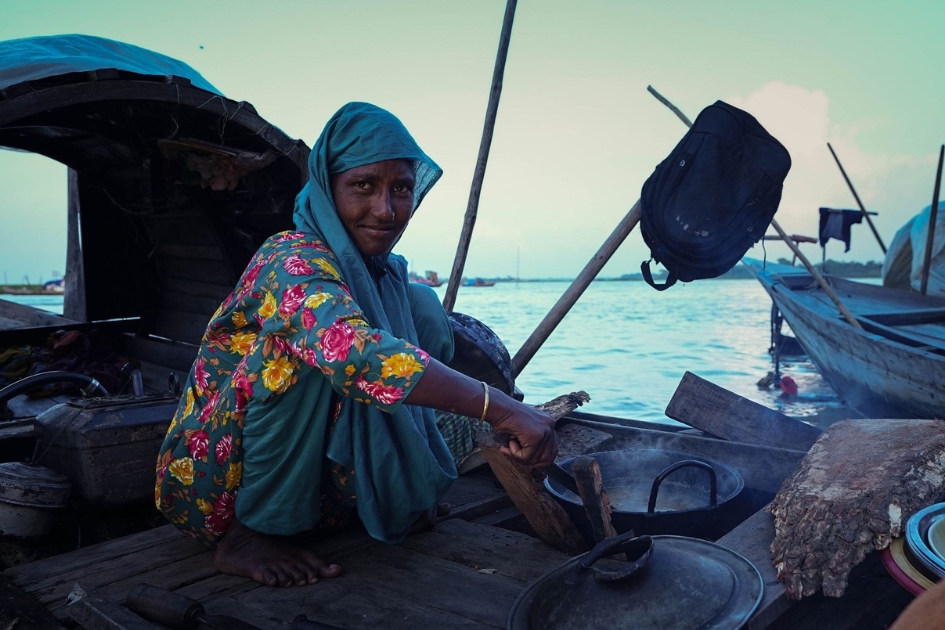
When men travel into deeper water to fish, women remain on the boats, caring for children and trying to secure food. Cooking on a small platform that moves continuously with the water is difficult, while passing launches and speedboats generate waves that can make the boats sway sharply. Mothers worry that newborns and young children may fall into the water; some tie infants with ropes to prevent drowning. These impacts in the form of persistent fear, loss of privacy, reduced dignity, heavy care responsibilities, insecurity and constant anxiety for children’s safety are a stark indication of how closely care and fear can coexist in everyday life on the water. This also shows how gender shapes who carries the emotional and care-related consequences of environmental and livelihood insecurity. These impacts may never appear in an accounting of lost income, declining fish catches or damaged boats, yet they profoundly shape women’s everyday wellbeing and sense of safety.
Children growing up between aspiration and exclusion
For Manta children, access to education is shaped by where their families can anchor and how often they need to move. NGO-led small learning centres have created important opportunities for younger children to learn rhymes, counting and basic lessons. Even so, continuity is fragile: when a family moves, a child may not be able to return to the same school.
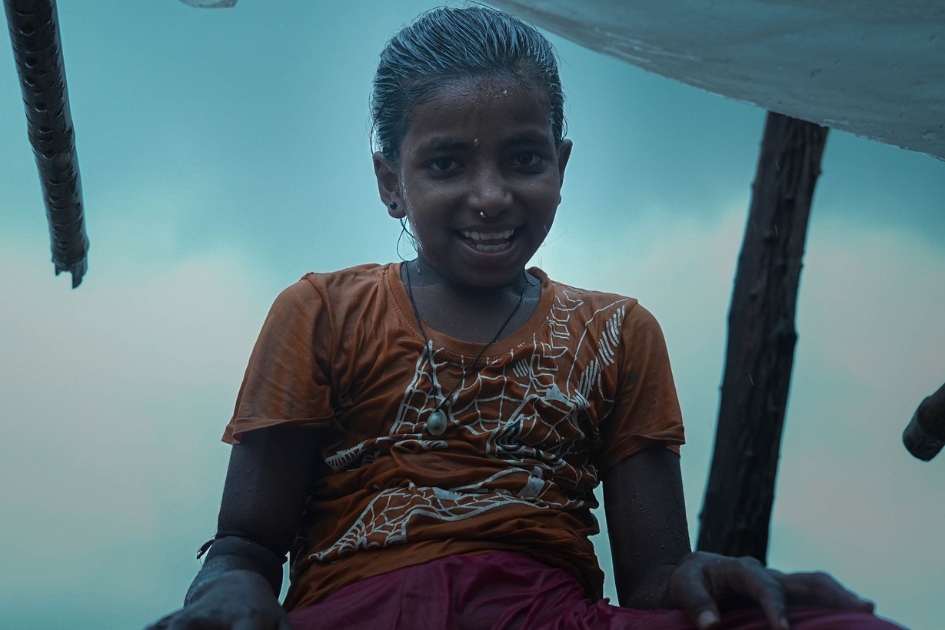
Children who grow up without education often see fishing as their only possible future because it is the only skill they learn from their parents. Those attending school describe different aspirations, including becoming doctors, teachers or NGO workers. Yet their learning environment remains unstable. Sonali, the six-year-old daughter of the community’s leader, Sardar, told us that she struggled to read and write because the boat was constantly swaying beneath her. Her experience captures something that statistics on school enrolment alone cannot: the everyday difficulty of trying to learn without a stable space in which to do so. This results in interruptions in education, anxiety, constrained opportunity and a child’s longing for stability. Girls face additional pressure of child marriage, commonly taking place around the ages of 14 or 15. When environmental and social insecurity narrow a child’s choices and aspirations, what is at stake is not only their present wellbeing, but their ability to imagine and shape their own future.
Emotional wellbeing and the struggle for recognition
When asked what worries people most, community members spoke of losing their boats because the boat gives meaning and structure to life. During warning signals, families cannot safely remain on the open river and must move into small canals without knowing what will happen next. This repeated uncertainty creates fear and emotional strain.
Limited access to healthcare can deepen this sense of insecurity. During the visit, an older woman suddenly became ill and began vomiting. Those around her did not know what to do, and the family did not have enough money for medical care. The moment revealed how limited access to essential services can intensify feelings of vulnerability, uncertainty and helplessness.
The Manta also face social exclusion from land-based communities. They are sometimes called “Bede” or “Bebaijja”, although they identify themselves as Manta and distinguish their fishing-based life from the occupations traditionally associated with Bede communities. This struggle to be recognised on their own terms is itself connected to non-economic loss: misrecognition can weaken dignity, identity and access to rights.
There are signs of change. Receiving national identity cards has improved acceptance by some land-based neighbours and enabled community members to join prayers during Ramadan. The allocation of land for burials has also provided a measure of dignity. In the past, families described floating bodies away or searching for different char areas in which to bury relatives. Secure burial space is not simply a service; it protects spiritual practice, memory and belonging.
Knowledge, solidarity and resilience
The Manta community is not defined by vulnerability alone. Families hold rich knowledge of clouds, rain, the moon, river conditions, fishing, boat movement and survival during emergencies. During the visit, community members read the clouds and the full moon to anticipate heavy rain and the possibility of a better fish catch. Each group of boats is guided by a sardar, who helps oversee daily affairs and maintain the harmony of the community. This knowledge is not simply a collection of traditional practices; it is part of how generations have learned to understand, navigate and live with the river.
Community life is also sustained through strong systems of social organization and mutual support. Groups of boats are guided by a sardar, who helps oversee daily affairs and maintain harmony within the community. Families rely on one another during difficult periods, particularly when services are inaccessible or interactions with land-based communities are unwelcoming. These relationships, shared knowledge and collective practices are important sources of resilience. However, resilience should not be used as a reason to normalise deprivation. Traditional knowledge and collective support cannot substitute for safe water, sanitation, healthcare, education, lighting, disaster assistance, legal recognition and secure places to live and anchor.
Seeing the losses that figures cannot capture
The story of the Manta community makes NELD tangible. It is present in a mother’s persistent fear that her child may fall into the river; in a young girl struggling to study on a constantly swaying boat; in the weakening of connections to familiar routes and anchoring places; in the uncertainty surrounding a livelihood and identity built around fishing; and in the struggle to bury loved ones with dignity. Environmental pressures intersect with poverty, social exclusion, limited recognition and inadequate public services, deepening the losses and insecurities experienced by the Manta community. When the Manta say that they are human beings who also have the right to live on land and access basic services, they are asking to be seen not as people outside society, but as citizens with identities, aspirations and rights. Understanding their experience through a NELD lens helps ensure that climate action protects not only what can be priced, but also what gives life meaning.
What a NELD-sensitive response should recognise
A NELD-sensitive response begins by listening to how the Manta themselves understand what is valuable, what is changing and what they fear losing. This means recognising that a boat is not only an economic asset but also a home and a space of family life; that mobility is both a livelihood strategy and part of an intergenerational relationship with the river; and that fishing carries not only economic value but also knowledge, identity and continuity.
Responses should therefore combine practical services with protection of dignity, identity, knowledge and choice. Priorities include formal recognition of Manta fishers, access to fishing-ban assistance, safe drinking water and sanitation, reliable solar lighting, mobile and accessible healthcare, continuity of education for children who move and disaster support designed for boat-dwelling families. Women and girls must be involved in designing measures for privacy, safety, maternal health, childcare and protection from early marriage. Community knowledge should inform early warning and adaptation planning rather than being treated as anecdotal.
Most importantly, the Manta should not be forced to choose between cultural identity and basic rights. Some may want to continue a mobile, river-based life; others, particularly educated young people, may seek different futures. A just response must make both possibilities safer and more attainable.




