

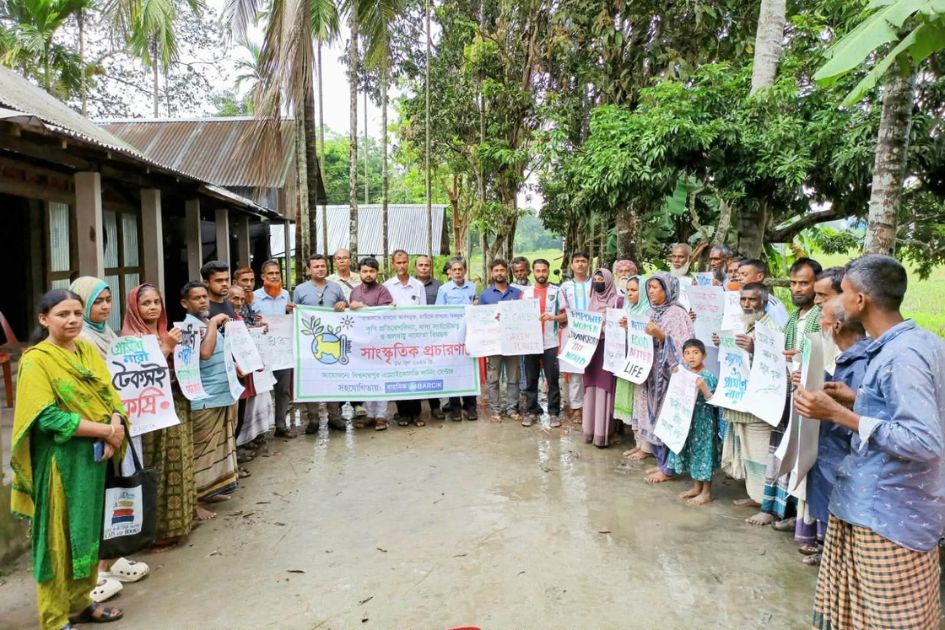



More than 100 farmers and youth joined a Netrokona rally advocating agroecology, climate justice and food sovereignty, highlighting sustainable farming practices as vital for resilient communities and environmental protection.
Farmers, development activists and youth representatives gathered in Netrokona, a district in the Mymensingh Division of northeastern Bangladesh, on Thursday for a day-long campaign and rally promoting agroecology, climate justice and food sovereignty, with speakers stressing that environmentally sustainable farming practices are essential to building resilient communities.
The programme was held under the slogan, “Keep the air carbon-free and the soil toxin-free,” at the Agroecology Learning Centre in Bishwanathpur village of Amtala under Netrokona Sadar upazila. The event began at 11:00 am and was organised with the support of private research organisation BARCIK and the Green Coalition Committee.
More than 100 farmers from the neighbouring villages of Gachgaria, Bishwanathpur and Panchkahania took part in the gathering alongside members of local youth organisations.
Speaking at the discussion session, BARCIK official Shankar Mrong highlighted the importance of agroecology in addressing the adverse impacts of climate change. He also spoke in detail about ensuring climate justice and the steps farmers can take to achieve food sovereignty.
Khadija Akter Lita presented a roadmap for transforming Bishwanathpur into a model “green village”, outlining plans aimed at promoting environmentally friendly agricultural practices and sustainable rural development.
The event also featured cultural performances by artists from the local Singher Bangla Adi Cultural Organisation, who performed traditional Baul songs. Farmers later displayed festoons carrying their demands and pledged to work collectively for the development of their villages and the agricultural sector.
At the conclusion of the programme, BARCIK distributed saplings of indigenous tree species among participants as part of efforts to build Bishwanathpur into a carbon-free and environmentally friendly village. The initiative generated considerable enthusiasm among those attending the event.
The organisers said the programme sought to raise awareness about agroecology, climate justice and food sovereignty while encouraging local communities to take a more active role in protecting the environment and promoting sustainable agriculture.




