




Bonn climate talks ended with limited progress, exposing deep divides over finance, adaptation and mitigation as developing nations demanded credible delivery before COP31 in Antalya.
The UN climate talks in Bonn ended with limited progress on finance, adaptation and mitigation, exposing deep divisions between developed and developing nations. Negotiators now face growing pressure to restore trust and deliver implementation-focused outcomes ahead of COP31 in Antalya.
The UN Climate Change Conference (SB64) concluded in Bonn after ten days of negotiations from 8 to 18 June, ending with limited progress and exposing a widening gap between climate finance commitments and real-world implementation.
Developing Nations Frustrated as Bonn Climate Talks End With Little Progress
The talks were defined less by new decisions than by stalled processes, deferred outcomes and unresolved disputes over how to operationalise existing climate pledges, particularly on finance, adaptation, Loss and Damage and just transition mechanisms.
At the centre of the deadlock was a persistent disagreement between climate-vulnerable countries and developed nations over predictable public finance and the credibility of delivery under the Paris Agreement.
Finance gap emerges as core implementation crisis
Climate finance dominated nearly every negotiating track in Bonn and became the central axis of disagreement across adaptation, mitigation and trade discussions.
Developed countries pointed to record climate finance flows of $136.7 billion in 2024, framing this as evidence of progress toward existing obligations. However, developing countries challenged both the scale and credibility of these figures, arguing that they mask a structural shortage of public, grant-based finance and declining concessional support.
They also raised concerns about predictability, accessibility and the growing reliance on private finance instruments that do not meet urgent adaptation needs.
The newly agreed global goal of $300 billion annually by 2035 was welcomed in principle but widely described by developing countries as insufficient relative to actual requirements.
Isatou Camara, lead climate finance coordinator for the Least Developed Countries (LDCs), said:
“Public finance is oxygen for us.It is what enables resilience and adaptation.”
Bangladesh urges binding finance and Loss and Damage mechanism
Bangladesh reiterated its call for a legally binding international mechanism to ensure predictable and adequate climate finance, particularly for Loss and Damage linked to accelerating climate impacts.
Delegates stressed that floods, river erosion, salinity intrusion and climate-induced displacement are already eroding livelihoods across low-lying and riverine regions. They warned that without predictable finance, adaptation planning risks remaining theoretical rather than operational.
Bangladesh also pressed for equitable access to carbon markets under Article 6 of the Paris Agreement, cautioning that poorly designed mechanisms could weaken adaptation priorities and fail to deliver justice for vulnerable communities.
Article 6 carbon markets raise equity concerns
Negotiations under Article 6 on international carbon trading exposed continued divisions over fairness, environmental integrity and access for developing countries.
Dr Saimum Parvez, Special Assistant to the Prime Minister on Environment, Forestry and Climate Change, said Bangladesh is seeking both equitable access to carbon credit systems and stronger safeguards to protect vulnerable communities.
He warned that carbon markets must not replace Loss and Damage finance or divert attention from adaptation needs in climate-impacted countries.
Bangladesh also highlighted its nature-based solutions strategy, including a plan to plant 250 million trees to strengthen ecosystem resilience and reduce climate vulnerability.
Just Transition Mechanism emerges as rare institutional outcome
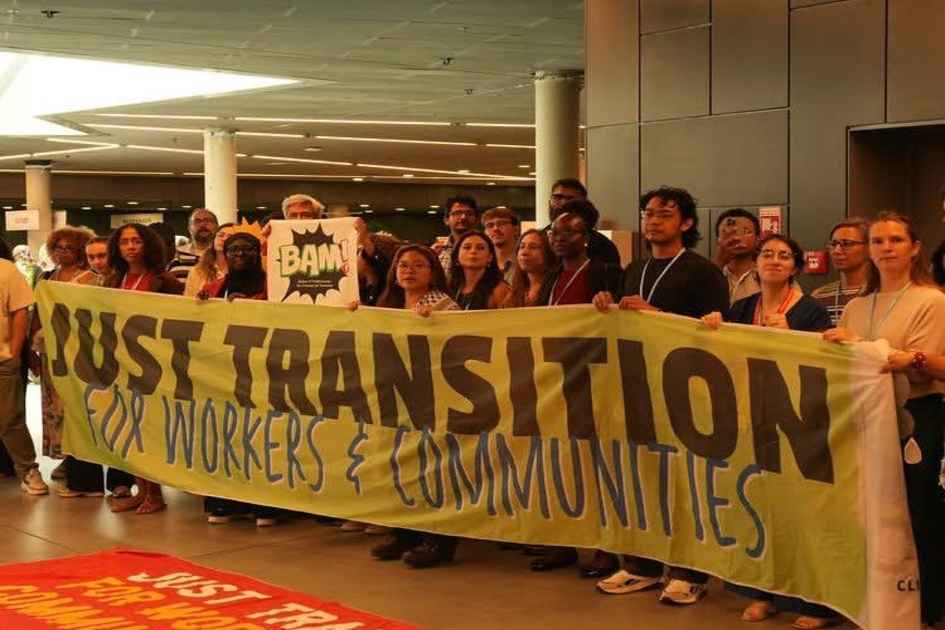
Amid widespread deadlock across most agenda items, the Just Transition Work Programme produced one of the few tangible institutional outcomes through progress on the Belém-Antalya Mechanism (BAM).
The mechanism is intended to support workers and vulnerable communities during the shift toward low-carbon economies by providing coordination, technical assistance and policy coherence.
However, negotiations were slowed by procedural disputes over mandate, governance and scope, with much of the first week consumed by technical discussions rather than substantive design.
Civil society organisations criticised the delay in moving toward implementation-focused negotiations.
Anabella Rosemberg of Climate Action Network International said:
“Over the ten days of negotiations, a week was spent on procedural issues instead of discussing how the mechanism should function.”
Despite delays, parties including Brazil, AOSIS, AILAC, Norway and the African Group supported advancing the process, while others called for further clarification on institutional design and inclusivity.
The BAM is now expected to return for further negotiation ahead of COP31 in Antalya, where it stands as one of the few emerging institutional innovations from SB64.
Science debates expose fault lines over equity and climate pathways
Scientific authority and the interpretation of climate science became a central political fault line in Bonn.
Three interconnected disputes defined the science discussions.
First, disagreement over temperature goals persisted, with some countries defending the 1.5°C limit while others emphasised the Paris Agreement’s “well below 2°C” framing. Small island states and climate-vulnerable nations warned that weakening the 1.5°C target undermines survival thresholds, while countries including Saudi Arabia and India emphasised broader interpretive flexibility.
Second, debates intensified over the role of the Intergovernmental Panel on Climate Change (IPCC) in informing future global stocktakes and whether its next assessment cycle should be accelerated.
Third, tensions emerged over language relating to “misinformation” and how climate science is framed within negotiations.
Anne Rasmussen of AOSIS said:
“There can be no equity for the most vulnerable if 1.5°C is breached.”
The debates reflected a deeper divide between equity-based interpretations of responsibility and differing views on development space and mitigation pathways.
Adaptation and mitigation talks collapse without agreement
Both the Global Goal on Adaptation (GGA) and the Mitigation Work Programme (MWP) ended without agreement and were deferred to COP31 under procedural Rule 16.
The failure reflected unresolved disputes over finance, governance structures and how progress should be measured and implemented.
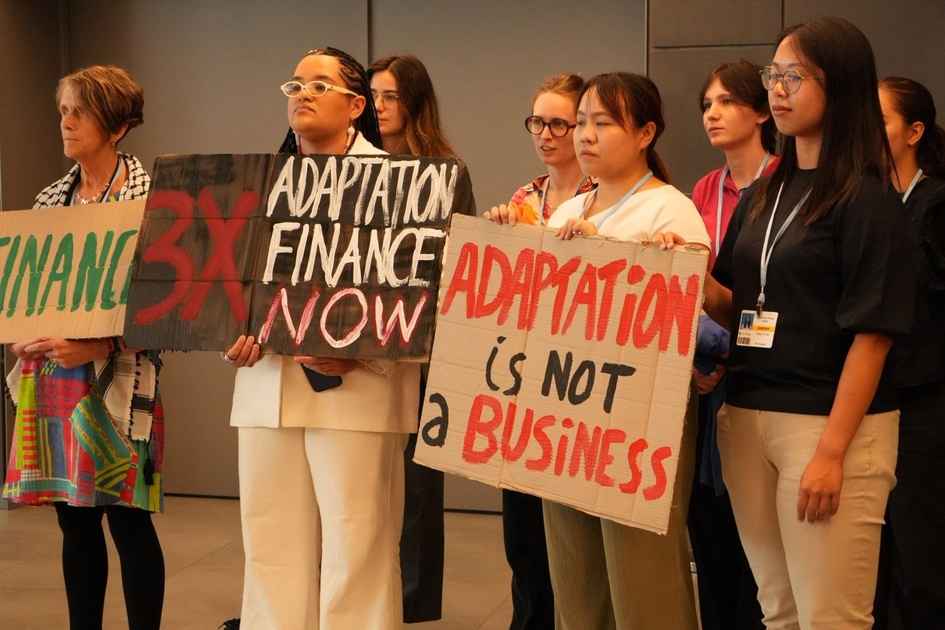
Developing countries pushed for explicit recognition of the pledge to triple adaptation finance by 2035, while several developed countries opposed its inclusion in the negotiating text.
Early drafts excluded finance entirely, while later versions contained only bracketed references, leaving the issue unresolved.
Teresa Anderson of ActionAid International said:
“It’s been a struggle to even acknowledge the promise to triple adaptation finance, let alone deliver on it.”
The collapse of both tracks reinforced concerns that implementation frameworks remain structurally underfunded and politically contested.
Fossil fuels remain outside agenda but central to political tension
Although not formally on the agenda, fossil fuels remained a persistent undercurrent throughout SB64.
The COP30 presidency continued consultations on informal roadmaps for transitioning away from fossil fuels and ending deforestation.
Small island states and some developed countries supported integrating these roadmaps into formal UN processes, while major fossil-fuel-producing countries largely avoided engagement or resisted formalisation.
The initiatives are increasingly seen as part of an emerging “coalition of the willing” operating alongside, rather than within, formal UNFCCC negotiations.
Trade debate highlights new form of climate conditionality
A first formal dialogue on climate and trade revealed emerging tensions over carbon border measures and their implications for developing economies.
Developing countries argued that such measures risk increasing compliance costs and restricting market access, effectively creating new forms of climate-related conditionality.
Developed countries defended them as legitimate tools to address environmental externalities and prevent carbon leakage.
While disagreements remain, the tone of engagement was more pragmatic than confrontational.
Governance and system reform remain marginal but ongoing
Discussions on UN climate governance touched on coordination between climate, biodiversity and desertification frameworks, alongside calls for improved efficiency and coherence.
A UN-backed assessment estimating $10 trillion to $25 trillion in annual losses from fragmented governance added weight to arguments for more integrated decision-making.
However, institutional reform remains limited, with proposals still in early exploratory phases.
Ocean and implementation initiatives gain visibility
The ocean-climate dialogue highlighted the increasing integration of marine ecosystems into national climate strategies through “blue NDCs”.
Meanwhile, presidency-led initiatives such as the Global Implementation Accelerator and the Belém Mission to 1.5°C aimed to bridge the gap between political commitments and implementation support.
These initiatives remain voluntary and operate outside formal UNFCCC decision-making structures.
Civil society warns of widening gap with frontline realities
Activists and practitioners warned that international negotiations risk becoming detached from the realities of climate-affected communities.
Soumya Dutta of SAPACC said climate governance must be grounded in lived experience.
“If climate indicators are designed without input from farmers and marginalised communities, they will fail on the ground.”
He stressed that adaptation frameworks remain ineffective without predictable finance and stronger accountability mechanisms.
From Bangladesh, youth leaders emphasised that climate diplomacy must move beyond negotiation toward implementation.
Sohanur Rahman, Executive Coordinator of YouthNet Global, said:
“Climate finance discussions cannot remain abstract negotiations. What matters is whether commitments translate into real protection, adaptation and justice for affected communities.”
Road to COP31: implementation test amid eroding trust
Attention now turns to COP31 in Antalya, where unresolved disputes over climate finance, adaptation, mitigation and just transition will return to the negotiating table.
UN officials warned that continued delays in delivering concrete outcomes risk further weakening trust in the multilateral climate system.
As SB64 concluded, delegates acknowledged limited institutional progress, while the broader outcome underscored a persistent gap between climate ambition and implementation.
COP31 is now set to become a critical test of whether global climate governance can move beyond procedural negotiation toward credible delivery of finance, adaptation support and just transition mechanisms for countries on the front lines of climate change.




