

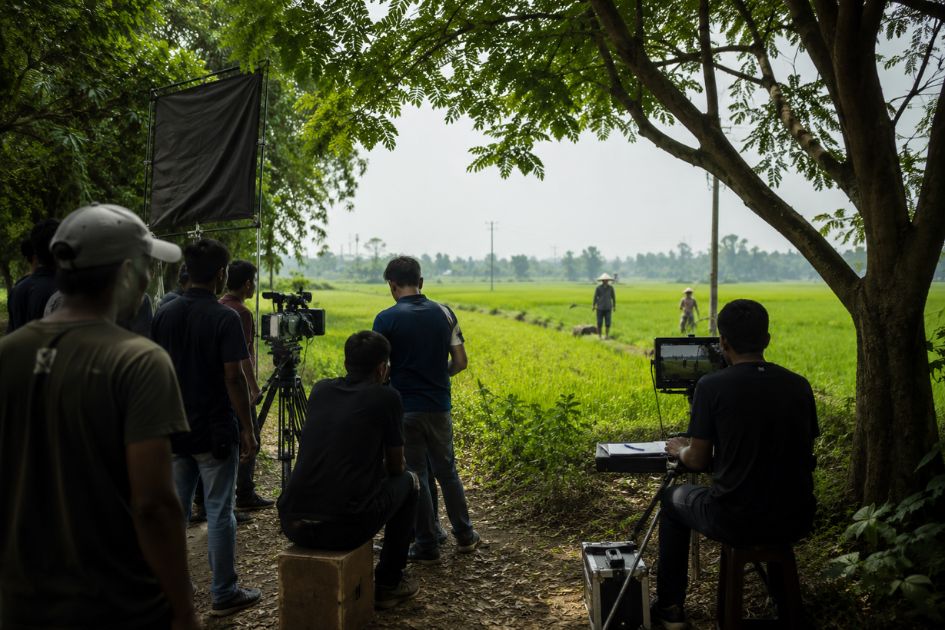



Bangladesh’s growing film industry can reduce its environmental footprint through sustainable production practices, stronger policy support, targeted training and greater awareness, helping filmmakers create globally competitive and environmentally responsible content.
In Bangladesh today, the film and content-making industry is growing steadily with the rise of digital platforms, the creativity of young filmmakers and the growing recognition of local stories. As the country’s creative economy expands, the need for sustainability in film production becomes increasingly important. Sustainable filmmaking refers to adopting environmentally responsible practices throughout the process of making a film. It includes activities from pre-production and shooting to post-production and distribution. Sustainable filmmaking means producing films in a way that minimizes harm to the environment while promoting social and economic well-being. Although the concept is still relatively new in Bangladesh, there is growing awareness among the creative community about the importance of environmental responsibility in this sector.
In recent years, a few initiatives in Bangladesh have started to explore the idea of sustainable filmmaking. Some film institutions have joined international networks that promote eco-friendly film education and practices, with a commitment to reducing waste, saving energy and creating awareness about the environmental impact of production. A few training programs and workshops have been held to introduce local filmmakers to sustainable methods, such as shooting during daylight hours, using renewable energy on set, reducing the use of single-use plastics, reusing materials and practicing responsible waste management. These training programs are still limited in number, but they show that Bangladesh is beginning to acknowledge the value of sustainability in its growing film sector.
The challenges are multifaceted. They mostly lie in the financial and infrastructural domains. Funding remains one of the biggest obstacles to sustainable film production in Bangladesh. Most film projects in the country operate with modest budgets. Financial constraints often make environmental initiatives appear to be additional expenses rather than essential investments. Producers already struggle to cover costs related to equipment, cast and post-production. They tend to prioritize immediate needs over long-term sustainability. In such a backdrop, practices like renting energy-efficient lighting, managing waste responsibly and using eco-friendly materials are often overlooked. These practices are frequently perceived as too expensive or impractical within existing budget limitations.
One area with great potential is the development of institutional and governmental support for green filmmaking. The government already provides grants for films that promote social values, reflect real-life experiences, demonstrate artistic excellence and represent diverse voices. Introducing dedicated funds or subsidies for environmentally sustainable productions could make a significant difference. The government could also prioritize environmentally sustainable films in the distribution of public grants, recognizing their contribution to environmental responsibility and sustainable development. Such initiatives would provide producers with direct financial support and policy-based motivation to adopt eco-friendly practices. With the right framework in place, sustainable filmmaking could grow from being driven by individual enthusiasm to becoming a recognized industry standard, helping Bangladesh’s film industry shine both locally and internationally.
Moreover, access to advanced infrastructure and technology is limited. Sustainable filmmaking often requires equipment that reduces energy use. For example, this includes LED lighting, rechargeable power sources and efficient digital storage systems. In Bangladesh, these technologies are not always readily available for film production. When they are available, they tend to be costly. This creates a gap between intention and implementation. Many filmmakers understand the need for sustainability, but they lack the resources to make it a reality. Investors and producers also tend to be cautious, as the return on investment for environmentally responsible practices is not yet clearly visible in the local market. However, green film projects could attract funding from global sources.
In addition to financial and infrastructural challenges, awareness is another key barrier. A large portion of the film community, from producers and directors to crew members, is not yet familiar with sustainable production methods. Many do not realize how film sets, travel and equipment use contribute to carbon emissions and waste generation. In such a context, training plays an essential role. To make sustainability a norm, training programs should target young filmmakers, production teams and technical crew members. These programs can teach simple but effective techniques, such as energy-efficient lighting setups, professional screenwriting software, location management that avoids environmental damage and proper waste disposal after filming. By including sustainability modules in film education and conducting regular professional workshops, the next generation of filmmakers and crew members can be equipped with the knowledge and motivation to adopt green practices naturally.
These training efforts should not be limited to students or independent filmmakers. Production companies, studio managers and on-set crew members also need to be included in the learning process. Sustainable production is a collective effort. It depends not only on the director’s vision but also on how the crew operates behind the scenes. If producers are trained to view sustainability as an investment rather than a cost, they can plan budgets more strategically. Similarly, if crew members learn to manage resources efficiently and reduce waste, the environmental footprint of film production can be significantly lowered. International cooperation and foreign assistance could play a transformative role here. By funding training programs, technical exchanges and awareness campaigns, international partners can help Bangladesh build the human capacity required for sustainable filmmaking.
Awareness building must also extend beyond formal training. Public events, festivals and media campaigns can highlight the importance of green filmmaking. Eco-themed film festivals can showcase movies that address environmental issues or are produced sustainably, inspiring both filmmakers and audiences. Awards for environmentally responsible productions can encourage healthy competition and create recognition for those who take sustainability seriously. By celebrating success stories, even small ones, the industry can normalize the idea that environmentally conscious production is a mark of professionalism and global relevance.
Social media can also be a powerful tool for spreading awareness. Young filmmakers in Bangladesh are highly active online. They can use platforms like YouTube, Instagram and Facebook to document their eco-friendly filmmaking processes. Short clips showing how a crew avoided plastic waste, used solar power or shot with minimal equipment can inspire others to do the same. Universities and film clubs can hold small competitions or campaigns focused on sustainability. This will give young creators an opportunity to experiment with environmentally friendly storytelling and production techniques. Such grassroots efforts, combined with institutional training and policy support, can create a strong culture of awareness.
Government involvement is crucial. Introducing policies that encourage green filmmaking could help showcase Bangladesh’s rich local culture at international film festivals. For example, the government could introduce certification programs for sustainable productions or tax benefits for films that meet environmental standards. This would encourage local producers to adopt eco-friendly practices and attract international collaborations from countries that value sustainability. If such policies are developed in consultation with both local and international stakeholders, they can also help build stronger diplomatic and cultural ties.
The journey toward sustainable film production in Bangladesh is still in its early stages. Yet it is both necessary and achievable. The creative potential of Bangladesh’s film industry is undeniable and sustainability can become a key part of its identity in the coming years. By focusing on awareness, training and international collaboration, Bangladesh can build a new generation of filmmakers who are environmentally conscious and globally competitive. International development assistance, technical partnerships and knowledge-sharing initiatives can help overcome financial and infrastructural barriers, while local initiatives can ensure that the knowledge gained is adapted to the Bangladeshi context.
Bangladesh’s film industry has the potential to lead South Asia in sustainable storytelling. The country’s culture and landscapes are deeply connected with nature. The people of Bangladesh are known for their resilience and creativity. By integrating environmental awareness into filmmaking, we are not only protecting our surroundings but also strengthening our national identity through responsible art. With the right training, support and vision, every film produced in Bangladesh can become more than just a piece of entertainment. It can be a step toward a greener, more sustainable future. Let us work together so that every story we tell on screen also tells the story of a planet we are committed to protecting.
About the Writer
A H M Masum Billah is the Director (Media) at the Ministry of Foreign Affairs of Bangladesh. He works in the fields of public diplomacy, media relations and strategic communication, with a particular interest in sustainability, cultural development and Bangladesh’s engagement with global issues.




