

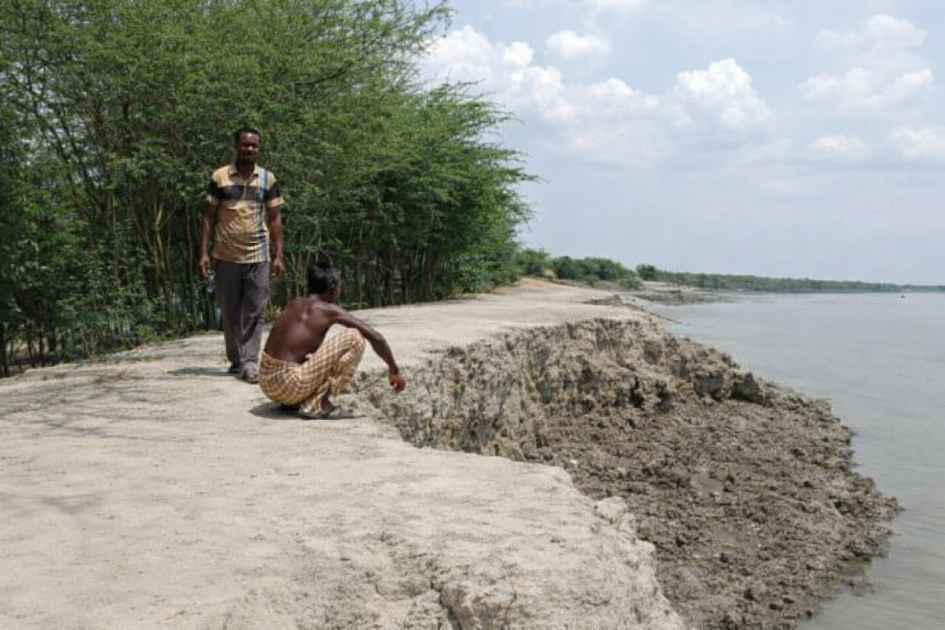



A new assessment shows 97 percent of families in coastal Koyra face severe climate risks, with cyclones, salinity, weak housing and poor roads deepening vulnerability, especially for women and girls.
Nearly the entire community in Koyra upazila is living under severe climate threat, with 97 percent of families directly affected by recurring cyclones, storm surges and rising salinity, according to a community risk assessment presented at a media dialogue in Khulna.
The findings showed that the multidimensional impacts of climate change have left the coastal area highly vulnerable, while weak infrastructure, gender inequality and economic uncertainty are worsening the crisis.
The assessment was carried out under the Preparedness Project run by the non-governmental organisation Jagrata Juba Shangha, with support from Japan-based Shapla Neer and funding from Japan’s Ministry of Foreign Affairs.
The research results were presented on Wednesday morning at the CSS Ava Center in the city during a media dialogue on disaster risks facing women and girls in Koyra, Khulna district. The main report was presented by Professor Dr Zakir Hossain and Lecturer Md Rimu Mia of the Urban and Rural Planning Discipline at Khulna University.
The report said salinity and cyclones are the two biggest threats facing people in Koyra, affecting 84.9 percent and 74.7 percent of residents respectively. The risks peak especially in May and November.
According to the study, 95 percent of people still live in mud-built homes, while 60.3 percent of houses do not have raised plinths, leaving them highly exposed during floods.
It also found that 82.8 percent of people reported road links being cut off after disasters, delaying emergency assistance. Within a week of a disaster, 25 percent of families fall into food insecurity. After losing livelihoods, 75 percent of families become dependent on loans, a large share of them taken at high interest rates.
Researchers said a specialist team from Khulna University conducted the study using a mixed-method approach. The survey covered 383 households in Uttar Bedkashi, Dakshin Bedkashi and Koyra Sadar unions. It also included 12 focus group discussions and 12 key informant interviews.
Using spatial data and GPS coordinates, the team identified high-risk areas and developed community and union vulnerability indices based on 60 indicators.
The media dialogue was moderated by Jagrata Juba Shangha coordinator for planning Nazmul Huda. Among those who spoke were Khulna Press Club convener Enamul Haque, member secretary Rafiul Islam Tutul and journalists HM Alauddin, Maksud Ali, Md Nuruzzaman, Abu Hena Mostafa Jamal Poplu, Ashraful Islam Noor, Sheikh Al Ehsan, Dipankar Roy and Aysha Akter Jyoti, among others.
Participants at the dialogue stressed the need to improve transport links and ensure health services, while also calling for more tree planting to help protect environmental balance.
Experts said that without integrated and gender-sensitive planning, climate risks in Koyra could turn into a more prolonged crisis for local people.




