

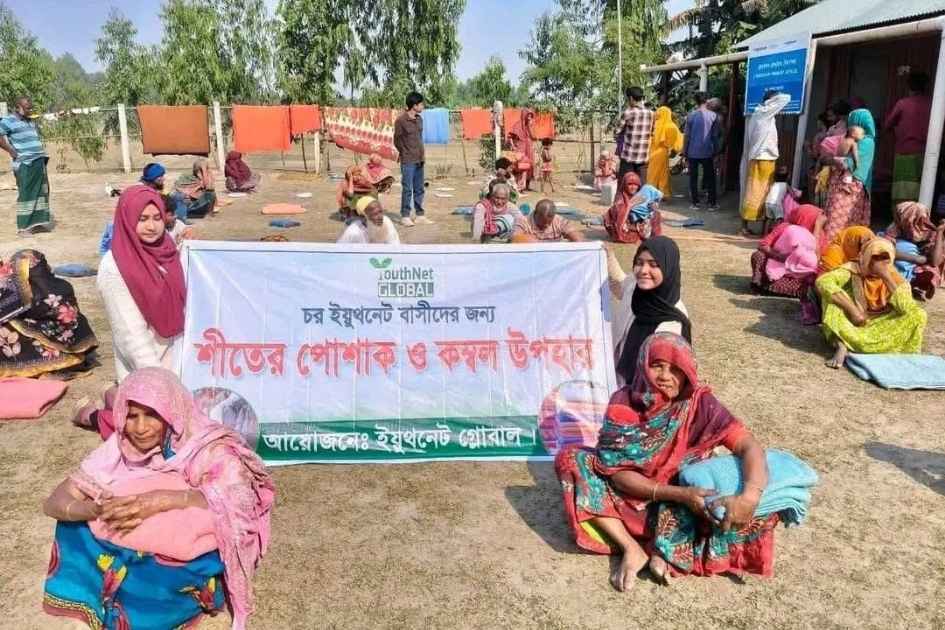



Winter hardship deepens in Kurigram’s remote river islands as YouthNet Global provides blankets and clothing, offering relief to vulnerable families amid cold waves and climate-driven risks and limited local support.
A cold spell in northern Bangladesh is taking a heavy toll on impoverished people, persons with disabilities and river island residents. Temperatures in the remote chars, or low-lying river islands, are far colder than in nearby towns and many families cannot afford winter clothing.
Bangladesh’s low-lying riverine districts are highly vulnerable to seasonal floods, cold waves, extreme river erosion and other climate-related hazards. These risks exacerbate poverty, inequality and displacement and increase gender-based vulnerabilities such as child marriage.
In response, YouthNet Global distributed 109 winter garments and 60 blankets to more than a hundred vulnerable families in Char YouthNet village under Jatrapur Union on Friday. The initiative was carried out with the support of the organization’s Kurigram district team. While this is a small part of the wider relief effort, it highlights the urgent challenges faced by communities in these isolated areas where government and NGO responses remain limited.
“Life in the chars is extremely challenging and winter only makes it harsher. This reality inspired our winter clothing distribution initiative. We remain committed to assisting disadvantaged communities in chars and disaster-prone areas across the country,” said Sohanur Rahman, Executive Coordinator of YouthNet Global.
Kurigram district is crisscrossed by 16 rivers and its chars are home to hundreds of thousands of people. Many struggle during winter due to limited access to basic services and resources. Climate change is intensifying these risks, making extreme weather events more frequent and unpredictable and increasing the vulnerability of these communities.
YouthNet Global emphasized that collective efforts and ongoing humanitarian programs are essential to help these communities survive harsh winters and adapt to the growing impacts of climate change.
Arifur Rahman Shuvo, General Secretary, added, “Humanitarian assistance is a core commitment of our organization. This initiative was made possible through the dedicated work of our field teams. We hope it brings some relief to families struggling in the winter cold.”




