

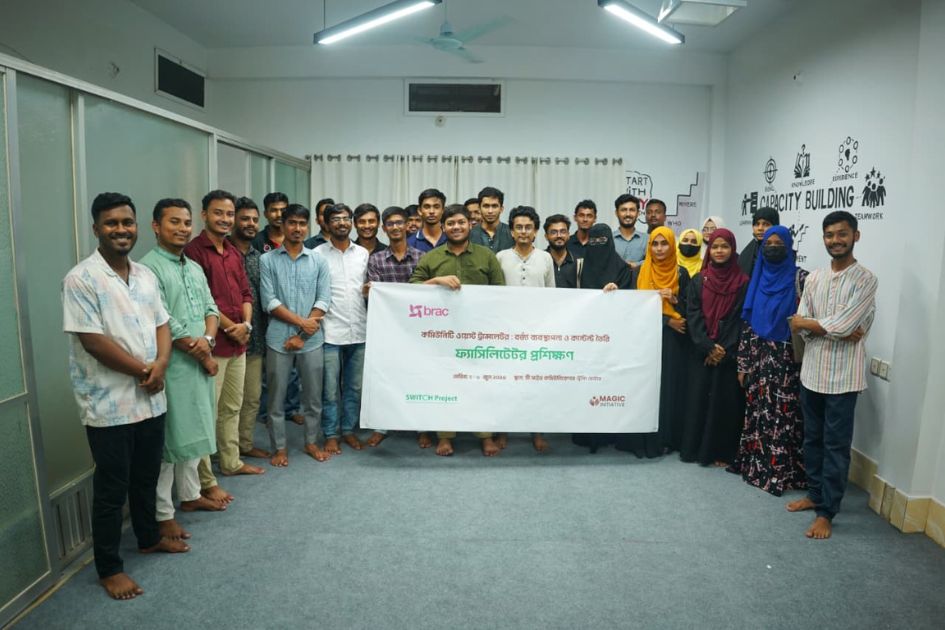



A youth-led initiative in Cox’s Bazar is promoting recycling, waste segregation and environmental awareness, engaging students and communities to tackle waste challenges and build a cleaner, more sustainable city.
A youth-led initiative is driving efforts to improve waste management in Cox’s Bazar, a coastal district in Bangladesh’s Chittagong Division, through recycling, waste segregation and environmental awareness programmes aimed at creating a cleaner and more sustainable city.
The initiative is being implemented under the SWITCH Project, led by Magic Initiative with support from BRAC and in partnership with Cox’s Bazar Municipality. It seeks to address growing waste management challenges in the world-renowned tourist destination, where rapid urbanisation, population growth and increasing tourist arrivals have intensified pressure on the environment and public health.
According to project organisers, unplanned waste disposal, limited waste management infrastructure and a lack of public awareness remain among the major challenges facing the district.
As part of the project, students from 20 educational institutions under Cox’s Bazar Municipality are receiving hands-on training in waste segregation, recycling and environmentally responsible behaviour. Organisers say the regular practice of these activities is helping students develop long-term habits that support sustainable waste management.
Selected educational institutions are also being transformed into environmentally friendly learning models. Waste management facilities are being established on school premises while greening activities and environmental murals are being introduced to promote awareness among students, teachers, parents and local communities.
One of the project’s key components is the development of a group of young content creators who use local languages and creative communication tools to raise awareness about responsible waste management. The content creators act as a bridge between project activities and the wider community by sharing information and encouraging positive behavioural change.
Organisers say the impact of the initiative has already expanded beyond educational institutions into markets, public spaces and neighbourhood communities. Local business owners and residents are gradually becoming more aware of proper waste disposal practices, recycling and the importance of maintaining cleanliness.
Areas that were once affected by poor waste management practices are increasingly becoming examples of community participation, responsibility and collective action, according to those involved in the project.
Promoting the concept of “waste to resource,” the initiative is helping foster a new environmentally friendly culture in Cox’s Bazar. Local youth remain at the centre of the effort, working to make their city more sustainable and liveable for future generations.
Organisers say the project’s emphasis on localisation through local leadership and locally driven solutions is emerging as a distinctive model for sustainable urban management in Cox’s Bazar.




