

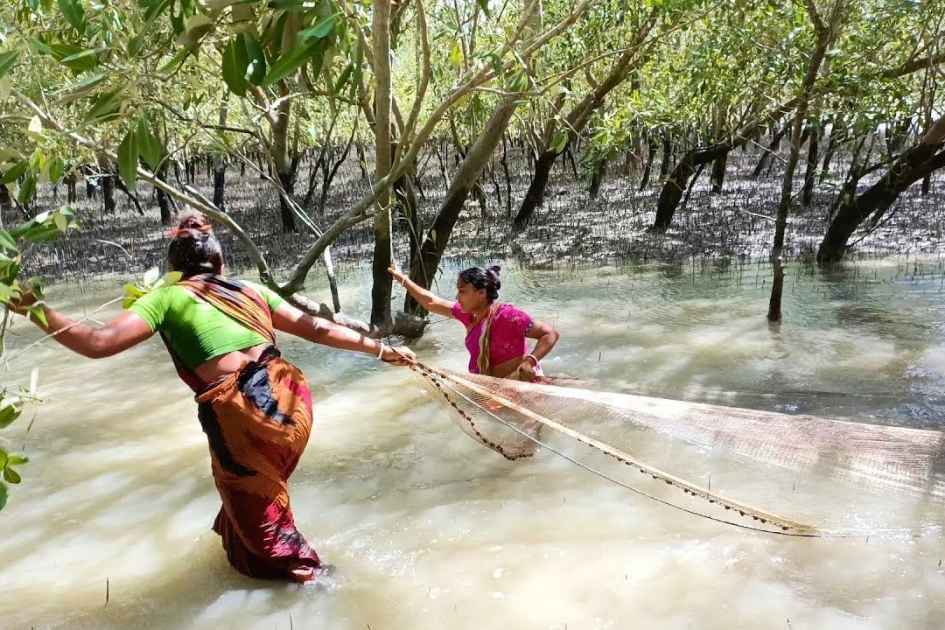



As climate change and poverty push women into dangerous rivers, rising crocodile populations in the Sundarbans expose deep gendered risks, linking conservation success with growing human cost.
Women in the Bangladesh and Indian mangrove Sundarbans are increasingly exposed to deadly saltwater crocodile attacks as poverty, climate change and shrinking ecosystems intensify human-wildlife conflict in the world’s largest mangrove forest.
While most scientific data come from the Indian Sundarbans, researchers and local organisations say similar patterns are emerging in Bangladesh, where women depend on fishing, crab-catching and forest resources to survive.
A 2017 study published by Cambridge University Press found that nearly 80 percent of victims of human crocodile conflict in the Indian Sundarbans were prawn seed collectors, locally known as meen. More than 61 percent of those attacked died, with women accounting for over 55 percent of fatalities.
The Sundarbans, a UNESCO World Heritage Site shared by Bangladesh and India, supports more than four million people. For many women on the Bangladesh side, particularly in Satkhira, Khulna and Barguna, entering tidal rivers is not a choice but a necessity.
Dangerous Work, Few Alternatives
Women collecting prawn seedlings or crabs spend long hours wading through turbid, tide-driven waters where visibility is low and escape is nearly impossible.
Saltwater crocodiles have strong sensory abilities and can detect movement and blood, said Jailabdeen A, director of the Gharial Ecology Project. Anyone entering their habitat is at risk, but women who spend hours in the water face prolonged exposure.
Despite the danger, women often continue working during menstruation due to economic pressure, limited livelihood options and lack of social support.
Conservation Success, Human Cost
On the Indian side, a 2025 survey by the Sundarbans Biosphere Reserve recorded an increase in saltwater crocodile populations, estimating their numbers at 220-242.
Bangladesh Forest Department officials say crocodile sightings have also increased in rivers and canals of the Bangladesh Sundarbans, though comprehensive population data remains limited.
Conservationists welcome the recovery of the species but warn that without parallel investments in community safety and alternative livelihoods, rising crocodile numbers will deepen human suffering, particularly for women.
Climate Change Drives Conflict
Climate change is reshaping the Sundarbans on both sides of the border. Rising sea levels, salinity intrusion and stronger cyclones such as Aila in 2009 and Amphan in 2020 have destroyed embankments, farmlands and freshwater sources in coastal Bangladesh.
Saltwater intrusion has pushed crocodiles closer to villages and ponds, said Ujjwal Sardar, a researcher studying Sundarbans folklore and ecology. At the same time, people have lost farmland and are forced into rivers for survival.
As mangroves degrade and fish stocks decline, women face greater exposure to dangerous waters for diminishing returns.
Shared Culture, Shared Risk
Crocodiles hold a powerful place in Sundarbans culture on both sides of the border. In the legend of forest goddess Bonbibi, revered by both Hindu and Muslim communities in Bangladesh and India, the crocodile Kalu Rai protects forest dwellers.
Before entering rivers, many women still offer prayers for protection, reflecting both reverence and fear.
Women Walking Away from Meen Collection
Fear, falling income and repeated attacks are forcing women in Bangladesh and India to abandon prawn seed collection.
Earlier, traders would come and buy meen but now the price is low and the risk is too high, said a resident of Gosaba. Similar accounts are reported from Bangladesh’s coastal islands, where women are shifting to crab catching or daily wage labour.
Hidden Health Crisis
Health workers warn that women working in waterlogged conditions face increased risks of infection due to unsafe menstrual hygiene practices.
Many women cannot afford sanitary pads and use cloth that is not properly washed or dried, said Sumanta Biswas, who works on menstrual health awareness in coastal communities. This can lead to pelvic inflammatory disease and increase the risk of cervical cancer.
Social taboos around menstruation remain strong, sometimes preventing women from boarding boats or entering shared spaces.
A Bangladesh Policy Challenge
Experts say Bangladesh must address crocodile attacks not only as a wildlife issue but as a gendered climate justice challenge.
They call for safer livelihood alternatives for women, community-based warning systems, menstrual health support and cross-border cooperation between Bangladesh and India to manage human crocodile conflict in the shared ecosystem.
As the Sundarbans continues to shrink under climate pressure, the cost of inaction will be borne by those with the least protection, women whose survival depends on entering waters where danger lurks just below the surface.




