

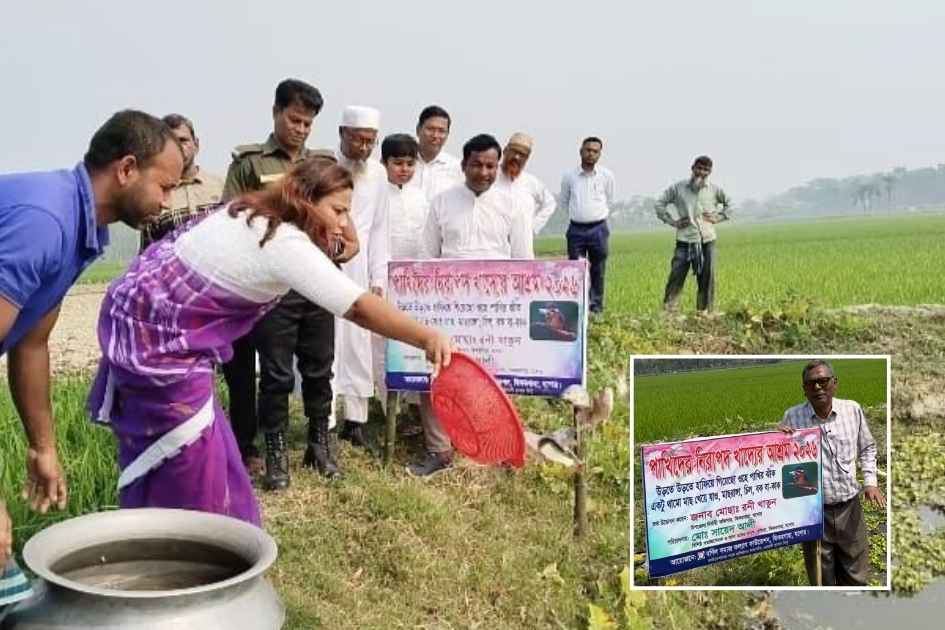



In Jessore’s Kuliya village, Sayed Ali’s four-decimal bird sanctuary offers a safe haven for birds while inspiring community-driven conservation, social support, and a powerful example of EcoMen leadership.
In the small village of Kuliya in Jessore, a four-decimal plot of land has been transformed into a safe feeding sanctuary for birds. Hundreds of local and migratory species can feed and rest here all year round, free from hunting or disturbance. This initiative demonstrates how humans and nature can thrive together while fostering community development.
This small but inspiring sanctuary highlights how community-driven conservation and caring leadership can protect biodiversity, strengthen social cohesion and set a model for sustainable development in Bangladesh and beyond.
The sanctuary was inaugurated on Sunday, 1 March, with a symbolic fish release by Jhikorgachha Upazila Executive Officer Roni Khatun. Praising the initiative, she said, “Sayed Ali’s dedication shows how one person’s effort can protect wildlife and inspire an entire community. This sanctuary is a model for caring for both nature and people.” The event was organized by Mehedi Hasan Dipu, president of the Bornil Social Welfare Foundation, alongside Sayed Ali, who is widely recognized in the community for his selfless work.
Sayed Ali explained, “Just as parents feel happy when their children eat, I feel happy when birds feed here. That is why I dedicated this four-decimal plot to create a feeding sanctuary for birds. Both local and migratory birds visit the pond, which holds water year-round and I ensure that no one hunts them.”
Ali’s contributions extend far beyond bird conservation. Using his own resources, he has repaired village roads, provided blankets to families in need, supported weddings for underprivileged girls, stocked ponds with fish, planted trees and awarded scholarships to high-achieving students.
For the residents of Kuliya, the sanctuary is more than a refuge for birds. It is a living example of how individual dedication can benefit both people and the planet, showing that even small initiatives can inspire broader social and environmental change.
Sohanur Rahman, Executive Coordinator of YouthNet Global, reflected on the wider significance of the initiative: “Initiatives like this reflect the power of EcoMen, men who lead with care, empathy and responsibility. When masculinity embraces nurturing and environmental stewardship, communities benefit and society moves forward.”




