

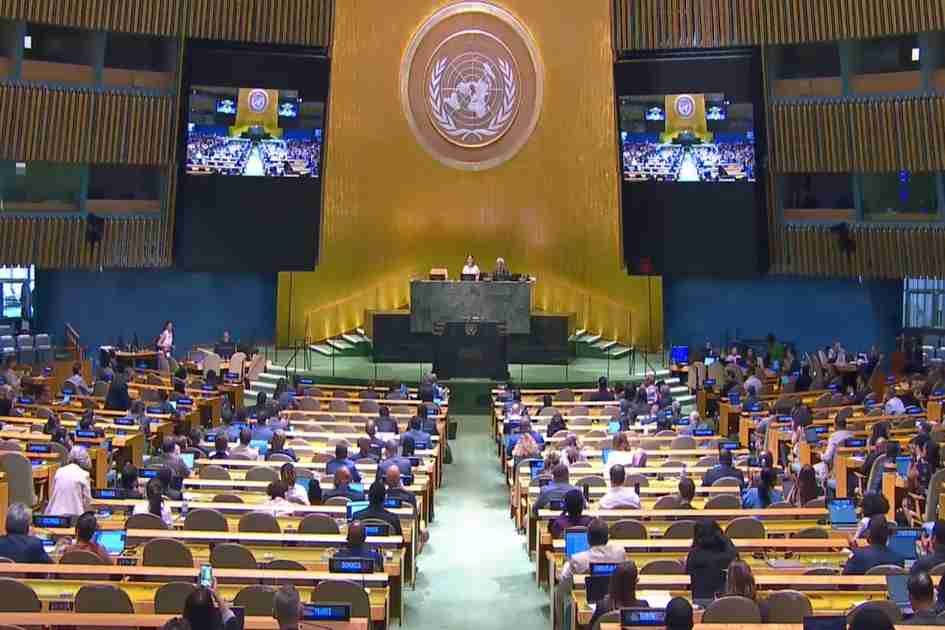

The UN General Assembly adopted a landmark climate justice resolution following the ICJ’s advisory opinion, reinforcing States’ legal obligations on climate action, accountability and protection of vulnerable nations from worsening climate impacts.
The United Nations General Assembly has adopted a landmark resolution reaffirming that addressing climate change constitutes a legal obligation under international law, marking a significant step forward for climate justice and accountability for climate-vulnerable nations.
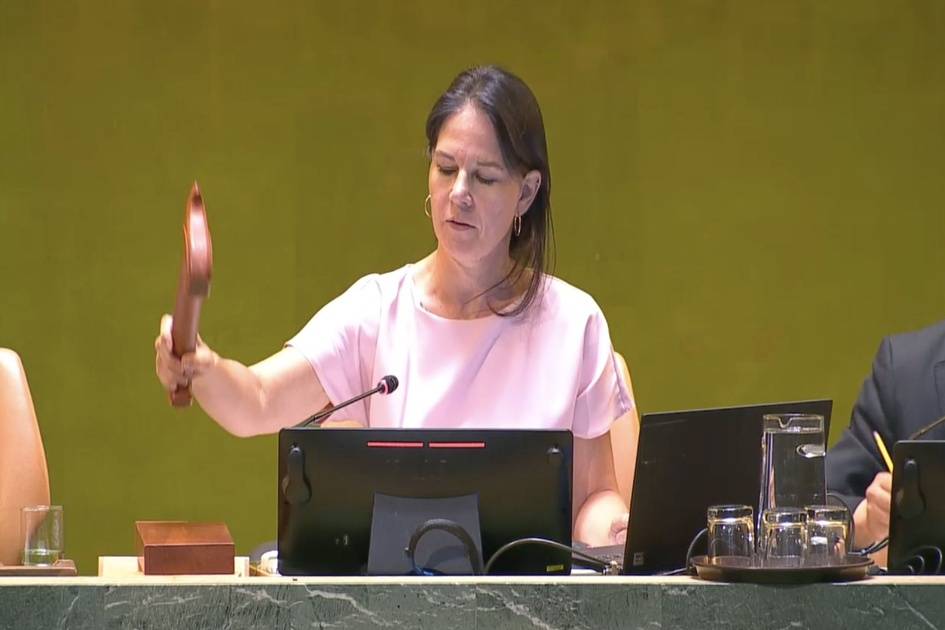
On Wednesday, the resolution titled “Advisory opinion of the International Court of Justice on the obligations of States in respect of climate change” was adopted with 141 votes in favour, eight against and 28 abstentions.
Countries voting against included Belarus, Iran, Israel, Liberia, Russia, Saudi Arabia, the United States and Yemen, underscoring continuing geopolitical divisions over climate responsibility and accountability.
The vote followed a historic advisory opinion issued by the International Court of Justice (ICJ) in July 2025. The United Nations’ principal judicial organ affirmed that States have obligations under international law to protect the climate system from greenhouse gas emissions. The ruling was widely hailed as a breakthrough, with UN Secretary-General António Guterres describing it as “a victory for our planet.”

Legal duty under international law
The ICJ clarified that States failing to meet their climate obligations may incur international legal responsibility. Remedies could include cessation of wrongful conduct, guarantees of non-repetition and full reparation, depending on the circumstances of each case.
While ICJ advisory opinions are not legally binding, they carry significant legal and moral authority and play an important role in clarifying and developing international law.
Wednesday’s General Assembly resolution builds on that advisory opinion, delivering a strong political message that climate action is not merely a matter of policy discretion but an emerging legal duty under international law.
“The world’s highest court has spoken,” Guterres said. “Today, the General Assembly has answered.”

The resolution calls on all UN Member States to take all necessary measures to prevent significant harm to the climate system, including emissions originating within their jurisdictions. It also urges stronger implementation of the Paris Agreement, enhanced international cooperation and the protection of human rights, including the rights to life, health and an adequate standard of living.
Guterres stressed that those least responsible for climate change continue to suffer its most severe impacts, reiterating the need for a “rapid, just and equitable transition” away from fossil fuels towards renewable energy.
He noted that renewable energy is now the cheapest and most secure form of energy globally and reaffirmed that limiting global warming to 1.5 degrees Celsius remains within reach.
Climate justice and frontline states
Climate-vulnerable countries, including low-lying and disaster-prone states such as Bangladesh, have long called for stronger international accountability from major historical emitters, particularly on loss and damage and climate justice.
Bangladesh not only co-sponsored UN General Assembly Resolution 77/276 but also actively participated in the ICJ proceedings, arguing that climate change carries clear legal consequences, is scientifically established and disproportionately harms vulnerable countries despite their minimal contribution to global emissions.
Climate Action Network International and YouthNet Global welcomed the ICJ advisory opinion as a landmark clarification of States’ obligations to prevent climate harm and protect human rights in the face of the climate crisis.
Voices from civil society
Responding to the General Assembly vote, Sohanur Rahman said the resolution marks a historic step toward climate accountability and justice for frontline communities.
“For decades, climate-vulnerable countries and young people have demanded recognition that climate inaction causes real human suffering. The world’s highest court and now the United Nations General Assembly have made clear that protecting the climate is not optional. Major emitters must now move from promises to legally and morally responsible action,” he said.
Tasneem Essop described the vote as an “important and historic political signal” demonstrating that governments are prepared to respond to the legal clarity provided by the ICJ.
She warned that major and historical emitters can no longer ignore the Court’s findings on climate harm, stressing the need to implement obligations in line with equity and the principle of Common But Differentiated Responsibilities and Respective Capabilities, while safeguarding human rights and advancing climate justice.
“This is also about strengthening international cooperation, addressing breaches of obligations and advancing meaningful remedies for communities already bearing the heaviest costs of a crisis they did the least to cause,” she added.
“The real test starts now and CAN will be watching whether this political commitment translates into the action the law demands.”
From legal initiative to global movement
The initiative traces its roots to May 2022, when a global alliance of more than 1,500 civil society organisations across 130 countries launched a campaign led by Vanuatu to bring climate-related human rights questions before the world’s highest court.
Observers say the latest General Assembly vote is expected to increase pressure on major emitting nations ahead of future climate negotiations and may strengthen ongoing climate litigation worldwide, particularly cases related to loss and damage and accountability for climate harm.
The resolution emerged from a sustained and coordinated global effort that gradually transformed climate vulnerability into a question of international legal responsibility.
The process began in 2021, when a group of young law students in Vanuatu, facing the existential threat posed by rising sea levels, launched a bold initiative to seek an advisory opinion from the ICJ on States’ obligations in relation to climate change.
Under the banner of the “#ICJAO (International Court of Justice Advisory Opinion on Climate Change)” campaign, they built a growing transnational coalition of small island developing states, youth movements, legal scholars and climate-vulnerable countries, framing the climate crisis not only as an environmental emergency but also as a question of legal duty, human rights and survival.
The initiative gained momentum during COP26 in Glasgow in 2021 and expanded further at COP27 in Sharm el-Sheikh in 2022, where political and civil society support strengthened and the call for legal clarification under international law became increasingly unified.
That sustained diplomatic and grassroots advocacy culminated in March 2023, when the United Nations General Assembly, through Resolution 77/276 adopted without a vote, formally requested an advisory opinion from the ICJ on the legal obligations of States in respect of climate change.
Led by Vanuatu with strong support from a broad coalition of countries including Bangladesh, an active voice for climate-vulnerable nations, the resolution marked a historic moment in multilateral diplomacy.
It laid the legal foundation for the ICJ advisory proceedings and subsequent developments, bringing climate justice firmly into the framework of international law and state accountability.




