


India and Bangladesh begin key Joint Rivers Commission talks in Kolkata ahead of the 2026 expiry of the Ganges Water Sharing Treaty, amid growing concerns over dry-season flows and regional water security.
The 90th meeting of the India-Bangladesh Joint Rivers Commission (JRC) is set to begin in Kolkata on Thursday, marking a significant moment in bilateral water diplomacy as the 30-year Ganges Water Sharing Treaty approaches its expiry at the end of 2026.
The three-day meeting, which will continue until Saturday, brings together senior officials and technical experts from both countries to review water-sharing mechanisms, monitor river flow measurements, and discuss implementation of the long-standing agreement governing dry-season water distribution from the Ganges River.
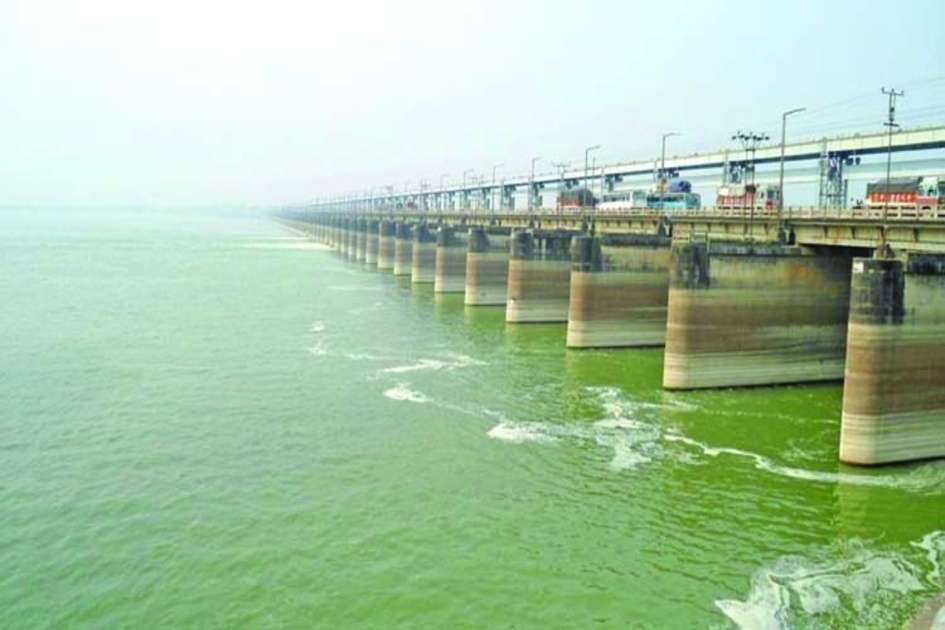
A six-member Bangladeshi delegation arrived in Kolkata on Wednesday to participate in the meeting and conduct field inspections at the Farakka Barrage in Murshidabad district, West Bengal.
The Bangladeshi delegation is being led by Mohammad Anwar Kadir, member of the Joint Rivers Commission, Bangladesh. Other members include senior officials from the Ministry of Water Resources, Bangladesh Water Development Board, and the Ministry of Foreign Affairs. Diplomats from the Bangladesh High Commission in New Delhi and the Deputy High Commission in Kolkata are also participating in the discussions.
The Indian side is being represented by officials from the Union Ministry of Jal Shakti and the Irrigation Department of the Government of West Bengal.
As part of the programme, the Bangladeshi delegation will visit the Farakka Barrage on Thursday to inspect the joint flow measurement station and assess whether water discharge measurements are being conducted in accordance with agreed technical protocols. The delegation will then return to Kolkata for formal meetings scheduled on Friday and Saturday.
The current Ganges Water Sharing Treaty was signed between India and Bangladesh on December 12, 1996, for a period of 30 years. Under the agreement, water from the Ganges River at the Farakka point is distributed between January 1 and May 31 every year during the dry season.
According to the treaty, when water flow exceeds 75,000 cusecs, India receives 40,000 cusecs and the remainder goes to Bangladesh. If the flow remains between 70,000 and 75,000 cusecs, Bangladesh is allocated 40,000 cusecs while India receives the rest. When the flow drops below 70,000 cusecs, both countries share the water equally.
Although Bangladeshi officials described the current meeting as a “routine” technical engagement held annually under the treaty framework, the timing has drawn increased attention from diplomatic and geopolitical observers due to the approaching expiry of the agreement.
Speaking to Bangladeshi media before departing for Kolkata, JRC member Mohammad Anwar Kadir said the meetings primarily focus on verifying river flow measurements, engineering procedures, and compliance with technical protocols at Farakka.
“We will inspect the Farakka site and review whether all measurements and procedures are being carried out properly under the treaty provisions,” he said, describing the visit as part of the regular monitoring mechanism between the two countries.
However, he declined to comment on whether discussions regarding renewal or renegotiation of the Ganges Water Sharing Treaty would take place during the current visit.
Analysts say the outcome of future negotiations over the treaty could have major implications for regional water security, bilateral relations, and downstream river-dependent communities in Bangladesh, particularly during increasingly severe dry seasons linked to climate change and upstream water management pressures.
Under the existing Ganges Treaty, which has been in effect since 1996, three meetings are held every year.
On December 12, 1996, the Awami League government signed a 30-year treaty with India for sharing the Ganges water, which is set to expire this December. According to the agreement, water is shared between the two countries from Farakka from January 1 to May 31.




