

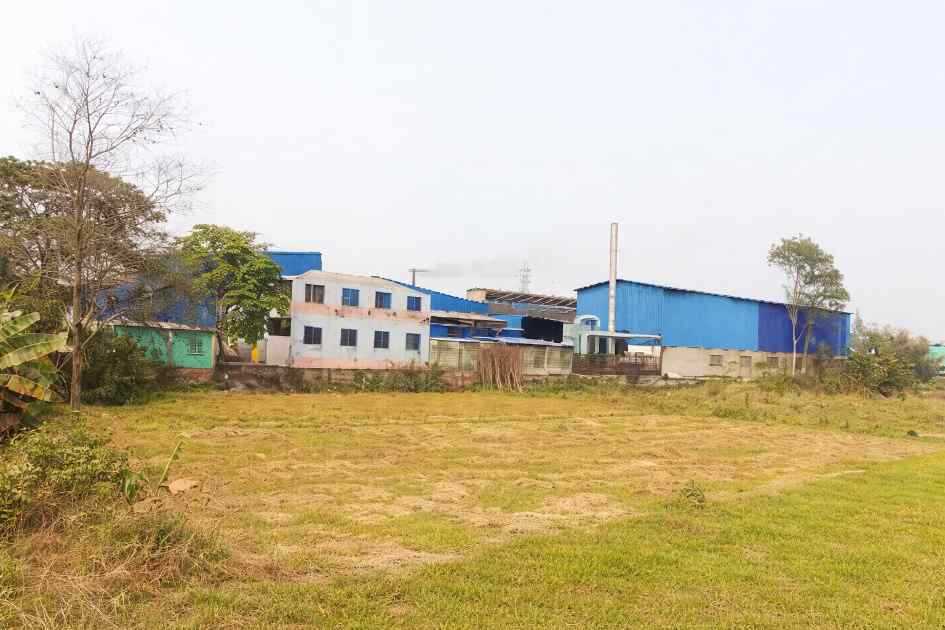

Residents near a battery recycling plant in Dhamrai say toxic fumes are harming health and the environment, raising concerns over lead exposure, student safety and weak enforcement.
Residents in the outskirts of Dhaka have accused a battery recycling plant of emitting toxic fumes that may be endangering public health and the environment.
The facility, identified by locals as Jiang Su BD Storage Limited, is located in Belishwar village under Sutipara Union in Dhamrai upazila. Residents say the plant has been operating for approximately 16 years with limited visibility, lacking a prominent signboard and situated near the Bathuli-Mohishashi link road off the Dhaka-Aricha highway.
According to community members, the factory recycles lead-acid batteries by melting lead to produce battery plates. They say this process releases hazardous smoke and gases into the air, which spread to surrounding villages. Residents report a strong persistent odor and visible emissions from the factory’s chimneys.
“We are experiencing breathing difficulties, eye irritation and other health problems,” several villagers said. They fear prolonged exposure to the emissions is contributing to rising respiratory illnesses, although no official health data has yet confirmed these claims.
Lead exposure is widely known to pose serious health risks, particularly for children, affecting brain development, the nervous system and respiratory health. Environmental experts have long warned that poorly regulated or informal battery recycling operations can be a major source of lead contamination in developing countries.
Residents have also raised environmental concerns, alleging that fish in a nearby farm have died under unexplained circumstances, possibly linked to contamination from the factory. However, no official data or scientific investigation has yet verified this claim.
The factory is located close to Belishwar Mohini Mohan High School, heightening concerns for children’s safety. Some students report feeling unwell due to the strong chemical odor while commuting to and from school.
Despite organizing multiple human chains and protests demanding the closure of the plant, residents say authorities have yet to take effective action. They claim the issue has been reported several times to local authorities, but no visible measures have been implemented.
The factory authorities have denied the allegations, stating that they operate with proper approvals from relevant authorities and do not cause environmental harm.
Commenting on the issue, Sohanur Rahman said:“Industrial operations that release untreated lead emissions pose a serious threat to public health and the environment. Strict enforcement of environmental regulations and immediate monitoring are essential to protect communities, especially children living in nearby areas.”
Officials from the Department of Environment and local administration were not immediately available for comment.
The case highlights ongoing concerns over weak enforcement of environmental regulations in Bangladesh, particularly in industrial zones that lack consistent monitoring. Residents continue to question when authorities will take concrete steps to protect public health and ensure accountability.




