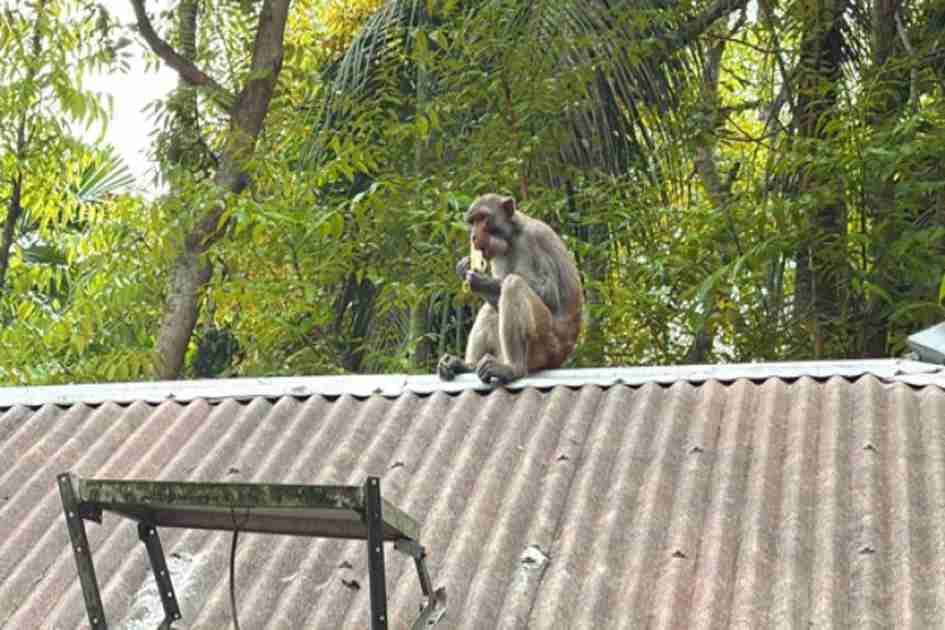



Thousands of monkeys in Bangladesh’s Shariatpur district are struggling to find food as fruit trees decline, forcing them into homes and highlighting growing human-wildlife conflict and habitat loss.
Thousands of monkeys in rural areas of Shariatpur district in central Bangladesh are facing a severe food shortage forcing them to enter homes in search of food and raising concerns among local residents.
The animals are mostly found in several villages of Naria and Bhedarganj upazilas particularly in the areas of Palpara, Madhupur and Pachalia under Dingamanik Kartikpur. According to local residents between 5,000 and 6,000 monkeys have been living in these villages for nearly five decades when the area had abundant trees and natural vegetation.
Shariatpur is located about 80 kilometres south of the capital Dhaka.
Residents say that although trees still exist in the area the number of fruit-bearing trees has declined over the years leaving the monkeys with limited natural food sources. As a result groups of monkeys frequently enter nearby houses grabbing food from courtyards, kitchens and sometimes even from children’s hands.
The situation has created fear among children and elderly residents though locals say they have learned to live alongside the animals.
“We have accepted the monkeys because they have lived here with us for decades,” said Anju Bala, a local resident. “They sometimes enter our homes, take food and damage household items. We cannot let children carry food outside because the monkeys may snatch it. But we never harm them because they are also hungry.”
Many residents occasionally feed the animals bananas, puffed rice, biscuits and other food but they say this is not enough to meet the needs of such a large population.
Local resident Mintu Pal said the community has grown up with the monkeys and shares a long relationship with them.
“For nearly 50 years the monkeys have lived here with us. But there has never been any organised initiative to ensure their food supply,” he said.
Residents believe the problem could be reduced if authorities plant more fruit-bearing trees and arrange regular food sources for the animals.
Naria Upazila Nirbahi Officer Md Abdul Kaiyum Khan acknowledged the issue saying the expansion of human settlements into the monkeys’ natural habitat has contributed to the food shortage.
“We are aware of the situation and are considering a project to ensure that the monkeys do not suffer from hunger,” he said. “If necessary we will create a safe habitat by planting trees on government land and relocate them there.”
Officials from the district forest department said they have heard about the presence of monkeys in the area but do not yet have detailed information. They plan to investigate the issue and report it to higher authorities for further action.
Environmental experts say planting fruit-bearing trees and restoring natural habitats could help reduce the growing conflict between humans and wildlife in the area.