

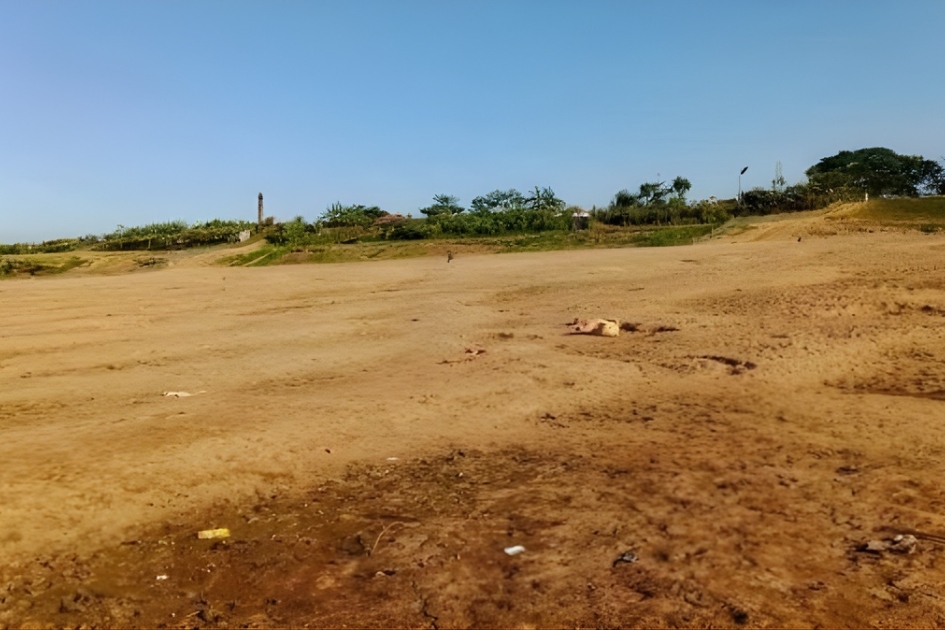



Dry-season depletion of the Surma and Kushiyara rivers in Sylhet is triggering water scarcity, harming agriculture and fisheries, and threatening livelihoods across Zakiganj and surrounding communities during increasingly severe dry seasons.
The Surma and Kushiyara rivers, once the lifelines of Zakiganj upazila in northeastern Bangladesh’s Sylhet district, are steadily drying up, raising alarm among local communities, experts and authorities.
Without immediate and effective action, experts warn that the continued drying of the Surma and Kushiyara rivers could lead not only to environmental collapse but also to deep social and economic consequences for communities across northeastern Bangladesh.
Once flowing year-round, the two rivers now carry little to no water during the dry season. In several stretches, sandbars have emerged in the riverbeds, navigation has come to a standstill and vast areas resemble barren land rather than active waterways.
Residents say the rivers have become virtually waterless in the dry months, threatening livelihoods, agriculture and the local ecosystem. For the people of Zakiganj, who have depended on the Surma-Kushiyara system for generations, the situation has become a growing source of anxiety.
Lal Mia, a resident living along the Kushiyara riverbank, recalled a very different past.
“I was ten years old at the time of Bangladesh’s independence. I remember fishing in the Kushiyara with my father. Even during the dry season, the river was full of water. Launches, steamers and engine boats moved freely. Today, all of that is just memory. The once-mighty Surma and Kushiyara now look like dead wastelands,” he said.
Experts say the drying of the rivers is the result of multiple interconnected factors. These include disruptions to natural upstream water flow, excessive sedimentation that reduces river depth and navigability, unplanned river encroachment, and the growing impacts of climate change.
Research indicates that the failure to maintain minimum environmental flow during the dry season has severely damaged the rivers’ natural ecosystems. Reduced flow has altered habitats, weakened biodiversity and accelerated ecological degradation across the basin.
The shrinking rivers have already triggered an acute water crisis across Zakiganj. Thousands of people who rely on the Surma-Kushiyara for drinking water, irrigation and household use are now facing serious shortages. As surface water availability declines, dependence on groundwater has increased sharply, creating long-term risks of falling water tables.
Agricultural production has also been affected, with reduced irrigation disrupting crop cycles and threatening local food security. Farmers report declining yields, while uncertainty over water availability persists.
The fisheries sector has been hit particularly hard. Insufficient water during breeding seasons has led to a noticeable decline in indigenous fish species, directly impacting fishers and communities whose livelihoods depend on the rivers. Many traditional fishing practices are no longer viable due to the lack of water.
Lower river flow has also intensified pollution. With reduced dilution capacity, industrial discharge and urban waste become more concentrated in the remaining water, posing serious risks to the environment and public health.
However, river experts caution that dredging alone will not provide a sustainable solution. They stress the need for comprehensive and coordinated river basin management, including ensuring natural upstream-to-downstream water flow, preventing illegal river encroachment and pollution and maintaining environmental flow throughout the year.
Officials at the Sylhet office of the Bangladesh Water Development Board stated that they are aware of the navigability crisis and dry-season water scarcity affecting the Surma-Kushiyara rivers. They stated that initiatives have been implemented under integrated river management plans, including dredging and sediment management in selected stretches. Regular monitoring of water levels is also underway.
Deputy Assistant Engineer Md Jasim Uddin said, “Dredging work is in process at various points of the Surma and Kushiyara, except in some border areas. InshaAllah, the work will begin within the next one or two years.”




