

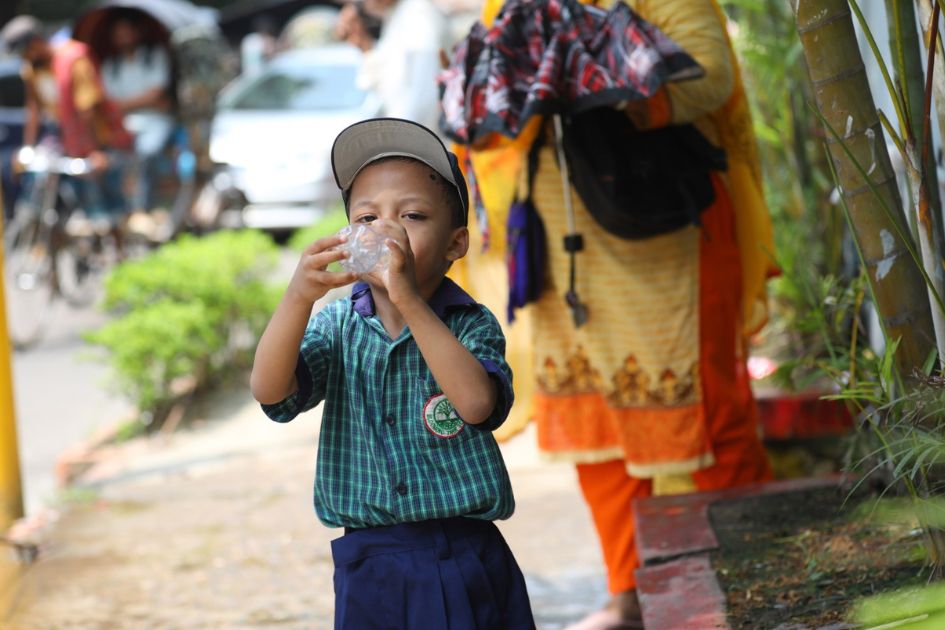



From street flower sellers to factory workers, children in Chattogram face rising heat risks as climate change, poverty and hazardous labour deepen pressure on young lives.
Rana sells flowers under the scorching sun near the sirish trees of CRB, a public area in the port city in Chattogram. Wearing red clothes, sweat dripping from his body, he approaches young couples in the city and asks them to buy flowers.
He walks through Jamal Khan, Chawkbazar and CRB selling flowers. His family depends on the money he earns and he has no option to stop working, even in extreme heat. Exhausted by the heat, he sometimes sits for a while on the stairs.
Rana lives in Bastuhara Palli, a settlement for people who lost their homes and moved to the city. Their house is made of tin and in the summer heat it becomes as hot as fire, he said. During the hot season, he sometimes sleeps outside.
Human-induced climate change is exposing about 22 million children in Bangladesh to additional heat stress, with the impacts falling sharply on children who work outdoors and live in poor urban settlements, according to a new study.
The research, led by Vrije Universiteit Brussel and published in Science Advances, found that about 79 percent of children in this age group in Bangladesh now face at least one month of additional heat stress each year because of human-induced climate change.
Climate change is affecting not only the growth of flowers in gardens, but also the lives of children like Rana.
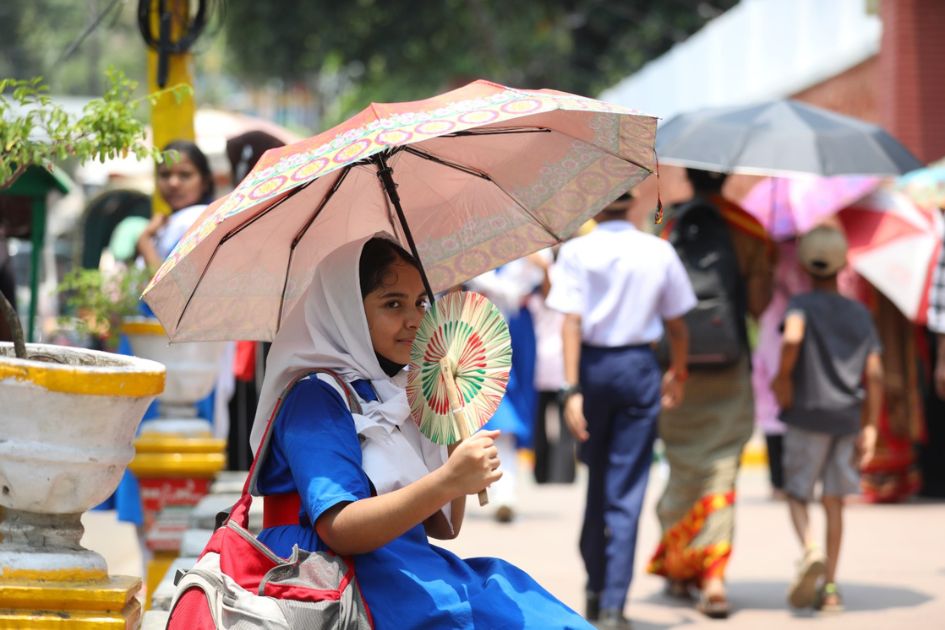
Its impacts are being felt across Bangladesh in many ways, with children, women and older people suffering the most. From agriculture to rivers, climate change has altered livelihoods and occupations.
The country’s traditional six seasons are no longer as distinct as before. Heavy rains during the monsoon bring floods, while summer brings intense heat.
The study said climate change has nearly tripled the number of children in Bangladesh who endure severe heatwaves for at least five months, or 150 days, each year. In a world without climate change, the number would have been 9 million. It now stands at 26 million, or 91 percent of children in this age group.
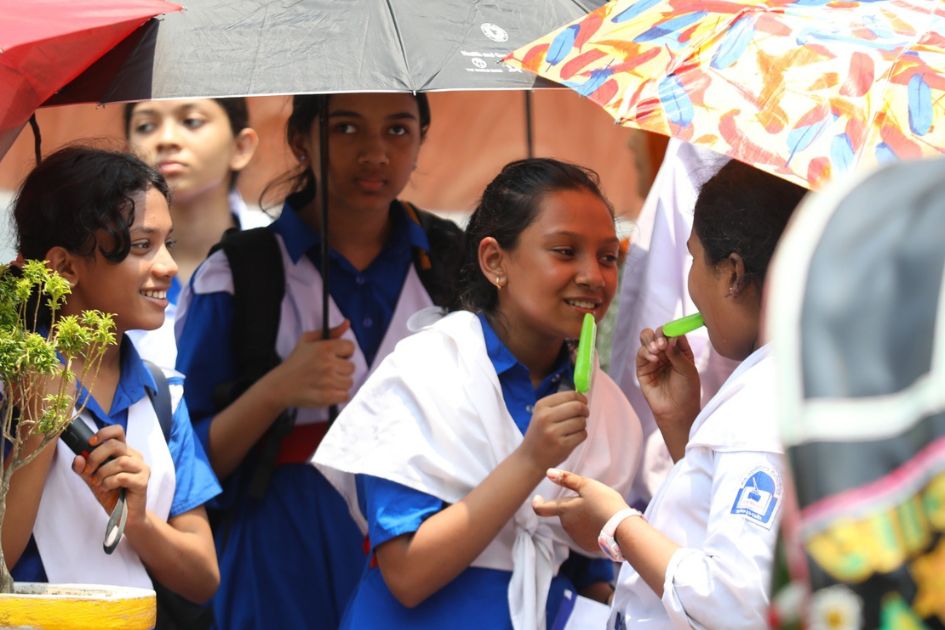
Globally, about 560 million children aged 0-9, or 43 percent of that age group, are now exposed to at least one month of additional heat stress each year because of human-induced climate change, the study found. The level of risk is higher than for any other age group.
Children are particularly vulnerable to extreme heat because their bodies heat up faster than adults, they sweat less and they depend on adults for protection.
Excessive heat can cause dehydration and heatstroke, worsen existing health problems and disrupt learning and cognitive development.
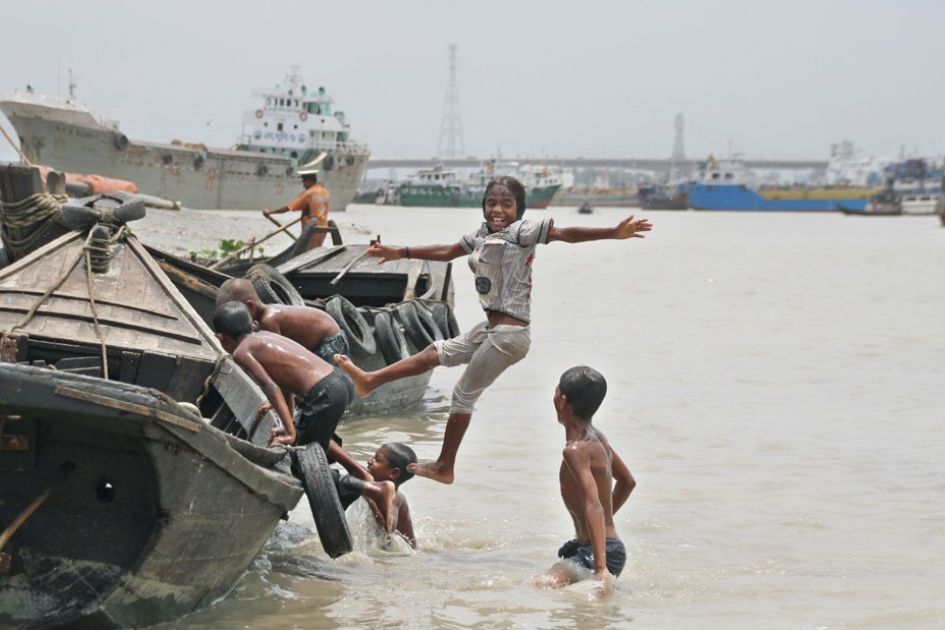
In the Kazir Dewri area of Chattogram, five to six children were seen bathing in a pond known as Askar Dighir Par during intense heat.
One of them, Rakib, said he works under the sun throughout the day and bathes in the pond during breaks. It feels cool and good, he said. The children have no parents and work in various jobs, leaving them without supervision. They roam across the city and engage in different harmful activities.
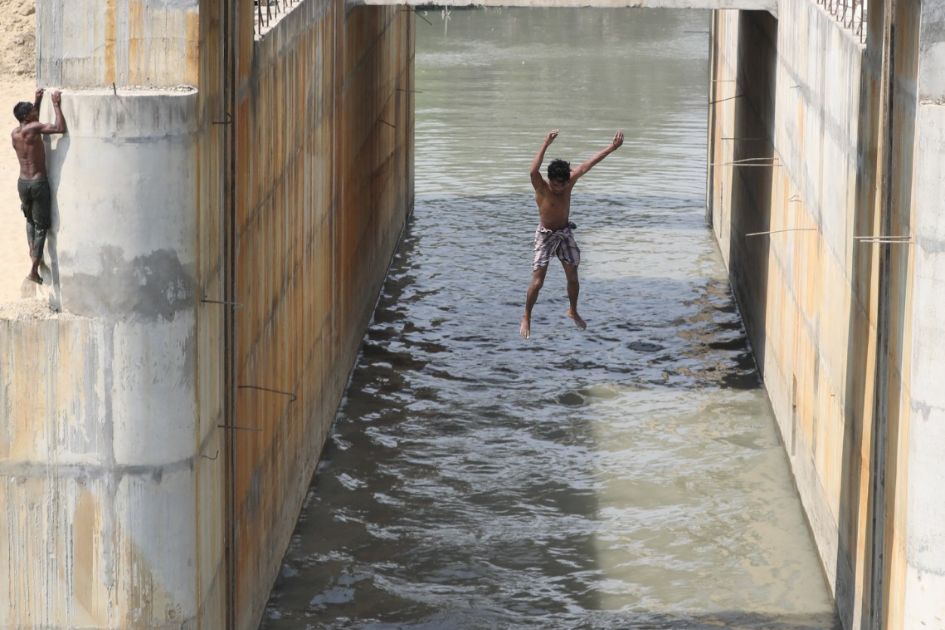
Children can be seen working in many places across the city. Under Bangladesh’s Children Act, 2013, every person up to the age of 18 is considered a child. Employment of children under 14 is generally illegal, while employing anyone under 18 in hazardous work is unlawful.
Children are also seen working in workshops across the city. Although the work is highly risky, they take it up to support their families. Extreme heat adds further pressure to their working conditions.
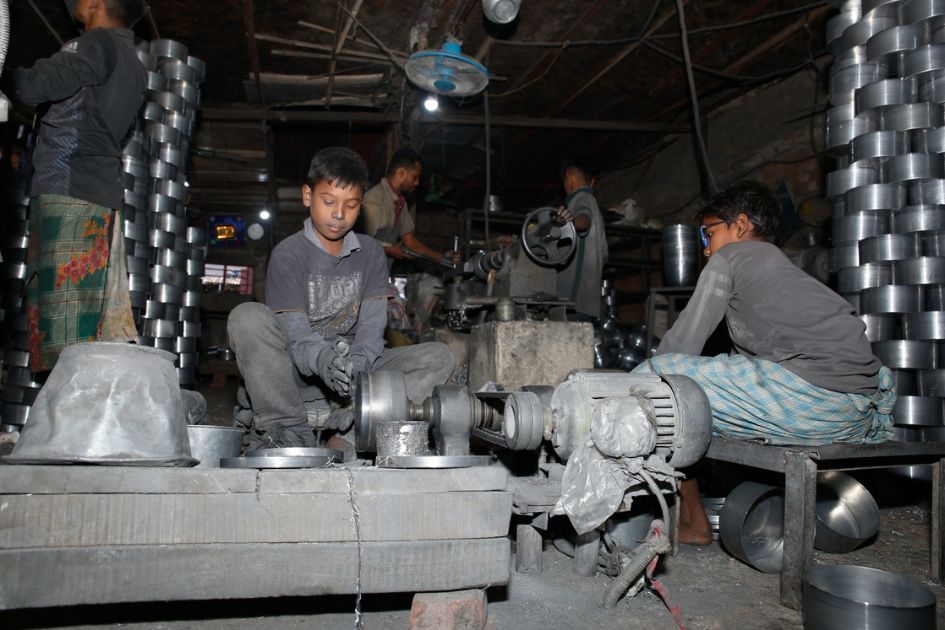
In Muradpur, a child named Junaid was seen working at a silver factory. Many children work at the company. Junaid’s father died when he was young. After losing their home to river erosion, his family eventually moved to the city. He now works at the company to support them.
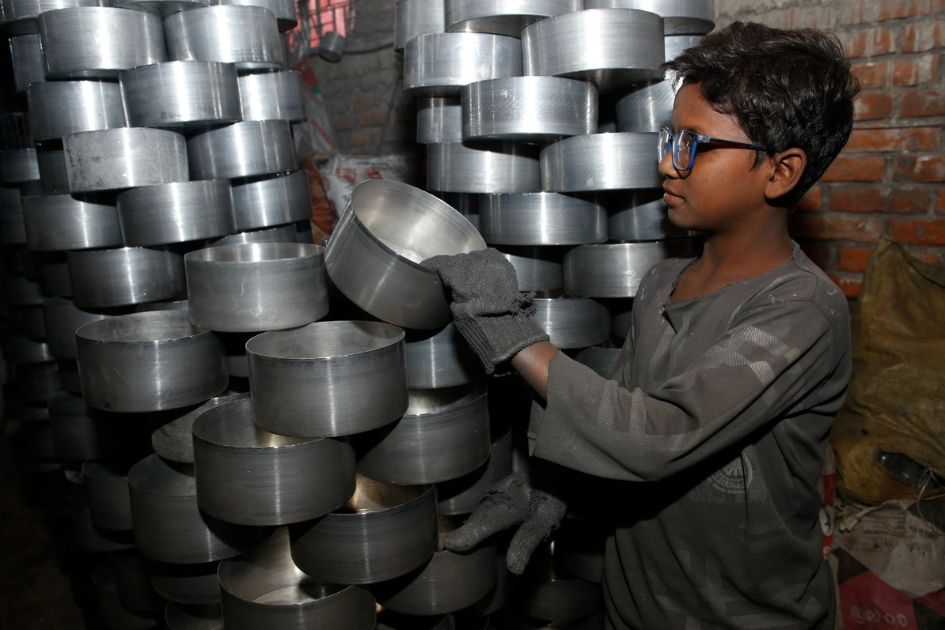
Despite legal measures and initiatives to eliminate child labour in Bangladesh, 1.78 million children are still engaged in work. Of them, 1.07 million children work in extremely hazardous conditions that pose a serious threat to their lives. The rate of child labour is highest in Chattogram among the country’s divisions.
The figures were presented at a discussion organised at the Krishibid Institution auditorium in Farmgate, Dhaka, by the Ministry of Labour and Employment, the Child Labour Elimination Platform and the International Labour Organization to mark World Day Against Child Labour 2026.
“Climate change is already causing hundreds of millions of children across the world to suffer from dangerous heatwaves, posing a serious risk to their health. Children in developing countries will face disproportionate risks from climate extremes now and in the future,” said Rosa Pietroiusti, lead author of the study and a PhD researcher at VUB.




