

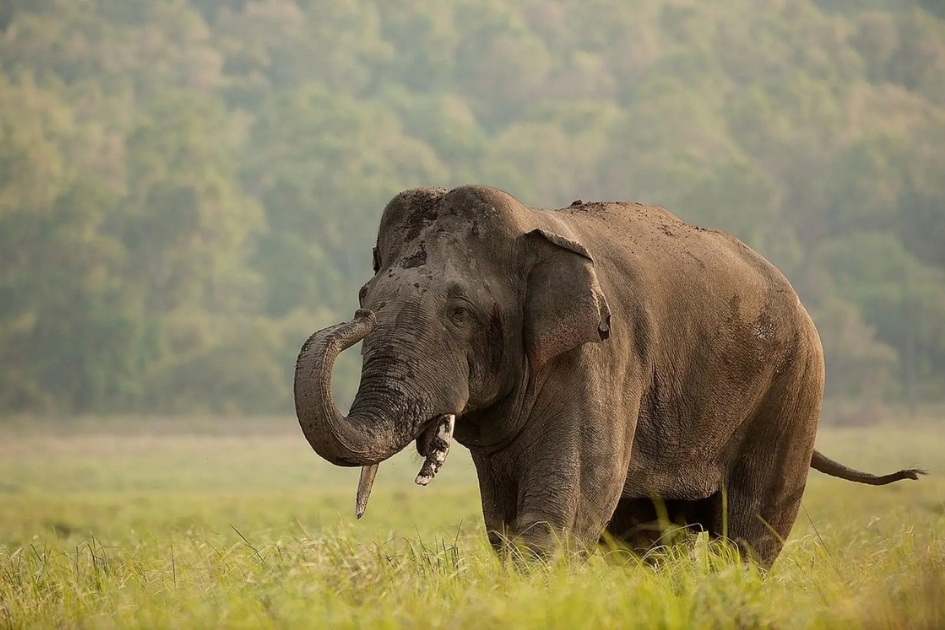



Habitat destruction, illegal electric fences and disrupted corridors are fueling deadly human-elephant conflicts in Bangladesh, killing dozens of elephants and people while conservation efforts struggle to deliver lasting solutions.
The escalating human-elephant conflict in Bangladesh has become a grave concern for wildlife conservation. This conflict is particularly prevalent in regions such as Sherpur, Netrokona, Chattogram, Cox’s Bazar and the Chittagong Hill Tracts. Due to human encroachment, infrastructure development and climate change, elephant habitats are being destroyed, forcing elephants into conflict with humans. This issue not only threatens the survival of these majestic creatures but also endangers human safety and the local environment.
Recent reports highlight a worrying trend of fatalities among both elephants and humans. The International Union for Conservation of Nature has listed the Asian elephant as critically endangered. According to IUCN data from 2016, Bangladesh is home to an estimated 268 endangered Asian elephants, primarily inhabiting Chattogram, Cox’s Bazar, Bandarban and the northeastern districts of Sherpur and Mymensingh.
Although the authorities have implemented several measures to reduce human-elephant conflict, visible improvements remain limited. According to Forest Department data, at least 50 elephants were killed in conflict-related incidents between 2017 and 2021. Notably, 2021 alone accounted for 68 percent of those deaths, 34 out of 50, marking it as the deadliest year within that period. Reported fatalities declined in subsequent years, with three deaths in 2022, two in 2023 and one in 2024. Nevertheless, continued reports in national newspapers indicate that elephant mortality remains a serious concern.
On October 5, 2023, authorities recovered the carcass of a wild adult male elephant from a paddy field in Jhinaigati upazila. Local residents and forest officials suspected the elephant died from electrocution due to an electric fence installed to protect crops. Last year, seven elephant deaths were recorded in Ukhiya and Teknaf, primarily caused by electrocution, gunshot wounds, food-related diseases and malnutrition. Additionally, on October 15 of the same year, a baby elephant was severely injured after being hit by a train on the Chattogram-Cox’s Bazar railway line and later died.
The latest elephant killing took place on September 17, 2025, in the Dochhari beat of the Ukhiya forest range in Cox’s Bazar. According to Mozammel Hossain, a local resident of Ukhiya, the elephant was electrocuted after coming into contact with electrified traps that farmers had set up around their crop fields. Herds are often driven into agricultural land due to a lack of food in their natural habitat. In response, some farmers use illegal and deadly measures to protect their crops, which can result in the animals’ deaths.
At the beginning of 2025, several more elephant deaths were recorded in Jhinaigati and Nalitabari in Sherpur district, marking the northeastern region as a new hotspot for conflict. Moreover, on March 20 of last year, a female elephant estimated to be 15 to 20 years old died from an electric shock in the Somschura area of Nalitabari upazila. Investigations revealed burn marks on the elephant’s trunk, likely caused by a makeshift electric fence set up to protect crops from hungry herds. Incidents like these continue to claim elephant lives regularly.
The human-elephant conflict has not only resulted in elephant deaths but has also claimed numerous human lives. According to the Wildlife Management and Nature Conservation Department, at least 83 people were killed in human-elephant conflicts in Bangladesh between 2019 and 2025, with 44 fatalities occurring in the Chattogram division alone. Additionally, 39 human deaths have been reported in Netrokona, Sherpur and Mymensingh since 2016.
To identify the root causes of human-elephant conflict, various organizations in the country have conducted research. In 2022, a study published on the international scientific data platform Mongabay reported that IUCN Bangladesh found elephants traditionally used 12 migratory corridors in the country, most of which have been encroached upon due to urbanization, refugee settlements and infrastructure projects. Five corridors in Cox’s Bazar have been severely disrupted by Rohingya refugee camps. Projects like the Dohazari-Cox’s Bazar railway, Korean Export Processing Zone, China Economic Zone and industrial developments in Anwara and Karnaphuli have obstructed elephant movement.
Furthermore, the Cox’s Bazar-Teknaf highway and planned railway expansions are destroying elephants’ natural habitats and migratory routes, forcing herds to venture into farmlands and human settlements and worsening conflicts. A recent study reported by Mongabay has documented the first confirmed physical evidence of elephant poaching in Bangladesh’s remote Sangu-Matamuhuri Reserve Forest near the border with Myanmar’s Rakhine state. Although local communities had long spoken of cross-border poaching, researchers found tangible proof during a field visit in April, including dried elephant skin and bones near a bamboo platform believed to have been used for drying meat.
The forest, an important habitat for species such as the Asian black bear, golden jackal and the endangered Asian elephant, has seen declining elephant populations over the years. Lead researcher Sourav Chakma noted that while elephants retreat to sparsely populated border areas to avoid pressure, the remoteness and weak monitoring also make the region vulnerable to bushmeat hunting and the ivory trade. The findings highlight that beyond human-elephant conflict, poaching is an emerging conservation threat in Bangladesh that requires greater attention.
According to the IUCN, the Forest Department has deployed more than 130 Elephant Response Teams in high-risk areas like southern Cox’s Bazar to protect elephants. However, most teams face severe funding shortages, which hinder their operations. Both government and non-government initiatives have been undertaken to raise awareness in vulnerable areas, but most have failed due to a lack of long-term sustainable planning. Repeatedly, after short-term measures are implemented, people quickly revert to intolerance toward elephants.
The Wildlife Conservation and Security Ordinance 2025 in Bangladesh provides strict legal protection for Asian elephants, punishing hunting, capturing or killing with up to 12 years in jail and fines of up to BDT 1.5 million. A 2024 High Court ruling banned the adoption of wild elephants, suspended logging licenses that use elephants and prohibited separating calves.
Nearly three years ago, during the previous government’s tenure, the Forest Department decided to implement a new project for elephant conservation. The decision came amid rising human-elephant conflict and elephant deaths in recent years, but the project has yet to materialize. Recently, the previous interim government has taken up plans for another elephant conservation project to reduce human-elephant encounters. Researchers identify shrinking forests and food shortages as the primary causes of conflict and the project has been designed accordingly, incorporating long-term sustainable awareness programs for communities. If implemented effectively, this project could ensure safe elephant corridors, secure habitats and ultimately help resolve human-elephant conflict.




