

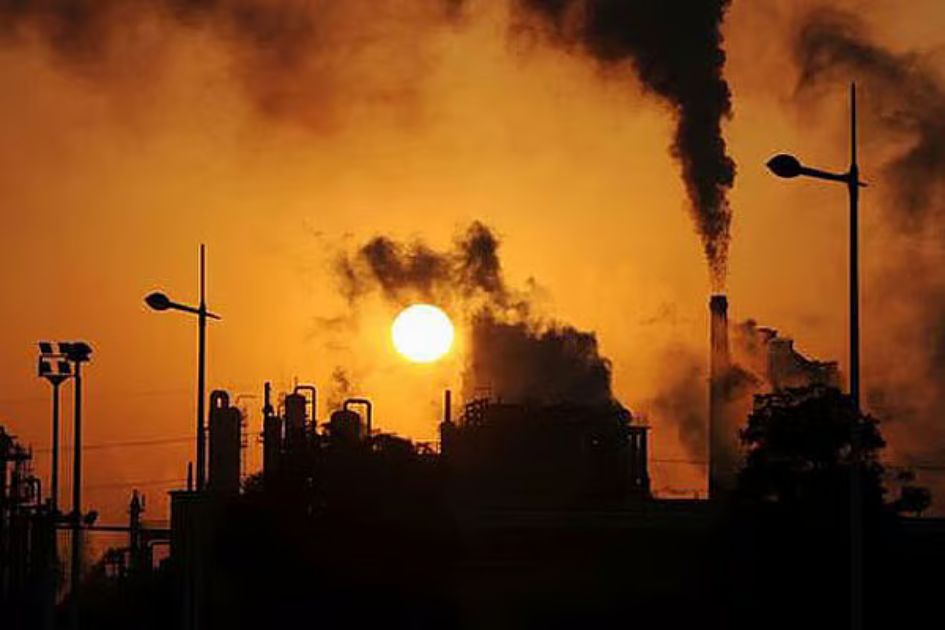

Leading scientists warn human-driven warming is accelerating toward the 1.5°C threshold, while rising sea levels, marine heatwaves and threats to global climate monitoring deepen concerns worldwide.
Leading climate scientists warned on Thursday that the planet is warming at an alarming pace and that key indicators of climate change continue to deteriorate, while cuts to Earth observation programmes in the United States and elsewhere threaten efforts to track global warming.
More than 70 scientists, including contributors to the United Nations’ Intergovernmental Panel on Climate Change (IPCC), raised concerns over record levels of human-driven warming and increasing marine heatwaves in an annual collaborative study published on Thursday.
“The indicators are essentially like monitoring the vital signs of a seriously ill patient whose symptoms are becoming increasingly worrying,” said study co-author Peter Thorne, a professor at Maynooth University in Ireland.
Thorne, who also serves as deputy chair of the UN-backed Global Climate Observing System (GCOS), said it was the first time in his career that he had seen global monitoring systems either being deliberately weakened or placed at risk.
The study, published in the journal Earth System Science Data, found that global temperatures in 2025 were 1.39 degrees Celsius above pre-industrial levels. Of that increase, 1.37 degrees Celsius was attributed directly to human activities. Scientists warned that human-induced warming is on course to reach the 1.5 degrees Celsius threshold by 2030.
Under the 2015 Paris climate agreement, countries pledged to keep global warming well below 2 degrees Celsius and ideally limit it to 1.5 degrees Celsius in an effort to avoid the most severe impacts of climate change.
The research showed that the world is accumulating heat at an exceptionally rapid rate, leading to a growing “Earth energy imbalance”. This means the planet is absorbing more energy from the sun than it is releasing back into space, causing heat to build up and temperatures to rise more quickly.
Piers Forster, a climate change professor at the University of Leeds and lead author of the study, said the balance would have remained stable without human interference.
“Since the 1970s the imbalance has steadily increased and in recent decades it has doubled, reaching record levels,” he said.
Scientists identified two main drivers behind the accelerating warming. Greenhouse gas emissions from industry and transport have reached record highs, while levels of aerosols and other particles that previously reflected sunlight and helped cool the planet have declined.
However, researchers stressed that carbon dioxide remains the dominant contributor to global warming and continues to accumulate in the atmosphere at unprecedented levels.
Although the growth rate of global carbon emissions has slowed somewhat, scientists said the danger remains acute. They warned that the remaining carbon budget, the maximum amount of carbon dioxide humanity can still emit while keeping warming below the dangerous 1.5 degrees Celsius threshold, could be exhausted within the next three years if emissions continue at current levels.
Aurelien Ribes, a climate scientist at the French national meteorological service, said concentrations of greenhouse gases in the atmosphere continue to rise.
“It now appears impossible to keep global temperature increases below 1.5 degrees Celsius,” he said.
The study reported that global sea levels rose by around 23 centimetres, or nine inches, between 1901 and 2025. The rate of rise has accelerated significantly and now averages 3.84 millimetres per year, driven by melting land ice and the thermal expansion of seawater as oceans warm.
Marine heat extremes have also intensified sharply. Compared with 1991, the number of extremely hot days in the oceans has more than tripled. By 2025, oceans were experiencing an average of 65 marine heatwave days each year.
Climate Monitoring Under Pressure
The Indicators of Global Climate Change project, launched in 2023, provides annual updates on the state of the climate for policymakers worldwide. The latest IPCC assessment report was finalised in 2023, with the next report expected in 2028 or 2029.
The annual assessment draws on nearly 40 global datasets collected through satellites, weather stations, ships, drifting buoys, weather balloons and a range of instruments operating across land, sea and the atmosphere.
However, the report said that climate action efforts are increasingly being overshadowed by conflicts in the Middle East and Ukraine, the global energy crisis, budget constraints and policies pursued by US President Donald Trump, who has expressed scepticism about climate change.
According to the study, observation systems that measure the Earth’s energy imbalance through ocean and satellite monitoring are now facing uncertainty because of geopolitical tensions and government funding decisions.
The report also noted that funding for the UN’s World Meteorological Organization has declined and that the activities of GCOS are under threat. Several satellite programmes, including some in the United States, are also facing an uncertain future.
Researchers highlighted a recent decision by the Trump administration to remove hundreds of deep-ocean monitoring instruments.
Samantha Burgess, strategic lead for climate at the European Centre for Medium-Range Weather Forecasts (ECMWF), said the instruments are crucial for understanding how oceans absorb heat and how that affects weather patterns and ocean circulation.
“We need to maintain direct observation systems to continue monitoring climate change effectively,” Burgess said.
Scientists also reported a decline in field-based observations across Africa, the western Pacific region and South America.
Burgess added that funding had recently been withdrawn for a specialised aircraft used to conduct atmospheric observations in the United Kingdom.




