

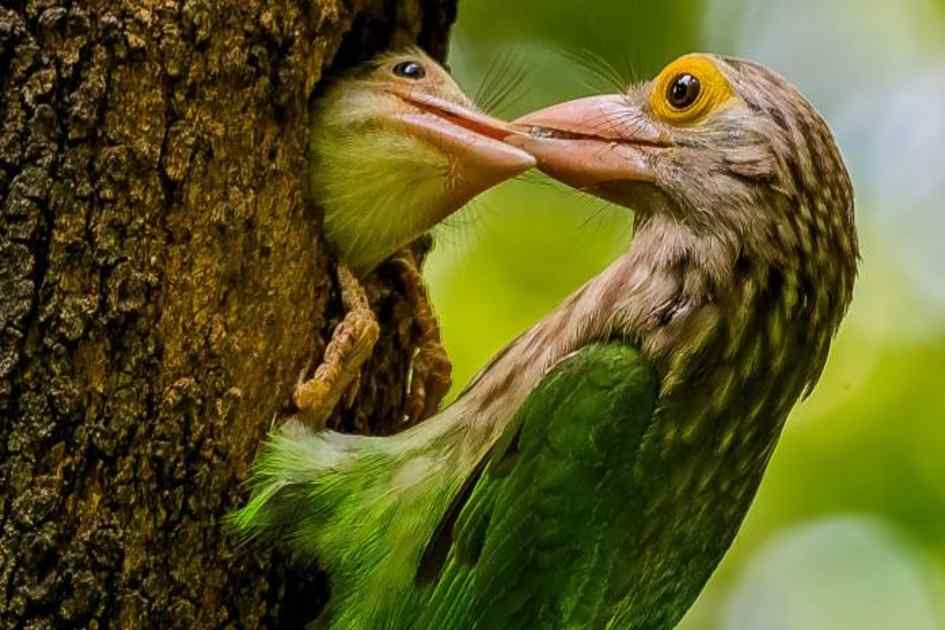

A bright green bird with a rhythmic call, the lineated barbet thrives across Bangladesh’s forests and urban green spaces, playing a key ecological role even as habitat loss and declining fruit trees raise concerns about its long-term survival.
In the dense forests and urban green spaces of Bangladesh, a bright green bird with a resonant rhythmic call graces the treetops. The lineated barbet is a vital part of the country’s vibrant birdlife. Join us as we explore the life of this remarkable species and its importance in Bangladesh’s ecosystems.
The lineated barbet, scientifically known as Psilopogon lineatus, is a large green bird with streaked markings on its head and breast. Its stout beak and vibrant plumage make it easy to recognise, even at a distance.
Native to the tropical and subtropical forests of South Asia, the lineated barbet thrives in Bangladesh, particularly in forested areas, gardens and parks where tall fruiting trees are abundant.
This bird is a skilled climber and spends most of its time in the upper canopy, feeding on fruits, berries and insects. Its loud rhythmic calls are a signature sound of the Bangladeshi countryside, often heard long before the bird is seen.
The barbet’s strong chisel-like beak is perfectly adapted for excavating nest cavities in tree trunks, where it raises its chicks in safety.
During the breeding season, both parents work tirelessly to care for their young, making it a true symbol of cooperation in nature.
The lineated barbet plays a crucial role in maintaining the health of Bangladesh’s forests. By feeding on fruits and dispersing seeds, it helps regenerate trees and supports biodiversity.
This bird also serves as a natural pest controller by consuming insects, contributing to the ecological balance in its habitat.
In urban areas, the lineated barbet is a reminder of nature’s resilience, thriving in green spaces and enriching the environment with its presence.
Despite its adaptability, the lineated barbet faces growing challenges. Deforestation, habitat loss and shrinking green spaces threaten its survival. The decline of fruiting trees, its primary food source, is particularly concerning.
Conservation efforts are crucial. By preserving forests, planting native fruit trees and maintaining urban green spaces, we can ensure a future for the lineated barbet and other wildlife species.
The lineated barbet is not just a beautiful bird, it is a part of our heritage. Protecting its habitat means preserving our natural legacy.
The lineated barbet is more than just a bird. It is a symbol of Bangladesh’s lush biodiversity and a reminder of the interconnectedness of all life. Its survival depends on us.
Let us cherish and protect the lineated barbet, ensuring that its calls continue to resonate across Bangladesh for generations to come




