




Researchers exploring Cambodia’s limestone caves have uncovered new species, including a pit viper and geckos, revealing unique ecosystems and urgent need to protect threatened karst habitats and biodiversity hotspots globally.


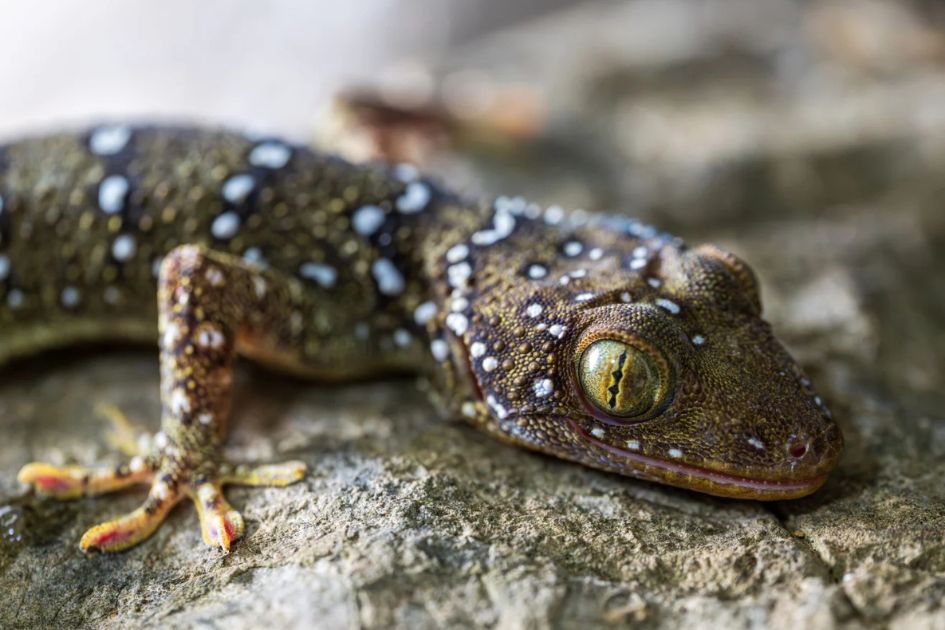
(Manita Hem/Fauna & Flora)

These help them climb almost any surface. (Hun Seiha/Fauna & Flora)

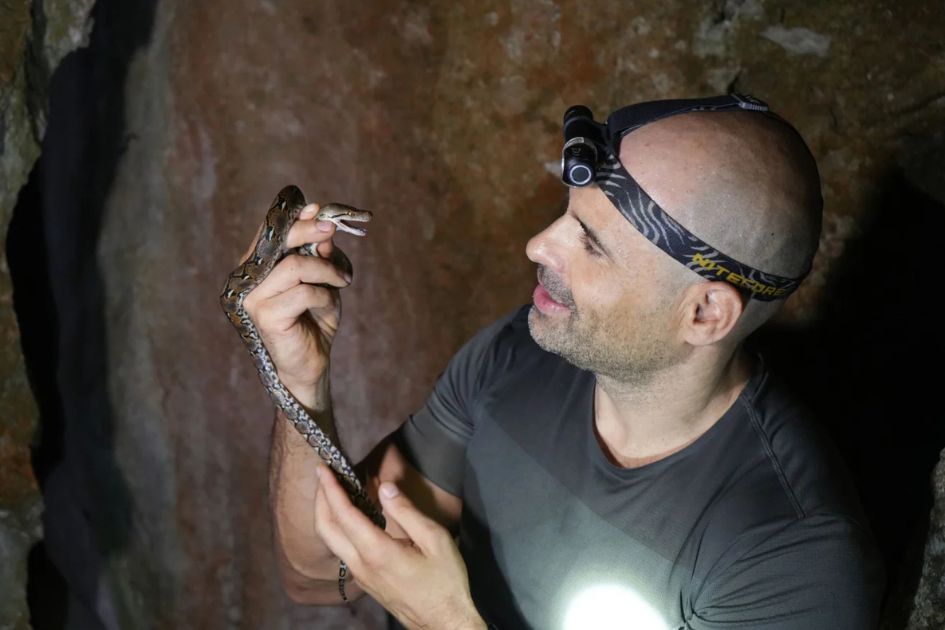
(Phyroum Chourn/Fauna & Flora)
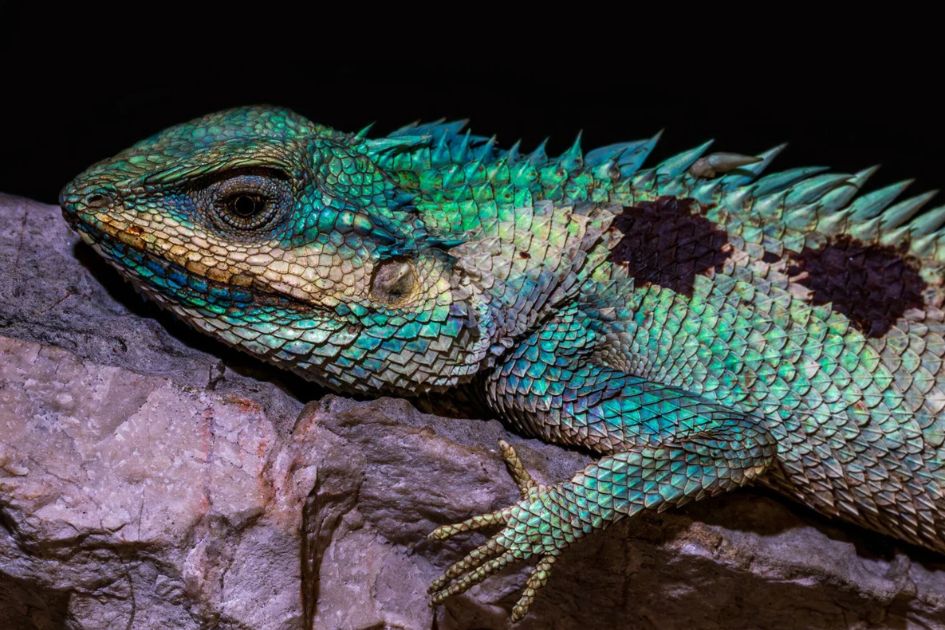
This lizard was only recognized as a new species in 2021, and it can change its vibrant colours when threatened.
(Phyroum Chourn/Fauna & Flora)


Cambodia’s vast limestone cave networks, stretching for thousands of miles and still largely unexplored, are yielding remarkable discoveries, including species never before recorded by science, researchers said.
A recent biodiversity survey in Battambang province in the country’s northwest uncovered a striking turquoise pit viper, a flying snake, several geckos, two micro-snails and two millipedes among newly identified species.
The pit viper and three of the gecko species are still undergoing formal scientific naming and classification. The remaining discoveries have already been officially recognized following the survey, which examined 64 caves across 10 hills between November 2023 and July 2025. The findings were published in a report on Monday.
Cambodia’s karst landscape, formed as rock dissolves over time to create caves, sinkholes and underground streams, acts as a natural laboratory for evolution. Each cave system is isolated, allowing species to develop independently.
“Think of it as their own vignette of biodiversity, where nature is performing the same experiment over and over again independently,” said evolutionary biologist Lee Grismer of La Sierra University in California, who supported the research team.
“We go to these separate places and analyse the DNA of the species, and we see how the experiment has run. Some look alike, some look different, and by analysing this we can get an idea of what the driving forces are behind the way they evolve,” he added.
During fieldwork in 2024, researchers identified the striped Kamping Poi bent-toed gecko, Cyrtodactylus kampingpoiensis, and found that it exists in four distinct populations that are evolving differently.
“If we are truly going to conserve the biodiversity on this planet, we need to understand what is there,” Grismer said. “We can’t protect something if we don’t know it exists.”
The survey also recorded globally threatened species in the region, including the Sunda pangolin, green peafowl, long-tailed macaque and northern pig-tailed macaque.
The fieldwork was led by conservation biologist Pablo Sinovas of UK-based charity Fauna & Flora, in collaboration with Cambodia’s Ministry of Environment and local researchers. Teams explored the terrain during the day and conducted night searches when animals such as snakes and geckos are most active.
Researchers moved across sharp rocky landscapes after sunset, using torches to scan caves, crevices, vegetation and branches.
“It was kind of a nice search party,” said Sinovas, now a senior program manager at the organization.
Some caves in the region host bat colonies numbering up to one million, although researchers avoided entering these sites due to health risks.
Karst landscapes cover about 9 percent of Cambodia’s land area, roughly 20,000 square kilometers or 7,722 square miles, yet much of this terrain remains scientifically unexplored. In one hill alone in Banan district, 14 previously unrecorded caves were documented.
“There is more exploration to be done,” Sinovas said, noting that scientists have only “scratched the surface” of the biodiversity hidden within Cambodia’s cave ecosystems.
Beyond their ecological importance, many caves serve as religious sites used for meditation and rituals and attract tourists and pilgrims.
However, these fragile habitats face increasing pressure from cement production, as karst limestone is a key raw material, as well as from overtourism, wildlife hunting, logging and wildfires.
“There is growing demand for cement and karst limestone is useful for the making of cement and, so, karst provides a very important raw material,” Sinovas said.
“But, obviously, if you destroy an area where certain species live, and those species don’t live anywhere else, then you would automatically potentially lead to the extinction of species, in some cases, of species that haven’t even been described yet,” he added.
Conservation groups are now working with the Cambodian government to secure stronger protection for these areas.
“There are ongoing discussions regarding giving this area some sort of protective status, so that they can be preserved into the future,” Sinovas said.
Daniel Olivares Gallego contributed to this report.
This report is republished from CNN.




