




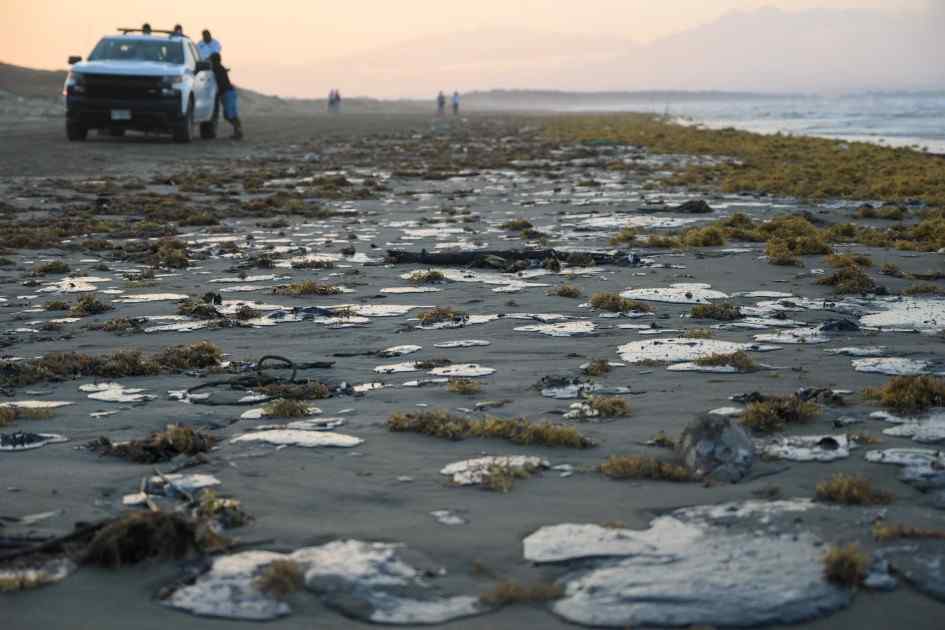
Residents along Mexico’s Gulf coast are racing to clean oil-coated beaches in Veracruz as an unexplained spill spreads across fishing villages, threatening fisheries, tourism and a nearby lagoon where communities raise shrimp and fish.
Coastal communities in Mexico’s Veracruz state are struggling with an oil spill that has coated beaches with hardened tar and disrupted local livelihoods, raising fears of contamination in nearby fishing waters.
Residents in the village of Jicacal, located along the Gulf of Mexico, say they began noticing oil washing ashore in recent days. The spill has spread along the coastline, leaving thick patches of tar on the sand.
Local people have organized volunteer efforts to remove as much of the oil residue as possible from the beaches, concerned that the contamination could reach a nearby lagoon where communities farm fish and shrimp.
Authorities have not yet confirmed the source of the spill. Veracruz is one of Mexico’s main oil-producing regions, with extensive extraction and transportation activities both onshore and offshore in the Gulf of Mexico.
State oil company Pemex said earlier this week that it had not detected any leaks or spills from its facilities in the area.
“As usual, we went out fishing and cast our nets, and we realized that the net was full of oil,” said Aurora Apolonia Martinez, a local fisher. She said the crude residue rendered the nets unusable.
Pemex did not immediately respond to requests for comment about whether new information had emerged following surveillance efforts it said it would conduct in the area.
Environmental group Cemda said that since March 1 more than a dozen spill sites have been identified along the beaches of Veracruz and neighbouring Tabasco.
Although Pemex has denied responsibility, the state-owned company has been linked to several oil spill incidents in recent years.
In October, authorities recovered about 2.7 million litres of oil from the Pantepec River in Veracruz following a pipeline leak.
The spill is also affecting tourism in the region. Both Jicacal and the nearby town of Las Barrillas rely heavily on visitors as well as fishing.
“What we want is to clean the entire beach,” said Nicolás Vargas, a tourism service provider in Las Barrillas. “Otherwise tourists will not come.”




