

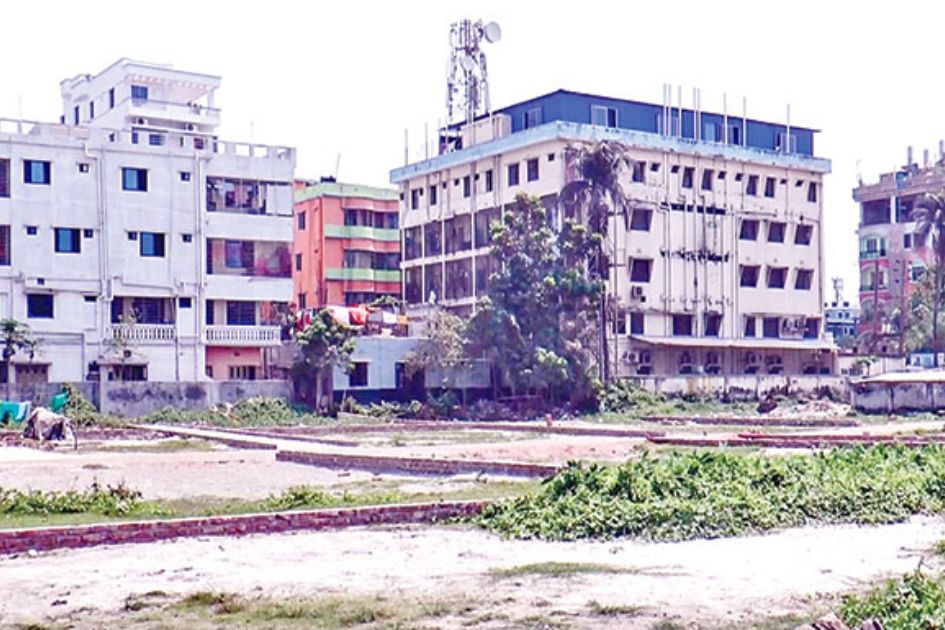



Ponds across Madaripur are rapidly disappearing as urban development expands, reducing vital water sources, disrupting ecosystems and complicating firefighting efforts, prompting calls for stricter enforcement to protect remaining wetlands.
Ponds across Madaripur, a district in central Bangladesh and part of the Dhaka Division, are being filled in to make way for multi-storey buildings and other structures, raising concerns over environmental degradation and increasing the risk of water shortages during firefighting operations.
Residents, environmentalists and fire officials say weak administrative oversight and the influence of powerful landowners are accelerating the loss of urban water bodies. They warn that the continued disappearance of ponds threatens ecological balance while leaving firefighters with fewer accessible water sources in emergencies.
An investigation found that more than two decades ago Madaripur municipality had over a hundred ponds and ditches spread across different neighbourhoods. That number has now fallen to less than half. As more residents migrate to Europe many families have been buying land and building homes in the town. Others are filling ponds before selling the land at higher prices. Markets shops residential buildings and other structures are then built on the reclaimed land reducing the number of ponds ditches and wetlands across the municipality.
Sohag Hasan, a garment trader at Madaripur’s Old Bazaar, said the area is the district’s main commercial hub and remains highly vulnerable to fire.
“If a fire breaks out here the Fire Service may arrive on time but it takes much longer to control the blaze because there is not enough water,” he said. “The pond beside the mosque has been ruined by waste and garbage. It should be cleaned and restored to its original condition.”
Anwar Hossain, a resident of the Shakuni area, said the town once had many ponds but most have now disappeared under landfills.
“The environmental balance is being damaged,” he said. “When fires break out there is no water available. The administration and municipal authorities must ensure that the remaining ponds are protected. Otherwise residents will face serious risks.”
Rajan Mahmud, founder of the environmental organisation Friends of Nature in Madaripur, accused influential groups of ignoring government laws by filling ponds ditches and wetlands across the town.
“This is harming the environment while increasing public safety risks,” he said. “Even the few ponds that remain continue to face threats.”
Mahmud cited an example from four to five years ago when a century-old pond near the launch terminal in Madaripur town was earmarked for filling by the then member of parliament. Sand filling had already begun using dredgers before protests by Friends of Nature local civil society residents and the then municipal mayor forced the work to stop.
“The administration should preserve the ponds that still exist because they will continue to benefit the people of the town,” he said.
Mohammad Shafiqul Islam, deputy assistant director of Madaripur Fire Service and Civil Defence, said the town now has limited water sources.
“A recent fire at the Old Bazaar destroyed 19 business establishments,” he said. “The shortage of water in the area made it difficult to bring the fire under control.”
Madaripur municipality administrator Mosammat Jesmin Akter Banu said the number of ponds has been declining steadily as rising land prices encourage developers to fill water bodies.
“We will no longer allow anyone to fill ponds or wetlands,” she said. “The ponds that remain in the municipality will be preserved.”
This post is republished from Ajker Patrika.




