




After decades without tigers, Kazakhstan is rebuilding the habitat and prey base needed to support their return, with experts taking a cautious approach to rewilding.
Kazakhstan has released a female Amur tiger into the Ile-Balkhash Nature Reserve, marking a major milestone in the country’s long-term effort to restore tigers to an ecosystem where they disappeared more than 70 years ago.
The reserve was established in 2018 specifically to support the reintroduction programme. Since then, authorities have carried out extensive work to restore habitat and rebuild populations of deer and antelope that once served as prey for the now-extinct Caspian tiger.
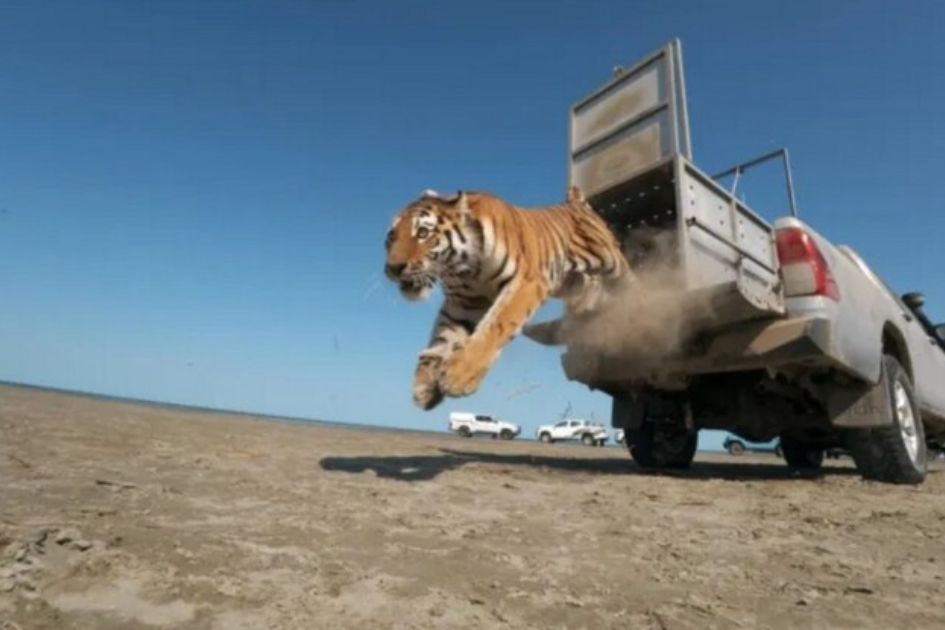
“Today, we witnessed a truly historic event,” Minister of Ecology and Natural Resources Yerlan Nyssanbayev said during the release ceremony, where the female tiger, named “hope” in the Kazakh language, leapt from a container mounted on the back of a truck into the reserve.
“For the first time since the tiger disappeared from Kazakhstan more than 70 years ago, the first tiger has been released into its historical range. This is the result of many years of work by the state, our Russian colleagues, scientists, and international partners,” he said.
The Caspian tiger, also known as the Turanian tiger, was the closest relative of the Siberian, or Amur, tiger, making cooperation with Russia a key part of the initiative.
As part of preparations for the reintroduction, Bukhara deer were re-established in the reserve in 2020. They were followed by the saiga antelope and the Asiatic wild ass, or kulan.
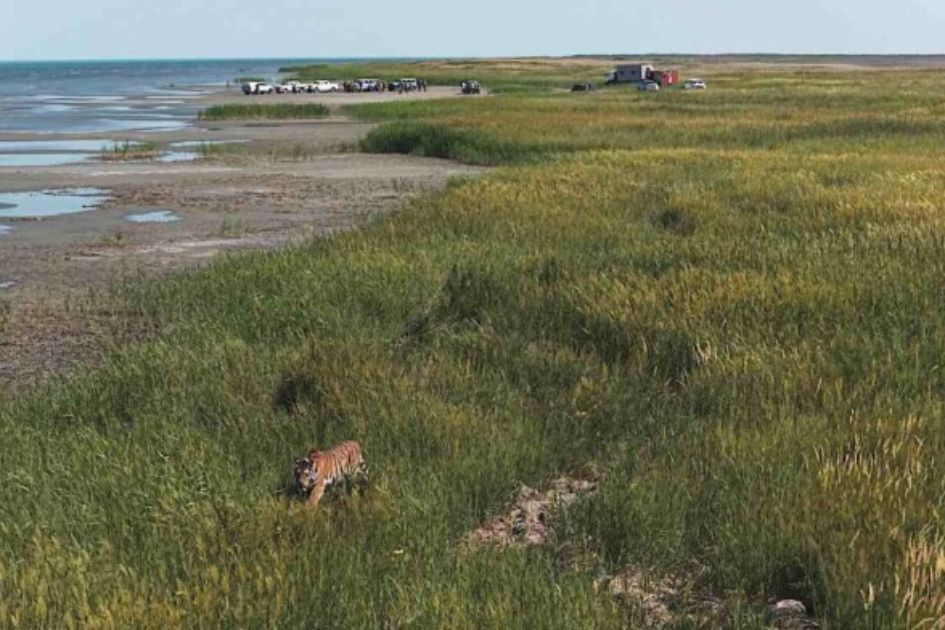
Before entering the wild, the female tiger and three other Amur tigers, a male named Amur and two cubs brought from Russia’s Khabarovsk Reserve, were kept in large enclosures to adapt to the area’s sights, smells, sounds and weather.
Veterinarians examined Hope before her release and found her to be in excellent condition. She was fitted with a GPS tracking collar before being transported into the reserve and released.
The male tiger, Amur, remains in captivity while experts assess whether he will be able to hunt successfully in the new environment.
The two cubs will continue to grow up in semi-wild conditions within the reserve and are expected to be released once they reach full maturity, at around 18 months of age, provided they meet behavioural assessments for hunting and survival instincts. Astana Times reported that the gradual process reflects the challenges involved in introducing large predators to new landscapes.
Authorities also said protecting nearby communities remains a priority. Although the Ile-Balkhash Nature Reserve is expansive, it is not fenced, allowing tigers to move beyond its boundaries into their historic range as the population expands.
“The safety of people living near the reserve is our top priority,” officials from Kazakhstan’s Ministry of Ecology said. “We’ve put measures in place to prevent conflicts between people and tigers, including a dedicated team that will respond if an animal approaches a populated area.”
If the programme is successful, Kazakhstan will become the first country in the world to restore tigers to an ecosystem from which they had disappeared.




