




Environmental activists warn toxic industrial waste from factories is polluting the Phuljhor River in Bogura and Sirajganj, threatening ecosystems, fisheries, agriculture and the livelihoods of nearly two million people.
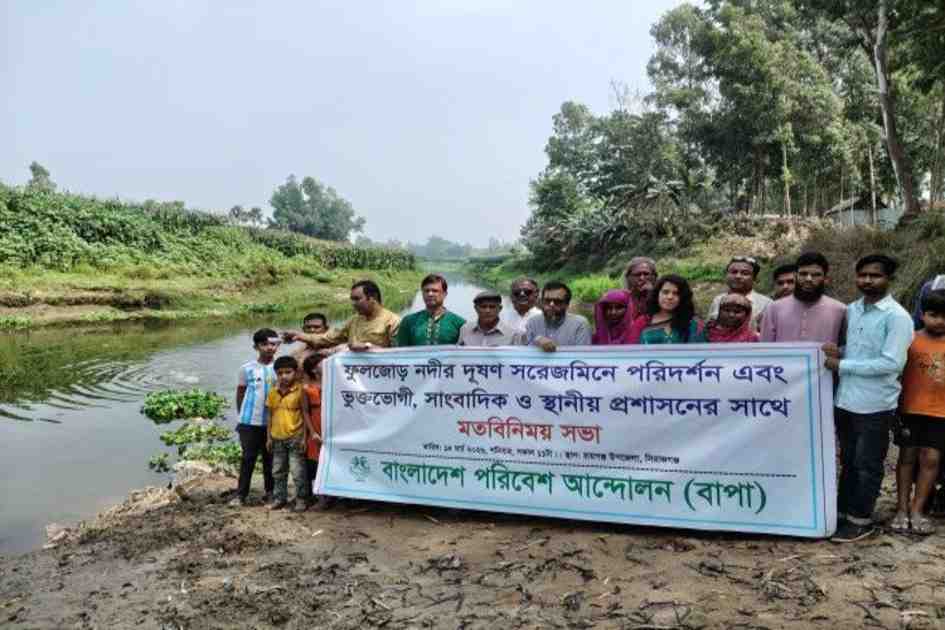
Environmental activists have raised serious concerns over toxic industrial waste allegedly being discharged into the Phuljhor River in northern Bangladesh, threatening the livelihoods of nearly two million people. A central delegation from the Bangladesh Poribesh Andolon (BAPA) conducted a day-long field inspection on Saturday in Bogura district and Sirajganj district to investigate the allegations.
The delegation, led by BAPA General Secretary Alamgir Kabir, inspected several sections of the river and spoke with affected residents about the growing environmental crisis.
During the visit, the team first travelled to the Kunighat area of Mirzapur Union in Sherpur upazila of Bogura, where activists said they observed liquid industrial waste being discharged into the river through a pipeline from SR Chemical Industries Ltd. The delegation later inspected the Belgachi Bridge area in the same upazila, where residents alleged that tanker trucks regularly dump toxic waste from the factory into the river.
The delegation also visited the Chomor Pathalia Bazar area of Mirzapur Union, where another factory, Majumdar Products Ltd, was accused by locals of releasing liquid waste into the river through pipelines.
Residents and environmental activists allege that untreated waste from several factories has been flowing into the river for years, severely affecting local ecosystems and communities.
The Phuljhor River, which flows for about 80 kilometres through agricultural communities in Bogura and Sirajganj, is a vital source of water for irrigation, fishing and livestock. Local residents say pollution has made the river water unsafe for farming and daily use.
Farmers reported that contaminated water can no longer be used for irrigation while fish populations have declined significantly.
Residents also said ducks and livestock have died after drinking river water in several riverside areas. Many people complained of skin diseases and respiratory problems after contact with the contaminated water.
Following the field visit, the BAPA delegation met with Raiganj Upazila Nirbahi Officer Abdul Khalek Patwari and urged authorities to take immediate legal action against industries responsible for the pollution, restore the river’s water quality and ensure compensation for affected communities.
Local activists also alleged that two protesters were recently arrested in what they described as false extortion cases filed by SR Chemical Industries Ltd, which they believe was an attempt to suppress the growing movement against river pollution.
Earlier, on March 11, students, human rights defenders and young environmentalists gathered at the Raju Sculpture at the University of Dhaka to protest growing industrial pollution in the Phuljhor and Karatoa rivers and to demand an end to the harassment of environmental defenders.
Protesters called for urgent investigations into industrial waste discharge, strict enforcement of environmental laws and accountability for companies and individuals responsible for polluting the rivers. Activists also stressed the importance of implementing the 2019 High Court ruling that declared all rivers in Bangladesh living entities and appointed the National River Protection Commission as their legal guardian, warning that without proper enforcement effective river protection will remain impossible.
Speakers at the protest said toxic industrial waste is severely polluting the rivers, threatening agriculture, fisheries, biodiversity and the livelihoods of local communities. Protesters alleged that chemical waste from several industries, including SR Chemical Industries Ltd reportedly owned by the family of Golam Mohammad Siraj, a member of parliament for Bogura-5 according to protesters, and Majumdar Products Ltd is contaminating the river and damaging surrounding ecosystems.
Young environmental activist Faysal Biswas from Sirajganj said rivers are the lifeline of communities and warned that continued pollution could lead to environmental disaster and the loss of livelihoods. He has been holding a six-day sit-in at Dhaka University, saying the movement will continue to grow until the river is protected.
Sohanur Rahman, Executive Coordinator of YouthNet Global, said rivers are living entities and the foundation of Bangladesh’s ecosystems and livelihoods, noting that the destruction of rivers harms not only local communities but the entire environment.
According to local residents and environmental organisations, a chemical discharge on February 21 and 22 poisoned the Phuljhor River, killing fish, snakes, frogs, crabs and snails. The incident triggered protests in Dhangara of Sirajganj and at Chandaikona bus stand, including human chains and memorandums submitted to local authorities.
Protesters later demonstrated peacefully in front of the factories of SR Chemical Industries Ltd and Majumdar Products Ltd in Sherpur upazila of Bogura. Some participants were reportedly targeted with extortion cases and on March 1 police arrested two activists, Touhidur Rahman alias Babu and college lecturer Ali Reza Biswas, who were later granted bail by a Bogura court.
The movement has continued to grow with demonstrations at the National Press Club on March 5. On March 6, leaders, women and children of the indigenous Mahato community of Bogura joined environmental activists in Dhaka for another protest at the Raju Sculpture while Faysal Biswas continues his sit-in at the Teacher Student Centre.
Activists say the movement will continue to expand with stronger youth participation to protect rivers, the environment and the rights of future generations in Bangladesh.




