




Indonesia’s vast forests and biodiversity could strengthen its climate diplomacy, but credibility will depend on climate finance, community inclusion and progress toward a just energy transition.
Climate leadership must combine forests, biodiversity protection, climate justice, youth inclusion and a fair energy transition.
As the world faces a widening gap between climate commitments and real action, Indonesia stands at a defining moment: it can either remain a participant in global climate discussions or emerge as a powerful leader shaping a fairer, more ambitious climate future.
Indonesia has been urged to step forward and assume a stronger leadership role in global climate diplomacy as escalating geopolitical tensions, economic pressures and slow progress on emissions reduction threaten to derail the global transition toward net-zero emissions.
Experts and policymakers warn that climate change risks becoming “the greatest blind spot in world affairs” if governments fail to move beyond commitments and accelerate meaningful action on the ground.
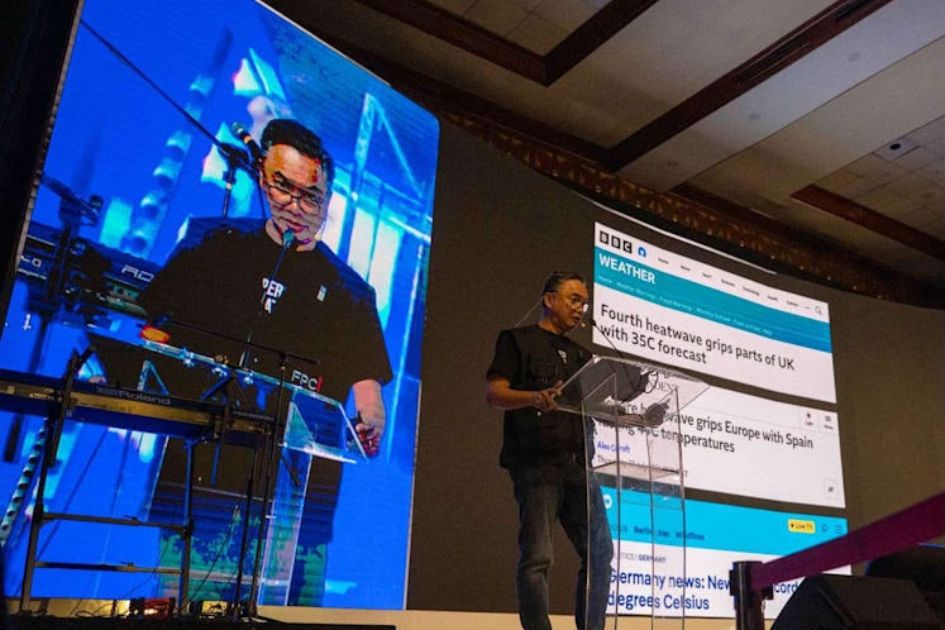
The call was made on Saturday (Aug 1) by Dino Patti Djalal, Chairman and Founder of the Foreign Policy Community of Indonesia (FPCI), during the opening of the Indonesia Net-Zero Summit (INZS) 2026 at Balai Kartini in Jakarta.
Dino stressed that shifting international priorities, including renewed support for fossil fuel expansion by some major economies, are increasing the global emissions burden and making stronger climate coalitions more urgent than ever.
Indonesia’s Natural Assets as Diplomatic Strength
To address global climate inaction, FPCI called on Jakarta to play a more ambitious role at the upcoming UN Climate Change Conference (COP31), scheduled to be hosted in Antalya, Türkiye, this November.
Dino emphasized that Indonesia holds a unique strategic advantage through its vast tropical forests, peatlands, marine ecosystems and extraordinary biodiversity.
“The world has no greater natural carbon sink than tropical forests. That gives us considerable leverage in building international cooperation,” Dino said.
Indonesia’s forests, peatlands, mangroves and marine ecosystems provide critical services in regulating the global climate, while its biodiversity offers opportunities for conservation partnerships, sustainable investment and international collaboration.
Dino noted that Indonesia had previously played an important role in advancing global forestry discussions and could once again position itself as a leading voice on nature-based climate solutions.
“Biodiversity protection is not only an environmental responsibility but also a pathway for global cooperation and investment,” he added.
However, Indonesia’s ambition for global climate leadership will depend on its ability to reconcile international commitments with domestic realities. As one of the world’s largest coal producers and consumers, Indonesia faces the challenge of balancing economic development with emissions reduction, forest protection and a transition away from fossil fuels.
A credible leadership role requires a clear pathway for coal phase-down, accelerated renewable energy deployment and protection for workers and communities affected by the energy transition through a just transition approach.
Government Commitment and COP31 Preparation
Minister of Environment and Head of the Environmental Control Agency Moh Jumhur Hidayat highlighted Indonesia’s critical ecological position, stating that biodiversity loss is part of a broader environmental crisis alongside climate change and pollution.
“President Prabowo has demonstrated an extraordinary commitment to tackling climate change, and the government’s efforts to mitigate its impacts have been underway for many years,” Jumhur said.
He explained that Indonesia is preparing a strategic agenda for COP31, including initiatives related to carbon trading, environmental restoration and attracting responsible international investment.
While carbon markets may provide opportunities for climate finance, experts emphasize that strong transparency, environmental integrity and community safeguards are essential to ensure carbon trading delivers genuine emissions reductions rather than becoming a substitute for urgent climate action.
Carbon markets should complement, not replace, rapid emissions reduction. Without strong safeguards, accountability and meaningful participation from affected communities, carbon trading risks creating new inequalities rather than delivering genuine climate solutions.
Closing the Climate Finance Gap
Deputy Minister of Environment Diaz Faisal Malik Hendropriyono stressed that stronger international engagement is essential to transform Indonesia’s climate commitments into measurable action.
“Our active engagement on the international stage is crucial to closing Indonesia’s climate financing gap, because that gap remains enormous,” Diaz said.
He highlighted platforms such as the G20 and BRICS as opportunities for Indonesia to strengthen cooperation, attract climate investment and advance green development.
For developing countries, including Indonesia, climate finance remains a central challenge. Meeting climate goals requires not only investment in mitigation but also greater support for adaptation, loss and damage, technology transfer and a just transition for communities affected by climate impacts.
For climate-vulnerable nations, climate finance is not only about reducing emissions; it is about survival. Greater international support is needed for adaptation, disaster resilience, coastal protection and addressing loss and damage faced by communities already experiencing irreversible climate impacts.
Climate Leadership Must Include Communities, Indigenous Peoples, and Youth
Indonesia’s climate diplomacy cannot succeed through government action alone. A credible global leadership role must include the voices of young people, Indigenous peoples, local environmental defenders and frontline communities already experiencing the impacts of climate change.
Communities protecting forests, restoring ecosystems and adapting to rising climate risks are not merely beneficiaries of climate policies; they are knowledge holders, ecosystem guardians and essential partners in achieving long-term climate resilience.
Their rights, participation and traditional knowledge must be central to Indonesia’s climate strategy.
Young people must also be recognized as key partners in Indonesia’s climate diplomacy. Across the country, youth are driving climate innovation, environmental advocacy and community-based solutions while demanding accountability from decision-makers.
A future-oriented climate strategy must create meaningful spaces for youth participation in national and international climate policymaking.
Indonesia’s Opportunity to Bridge the Global Climate Divide
Indonesia has an opportunity to become a bridge between developed and developing nations by championing climate justice, equitable finance, biodiversity protection and a fair energy transition.
As COP31 approaches, the country’s leadership will be measured not only by diplomatic statements but by concrete commitments: protecting ecosystems, reducing fossil fuel dependency, accelerating renewable energy, mobilizing climate finance and ensuring that vulnerable communities are at the heart of the global response.
Indonesia’s greatest climate influence may come not only from the size of its forests and biodiversity, but from its ability to demonstrate how an emerging economy can pursue development while safeguarding the planet for future generations.
Indonesia’s climate leadership will ultimately be judged not by the scale of its promises, but by the courage of its actions. By protecting nature, empowering communities, accelerating a just energy transition and advocating for climate justice, Indonesia can demonstrate that economic development and planetary protection are not competing goals but shared responsibilities.




