

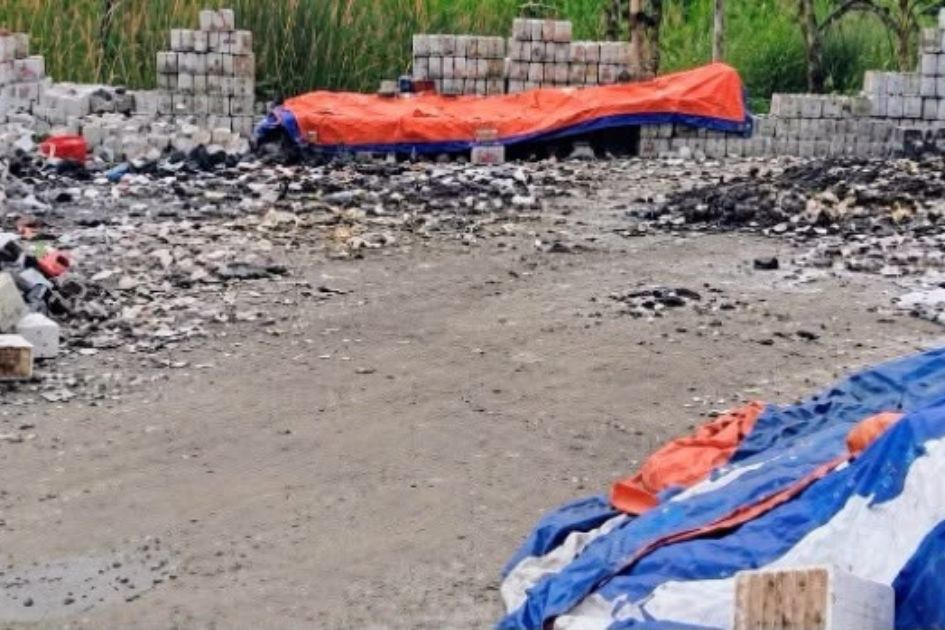



Residents allege illegal lead battery recycling in Savar is exposing communities to toxic pollution, damaging farmland and water bodies, while prompting urgent calls for enforcement and environmental accountability.
Residents in the Awal Market area under Vakurta Union in Savar, on the outskirts of Dhaka, have raised alarm over alleged illegal used lead-acid battery recycling operations in densely populated residential and agricultural areas, warning of serious public health and environmental risks.
Local residents say clandestine facilities inside the Silicon Housing project in Baro Bordeshi Mouza have been burning discarded lead-acid batteries to extract lead, reportedly without environmental clearance or regulatory approval.
Night Operations Raise Toxic Exposure Concerns
Residents say the facilities typically operate at night, from around 8:00 PM to 6:00 AM, releasing thick black smoke believed to contain lead particles and hazardous acid fumes across surrounding neighbourhoods.
“The air becomes very difficult to breathe at night,” said Kawsar Ahmed, a local resident. “Children, women and elderly people are suffering from breathing difficulties, eye irritation and persistent coughing.”
Environmental health specialists note that exposure to lead and sulfur dioxide, commonly associated with battery smelting, is highly toxic. Long-term exposure can cause kidney damage, respiratory illness and developmental harm in children. Bangladesh already faces significant challenges linked to informal lead recycling and elevated blood lead levels, making such incidents a growing concern.
Crop Damage and Water Contamination Reported
Farmers in surrounding areas say toxic emissions and suspected chemical runoff are affecting agricultural land, damaging crops and reducing yields. Some residents report that vegetation has turned black in affected areas.
Local communities also claim nearby ponds and wetlands are being contaminated, leading to a decline in fish populations and further affecting livelihoods that depend on farming and fishing.
Residents Allege Intimidation and Weak Enforcement
Despite repeated complaints, residents say enforcement action has been limited. Some locals allege that attempts to raise concerns have been met with intimidation and pressure.
Community members have identified individuals locally associated with the operations, including Manik Sarkar, Mohsin, Rezowan and Ratan from Gaibandha district. These claims are based on local accounts and could not be independently verified.
In a phone interview, one individual identified as Manik Sarkar, who is described locally as coordinating the operations, acknowledged the lack of formal authorisation.
“We have no permits,” he said. “We manage to operate by keeping everyone satisfied. You can report this if you wish.”
The statement could not be independently verified.
Calls for Urgent Government Action
Local residents, including Md. Solaiman Hossain, have submitted formal complaints to the Department of Environment and the local administration, urging immediate intervention.
They are calling for the shutdown of the illegal facilities, a full investigation into the alleged regulatory failures and legal action against those responsible.
Youth environmental advocate and Executive Coordinator of YouthNet Global, Sohanur Rahman, said the situation reflects a broader failure to regulate hazardous informal industries.
“Communities should not have to choose between survival and health. Unregulated toxic industrial activities like illegal lead recycling are a direct violation of environmental justice and basic human rights. Immediate enforcement and safe transition measures are essential to protect vulnerable communities,” he said.
As concerns grow over continued toxic exposure, residents say urgent enforcement is needed to prevent further environmental degradation and protect public health in one of Bangladesh’s rapidly expanding urban fringes.
Lead Exposure in Children: A Persistent Public Health Gap
Research conducted in Dhaka and surrounding districts since 2012 has found that between 54% and 78% of children in the studied areas have detectable levels of lead in their blood, indicating widespread exposure. According to the U.S. Centers for Disease Control and Prevention (CDC), blood lead levels above 5 micrograms per decilitre are considered high risk.
Once inside the human body, lead behaves similarly to calcium, allowing it to interfere with early neurological development in children. It disrupts normal brain signal transmission, which can result in attention deficits, impaired emotional regulation and long-term behavioural changes.
Despite the severity of the issue, Bangladesh’s regulatory and public health response to lead contamination has seen limited structural expansion since 1999. There is still no nationwide blood lead screening programme, no systematic soil remediation in high-risk areas and blood lead testing is not yet part of routine paediatric healthcare services in government health facilities.




