

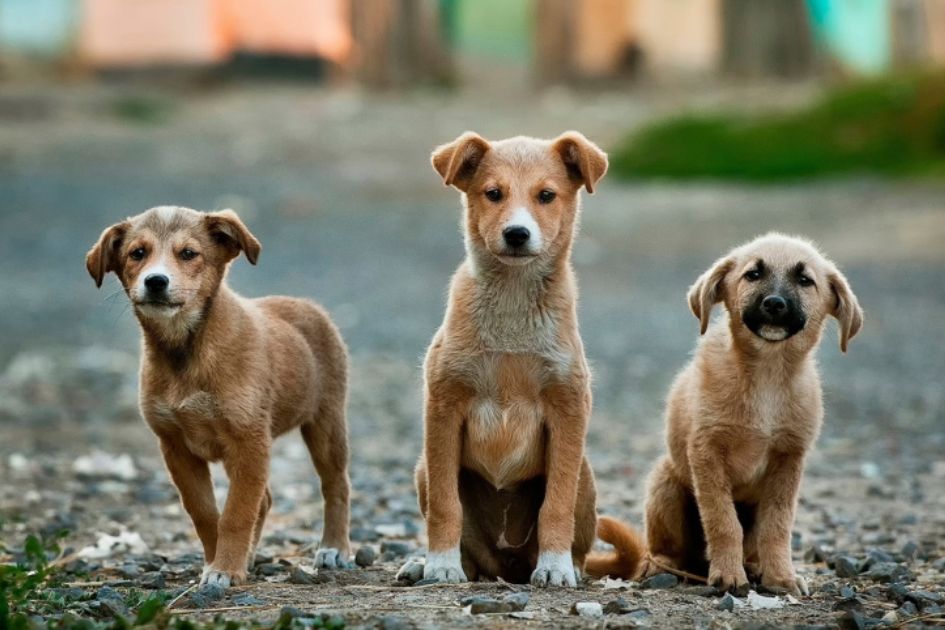



Residents and animal welfare activists allege free-roaming dogs have disappeared from Baridhara DOHS, while the Parishad denies involvement and blames DNCC, raising renewed concerns over animal welfare and accountability.
Fresh allegations over the removal of free-roaming dogs have emerged in Dhaka’s Baridhara DOHS, with residents claiming that more than a dozen community dogs have disappeared and animal welfare advocates questioning the legality of recent restrictions on both stray and pet dogs.
The issue has resurfaced months after similar claims were first raised, prompting renewed concern among residents and animal welfare activists.
Members of Animal Welfare of Baridhara DOHS (AWBD), a resident-led group, alleged that notices recently issued by the Baridhara DOHS Parishad calling for the relocation of free-roaming dogs and placing restrictions on pet movement are unlawful and counterproductive.
Samiul Hasan, a resident of Baridhara DOHS, said around 13 to 15 community dogs have gone missing from the neighbourhood.
“There were around 13 to 15 dogs in the area, but now we cannot see any of them. On June 10, a van came and picked them up. We do not know whether they are alive or not,” he said.
Hasan said residents approached the authorities about the incident but were told that the dogs had been taken away by the Dhaka North City Corporation (DNCC).
“When we asked the authorities about it, they denied any involvement and said the dogs had been taken by Dhaka North City Corporation,” he added.
Repeated attempts by this correspondent to contact DNCC officials for comment were unsuccessful.
Another resident, Md Rafidur Rahman, said the lack of CCTV footage has made it impossible to establish who removed the dogs.
He also alleged that dog owners are facing restrictions inside the residential area.
“Those who own dogs have to keep them in the garage or basement and are not allowed to bring them into their apartment buildings,” he said.
“We have sent them several legal notices, but nothing has happened,” Rafidur added.
Contacted by The Daily Star, Baridhara DOHS Parishad President Col (retd) M Abdul Hai rejected the allegations and said the Parishad had not carried out any dog relocation programme.
“The DNCC took the dogs. Our Parishad did nothing,” he said.
“I have received five legal notices and am responding to all of them according to the law. The matter may eventually go to court, but the relocation has nothing to do with us,” he said.
“We are busy with our regular responsibilities. Even if the Parishad were to take any action, it would require approval from the full governing body. No such decision has been taken,” he added.
Abdul Hai also claimed that the allegations were politically motivated.
“I was elected by the residents. I believe some opposition groups are making these allegations against me. Neither I nor my associates are involved,” he said.
However, in an earlier report published by The Daily Star on March 27, 2026, Abdul Hai acknowledged that free-roaming dogs were being removed from the area but said the process differed from previous practices.
“There is a general body, and decisions are made in annual meetings. These measures (removing free-roaming dogs) reflect residents’ concerns. Earlier, dogs were killed. Now they are not being killed; rather, they are being taken outside the area,” he said at the time.
“Dogs make noise at night; people can’t sleep. They make the streets dirty. Many residents are facing problems,” he added.
Responding to criticism from animal welfare campaigners, Abdul Hai had also said, “Some want to go to the prime minister over this. I think the prime minister has more important matters to deal with.”
Rubaiya Ahmed, founder of Obhoyaronno, Bangladesh Animal Welfare Foundation, said the alleged cruelty has not led to legal action because there is no conclusive evidence.
“The area is controlled by the army authorities, and we do not have concrete evidence. That is why no action has been taken against this alleged cruelty,” she said.
“I have met the authorities several times and served legal notices, but there has been no progress,” she added.
Rubaiya also warned that removing vaccinated community dogs could increase public health risks.
“If this continues, unvaccinated dogs from surrounding areas may move into the area, which could create a more serious problem,” she said.
This post is republished from The Daily Star.




