

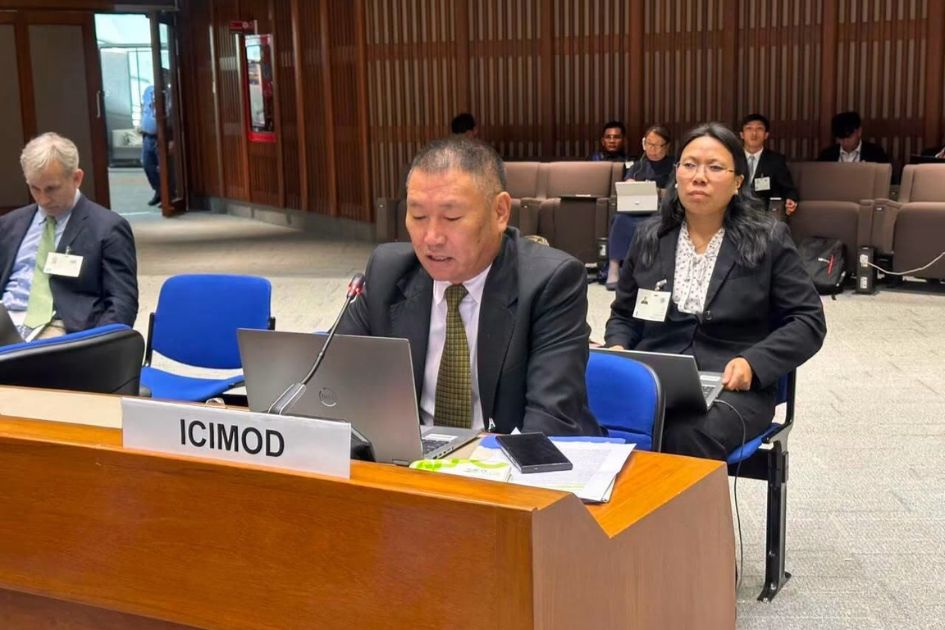



ICIMOD Director General Pema Gyamtsho urged Asia-Pacific governments to prioritise mountain ecosystems, warning that glacier loss and environmental degradation threaten regional water security, climate resilience and sustainable development.
The Director General of the International Centre for Integrated Mountain Development (ICIMOD), Pema Gyamtsho, has called for the urgent integration of mountain-focused policies into the Asia-Pacific region’s climate and development agenda, warning that the stability of high-altitude ecosystems is critical to the future of regional prosperity.
Speaking at the ministerial segment of the ninth session of the Committee on Environment and Development (CED9) under the United Nations Economic and Social Commission for Asia and the Pacific (UN ESCAP) in Bangkok, Gyamtsho stressed that the region’s economic and environmental future is deeply linked to the health of its mountain systems.
‘Mountains Are Fountains of Life’
Describing Asia’s mountain ranges as the “fountains of life,” the ICIMOD chief underscored their role in supplying water to millions of people across the region.
He warned that these fragile ecosystems are increasingly threatened by glacial retreat, biodiversity loss and increasingly frequent extreme weather events linked to climate change.
“The future of sustainable development in the Asia-Pacific region is inseparable from the future of our mountains,” Gyamtsho said, adding that safeguarding these systems requires regional cooperation on water security, climate resilience and economic stability.
Call for Action Beyond Commitments
While welcoming growing global attention to mountain issues in climate negotiations, Gyamtsho urged governments to move beyond policy commitments and translate them into concrete action.
He highlighted three priority areas: glacier protection to address rapid cryosphere loss, ecosystem restoration to reverse environmental degradation and stronger support for vulnerable mountain communities facing climate risks on the front lines.
Strengthening Regional Cooperation
Reaffirming ICIMOD’s role as a bridge between science and policy, Gyamtsho pledged continued support to UN ESCAP member states in addressing cross-border challenges such as water management and disaster risk reduction.
He said no single country can address these issues alone, calling for stronger regional collaboration to integrate mountain priorities into broader development frameworks.
The CED9 session, running from July 1 to 3, brings together policymakers and experts to review environmental trends and coordinate responses to the triple planetary crisis of climate change, pollution and biodiversity loss.




