

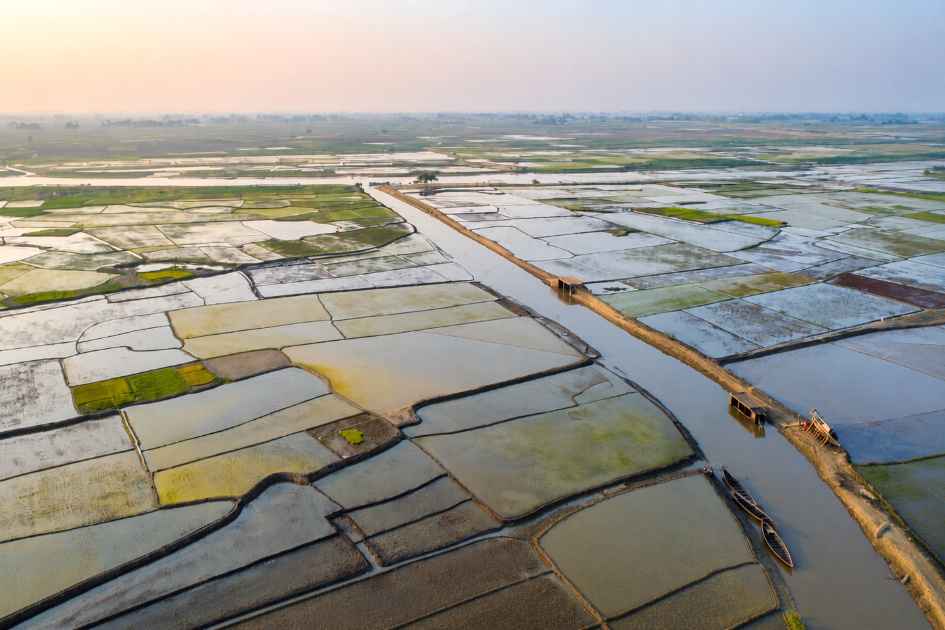

Bangladesh’s monsoon sustains rice, jute, vegetables, fruits and fisheries, but climate-driven floods and waterlogging threaten production, demanding resilient farming, better storage and weather-based advisory support.
Agriculture and the monsoon are deeply interconnected in Bangladesh. Nearly 75 percent of the country’s annual rainfall occurs during the monsoon season, making it indispensable for agricultural production. As an agrarian nation, more than 40 percent of Bangladesh’s population depends directly or indirectly on agriculture for their livelihoods. According to the Bangladesh Bureau of Statistics (BBS), the agricultural sector contributes more than 11 percent to the country’s Gross Domestic Product (GDP). The monsoon is therefore not merely a season. It is a cornerstone of Bangladesh’s food security and rural economy.
The principal crop of the monsoon season is Aman rice. Although rice is cultivated in three distinct seasons in Bangladesh, Aman production depends most heavily on natural rainfall. According to the latest agricultural statistics from BBS, Bangladesh produced approximately 40.6 million tonnes of rice during the 2024-25 fiscal year. Of this total, Aman rice accounted for about 16.4 million tonnes while Aus rice contributed approximately 2.8 million tonnes. Together, these two monsoon rice crops account for nearly half of the country’s total rice production and play a vital role in meeting the food requirements of Bangladesh’s nearly 170 million people.
Another important monsoon crop is jute, often referred to as the country’s “golden fibre.” Once the leading source of foreign exchange earnings, jute continues to make a significant contribution to Bangladesh’s economy. According to agricultural statistics, the country produced more than 1.5 million tonnes of jute in 2025. Bangladesh remains one of the world’s largest producers of jute. As global demand for environmentally friendly and biodegradable fibres continues to grow, jute and jute-based products present new economic opportunities for Bangladeshi farmers.
The monsoon season is also highly favourable for vegetable cultivation. Crops such as okra, bitter gourd, ridge gourd, pumpkin, pointed gourd and Malabar spinach are widely grown during this period. According to the Department of Agricultural Extension (DAE), Bangladesh produces more than 20 million tonnes of vegetables annually. However, excessive rainfall and waterlogging frequently damage vegetable fields in many areas, reducing production and driving up market prices.
Fruit production also benefits significantly from the monsoon. Mangoes, jackfruit, pineapples, guavas, hog plums and palmyra fruits are among the seasonal fruits that become widely available during this period. Bangladesh currently produces more than 13 million tonnes of fruit annually. While these fruits make an important contribution to nutritional security, inadequate post-harvest handling and storage facilities result in considerable losses each year.
The monsoon season is equally important for the fisheries sector. Bangladesh is one of the world’s leading producers of freshwater fish. According to the Department of Fisheries, total fish production reached approximately 5.0 million metric tonnes during the 2023-24 fiscal year. During the monsoon, rivers, canals, floodplains and wetlands are replenished with water, creating ideal breeding conditions for fish. As a result, fish production increases, providing both nutritional and economic benefits to rural communities.
Despite its benefits, monsoon agriculture is increasingly threatened by climate change. In recent years, flash floods, excessive rainfall, riverbank erosion and prolonged waterlogging have severely affected agricultural production across the country. According to various government and international reports, the devastating floods of 2024 damaged approximately 1.1 million tonnes of rice, causing agricultural losses amounting to several thousand crore taka.
To address these challenges, Bangladesh must strengthen climate-resilient agriculture through the development of stress-tolerant crop varieties, improved seed distribution systems, greater agricultural mechanization, crop insurance schemes and modern post-harvest storage facilities. In addition, providing farmers with weather-based advisory services can help them make informed production decisions. With appropriate planning, investment and technological innovation, monsoon agriculture can become more productive, resilient and sustainable, ensuring long-term food security and economic prosperity for Bangladesh.
The writer is a Senior Program Officer at the SAARC Agriculture Centre, Bangladesh.




