


A nationwide CPD survey shows Bangladesh parties prioritise infrastructure over sustainability, urging clearer links between growth, environment and social protection as voters express optimism for a green future ahead election.
As Bangladesh prepares to hold its national election this week amid intense campaigning, a nationwide survey conducted by the think tank Centre for Policy Dialogue (CPD) has revealed significant gaps in political commitments toward building a green and sustainable economy.
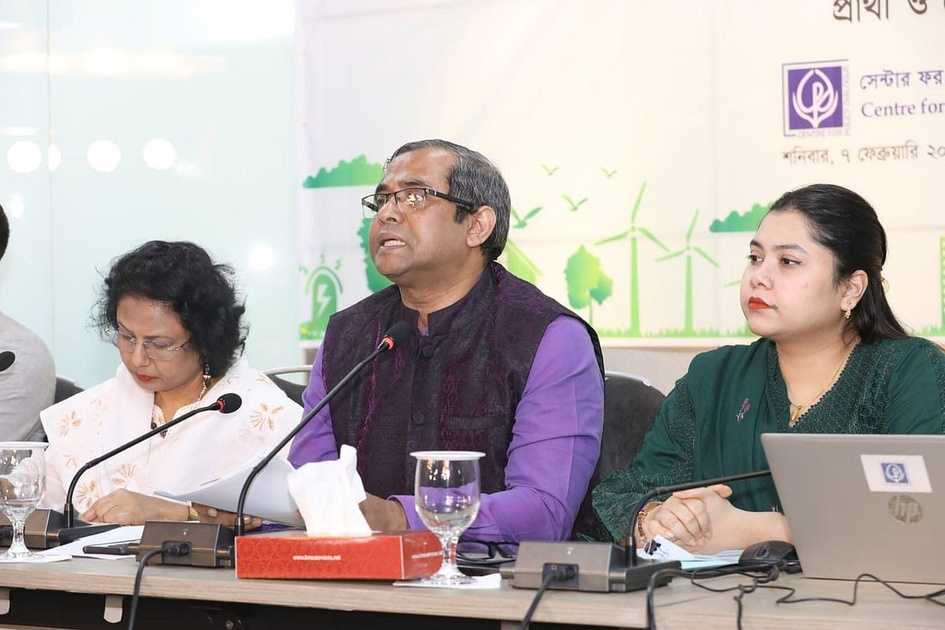
Presenting the survey findings, CPD Research Director Khondaker Golam Moazzem called on political parties to adopt stronger, integrated sustainability frameworks.
“Political parties have taken encouraging steps by moving beyond traditional infrastructure-centred pledges and giving greater attention to social development,” Moazzem said. “Now they must clearly connect economic growth with environmental sustainability and social protection. Without this integrated approach, Bangladesh will struggle to achieve truly inclusive and resilient development.”
Speaking at a media briefing at BRAC Centre Inn in Dhaka on Saturday, CPD researchers said voters and political leaders continue to associate development primarily with visible infrastructure such as roads, bridges, culverts and employment generation rather than long-term sustainability indicators.
The CPD analysis reviewed political party manifestos and identified several gaps in environmental commitments. While the Bangladesh Nationalist Party has pledged to reduce carbon emissions, its manifesto does not clearly explain financing strategies for reducing dependence on fossil fuels. Researchers also described Jamaat-e-Islami’s target of generating 50 billion dollars in ICT export earnings as overly ambitious.
Despite these limitations, researchers acknowledged some positive changes, noting that political parties have reduced commitments to large-scale mega projects and increased attention to social development issues.
Several environment-related promises feature in election manifestos. BNP has pledged to introduce family and farmer support cards, re-excavate 20,000 kilometres of rivers and canals, plant 250 million trees within five years and modernise waste management systems.
The National Citizens Party has promised to generate 25 percent of national electricity from renewable sources within five years. The party also plans to install solar panels on government buildings and convert 40 percent of government vehicles to electric vehicles.
Jamaat-e-Islami has pledged to make effluent treatment plants mandatory in industrial facilities, increase domestic gas exploration, provide free healthcare services for children and elderly citizens and ensure free higher education for female students. Islami Andolon Bangladesh has promised to cancel quick rental power agreements.
The survey covered 150 constituencies and included 1,650 respondents comprising voters, election candidates and their representatives. The findings suggest that although environmental issues are gaining attention, political party manifestos still lack comprehensive plans that integrate economic, social and environmental sustainability.
According to the survey, nearly 77 percent of voters believe development is largely ensured through infrastructure expansion and job creation. This perception is even stronger in urban areas, where around 86 percent of respondents linked development directly with road and bridge construction. Similar views were observed among residents of climate-vulnerable and marginal regions, including the Chattogram Hill Tracts and coastal areas.
Researchers warned that this narrow understanding of development could weaken efforts to achieve sustainable growth, climate resilience and environmental protection in the future.
CPD Senior Research Associate Helen Mashiat Priyoti emphasised the need to transform employment strategies toward environmentally responsible sectors.
“We cannot continue to justify employment by expanding polluting industries,” she said. “Bangladesh must prioritise green job creation that protects public health, reduces environmental risks and supports sustainable economic transformation.”
The survey found that 95 percent of voters remain optimistic about the possibility of building a green society in Bangladesh. However, environmental protection measures preferred by voters are mostly limited to tree plantation and reducing plastic use, cited by around 61 percent of respondents.
Awareness of renewable energy remains relatively limited. Only 47 percent of voters and 42 percent of political candidates reported familiarity with renewable energy technologies. Researchers noted that renewable energy is still not widely viewed as a central component of environmental protection and sustainable development.
The study also found that among the three pillars of sustainable development environmental, economic and social the social dimension receives the least attention from both voters and candidates. Economic challenges, including poverty, income insecurity and unemployment, continue to dominate public priorities.
Among social concerns, healthcare and education emerged as the most important demands from voters, reflecting ongoing struggles to meet basic needs across a large section of the population.
CPD researchers emphasised the need to strengthen local government institutions, noting that decentralised governance is essential for implementing sustainable development initiatives effectively.
As Bangladesh approaches its 13th parliamentary election, the CPD findings highlight growing public expectations for policies that balance economic progress with environmental sustainability and social wellbeing, which experts say will be crucial for the country’s long-term development and climate resilience.
Reacting to the survey findings, Sohanur Rahman, Executive Coordinator of YouthNet Global, told The Climate Watch that the rising public awareness reflected in the survey presents a critical opportunity for political leadership.
“The findings clearly show that citizens are ready to support a greener and more sustainable Bangladesh, but political commitments must move beyond symbolic promises,” he said. “A just industrial transition can unlock green jobs, resilience and environmental protection simultaneously. Election manifestos must offer clear, measurable and youth-inclusive climate and green economy plans to make that transition real.”




