




South Asia’s harvests remain broadly stable, but rising food, fuel and farm-input costs are exposing vulnerable households, while conflict and climate shocks deepen hunger across Africa, the Middle East and parts of Asia
Bangladesh and its South Asian neighbours face mounting food-security risks from an emerging El Niño, costly fertiliser, higher energy bills and erratic monsoons, even as harvests remain broadly stable, the World Bank warned in a new global food security assessment.
Bangladesh faces mounting threats to its food system from extreme heat, unpredictable rainfall, flooding and salinity as a possible El Niño event combines with soaring fertiliser and energy costs, according to a new World Bank assessment.
The bank’s June 2026 Food and Nutrition Security Update said South Asia had enough food in aggregate, but warned that affordability and household vulnerability were coming under increasing pressure.
For Bangladesh, the immediate concern is not a nationwide shortage but the convergence of climate hazards and higher production costs that could weaken harvests, reduce farmers’ incomes and push food prices beyond the reach of poorer families.
The country could experience heatwaves, reduced rainfall, salinity intrusion and localised floods, placing agriculture, fisheries and water supplies under strain, the report said.
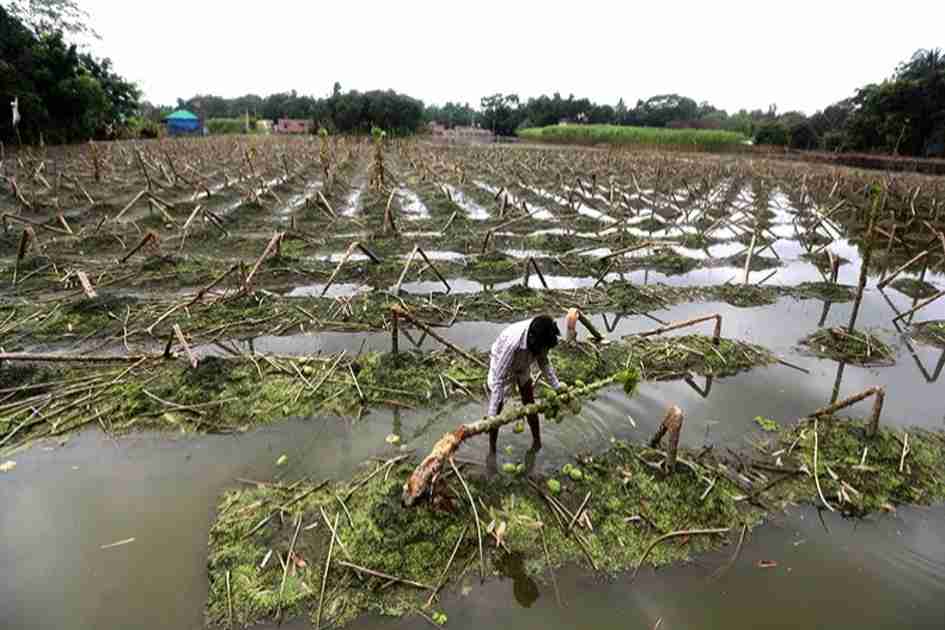
Bangladesh’s main boro rice harvest was wrapping up with generally favourable crop conditions, despite minor losses caused by flooding. But the report warned that conditions could become more difficult as the year progresses.
Climate pressure on Bangladesh
The outlook is complicated by the prospect of El Niño developing during 2026 and persisting into early 2027.
The World Bank cited an 82-percent probability of those conditions emerging, potentially bringing lower crop yields to parts of South and Southeast Asia, Southern Africa, Central America and the Sahel.
In areas severely affected by El Niño, rice output could decline by between 20 and 50 percent, with South Asia among the regions most exposed, the update said. The figure represents a risk scenario for affected areas rather than a forecast of a Bangladesh-wide production fall.
Bangladesh’s exposure is unusually broad because the same climate event could produce different shocks in different parts of the country.
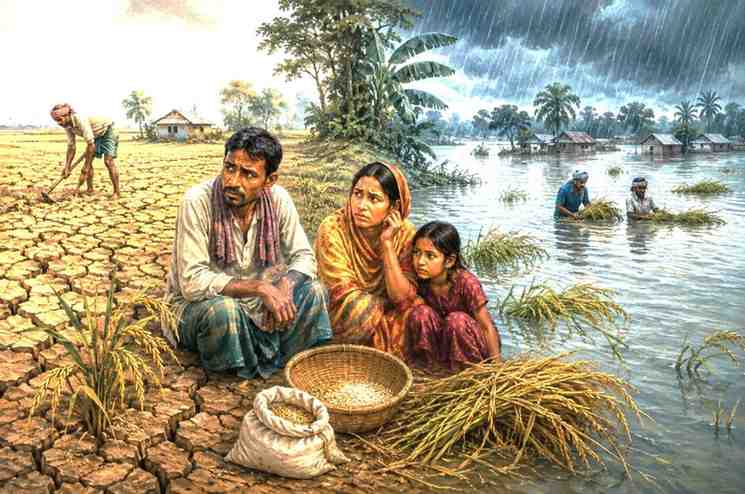
Reduced rainfall and heat could damage crops and freshwater supplies, while intense rainfall could cause flash floods, waterlogging and crop losses. Salinity intrusion could add pressure to farming, fisheries and drinking-water systems in coastal areas.
The overlapping dangers mean a favourable national harvest may mask severe losses in particular districts or among farmers, fishers and agricultural labourers whose incomes depend on local conditions.
The report called for stronger early-warning systems, drought preparedness, targeted assistance and contingency planning across South Asia.
Fertiliser prices add to farmers’ burden
Climate pressure is being compounded by a sharp rise in agricultural input costs.
Global fertiliser prices increased by 35 percent in the first five months of 2026 compared with the same period a year earlier, according to the World Bank.
Although prices eased in recent weeks, the market had not fully stabilised. The impact of reduced fertiliser applications earlier in the growing season may only become visible when crops are harvested, it said.
The bank projects fertiliser prices will rise by 38 percent over the full year, while food commodity prices are expected to increase by about three percent.
Such increases could force small farmers to reduce fertiliser use, plant less land or borrow more to finance production. They could also narrow profit margins even when crop prices rise.
The report also pointed to disruptions connected to the Middle East and the Strait of Hormuz, which were raising the costs of oil, gas, fertiliser, shipping and insurance.
For South Asian economies, these higher costs could influence planting decisions, food transportation and the final prices paid by consumers.
Food available but increasingly unaffordable
Global food supplies remain broadly adequate, but the World Bank said production of wheat, maize and rice was expected to decline from record levels in 2025 because of high input costs, adverse weather and weaker incentives to plant.
Rice stocks were estimated to have fallen by 2.7 percent, although overall global grain stocks remained stable. International price movements have been mixed.
Since the previous update, maize and wheat prices fell by 15 and 13 percent respectively, while rice prices increased by nine percent. Compared with a year earlier, average rice prices were one percent higher and wheat prices eight percent higher.
The decline in some international prices does not automatically translate into cheaper food in local markets. Exchange-rate pressure, transport costs, taxes, import restrictions and domestic supply disruptions can keep retail prices elevated.
The food-inflation heat maps on page two of the World Bank update show that pressures increased in South Asia between April and May.
Globally, 45 percent of low-income countries recorded food inflation above five percent, up from 40 percent. The figure stood at 36.7 percent for lower-middle-income countries, the group that includes most South Asian economies.
Uneven outlook across South Asia
The region’s outlook varies widely by country. Nepal is exposed because its paddy production depends heavily on the monsoon, groundwater recharge and food imports. Delayed or uneven rainfall could affect both domestic production and rural livelihoods.
Bhutan could face lower river flows, with possible consequences for hydropower generation and export earnings.
Sri Lanka may receive more rain during later stages of an El Niño cycle, but that could increase the risk of floods, waterlogging and landslides.
India’s rabi harvest was concluding and its summer rice crop was developing under broadly favourable conditions when the report was prepared.
Pakistan’s cereal production remained above average, although dry conditions and reduced wheat acreage had created localised pressure.
Afghanistan remained highly fragile after repeated droughts and climate shocks, while reduced assistance was adding to the difficulties faced by vulnerable households.
Hunger deepens in Africa
Conditions are more severe across conflict-affected parts of Africa. Between 44 million and 47 million people in East and Southern Africa were estimated to need food assistance, with the gravest crises concentrated in Sudan, South Sudan and Somalia.
The World Bank said famine conditions had been confirmed in parts of Sudan, while prolonged drought had created a credible famine risk in some areas of Somalia.
Southern Africa’s 2026 harvest was more encouraging, particularly in Zambia, Zimbabwe and South Africa, but Madagascar, Malawi and southern Mozambique continued to experience localised shortages linked to dry spells and erratic rainfall.
In West and Central Africa, 52.8 million people could face acute food insecurity between June and August, including more than 34.7 million people in Nigeria.
Conflict, displacement, economic pressure and climate shocks remain concentrated around the central Sahel and Lake Chad Basin. A possible El Niño-related rainfall deficit could reverse recent improvements in food markets.
Asia-Pacific divides
Food supplies remained relatively manageable in China, Cambodia and Indonesia, supported by domestic production, government reserves and market interventions.
Indonesia expected 19.3 million tonnes of rice production during the first six months of 2026 and held 5.3 million tonnes in reserve, while China recorded a 1.6-percent year-on-year decline in food prices in April.
But conditions were markedly worse in import-dependent and conflict-affected economies.
Myanmar had 12.4 million people facing acute food insecurity. In Laos, imported rice prices increased by 18 to 20 percent and cooking oil prices by 25 percent amid currency pressure.
The Philippines raised its projected rice imports for 2026 to at least 4.8 million tonnes following a contraction in agricultural production during the first quarter.
Conflict drives crises elsewhere
In the Middle East, the gap between food availability and people’s ability to afford it remained stark.
Inadequate food consumption in Yemen increased from 50 percent of the population in March to 59 percent in April despite adequate imports, illustrating how falling incomes and reduced assistance can cause hunger even when food reaches national markets.
Only 18 percent of Syria’s population was considered food secure, while 1.24 million people in Lebanon faced high levels of acute food insecurity. Gaza continued to experience extreme deprivation and severe restrictions on access to essential supplies.
Latin America and the Caribbean also faced growing pressure. Haiti remained the region’s most acute crisis, with 5.83 million people, about 52 percent of the population, experiencing acute food insecurity.
In Bolivia, weeks of protests and road blockades disrupted the movement of food, fuel and farm inputs, while annual inflation reached 21.3 percent in May. Vegetable prices increased by between 42 and 57 percent in some markets.
Europe and Central Asia remained comparatively stable, although high fertiliser prices and geopolitical disruptions were increasing production costs, particularly in import-dependent economies in Central Asia, the South Caucasus and the Western Balkans.
For Bangladesh and its neighbours, the World Bank’s message is that adequate national food stocks alone will not guarantee food security.
The greater test will be whether governments can protect farmers from costly inputs, prepare for erratic weather and ensure that low-income households can continue to afford food as climate and geopolitical shocks pass through markets.




