

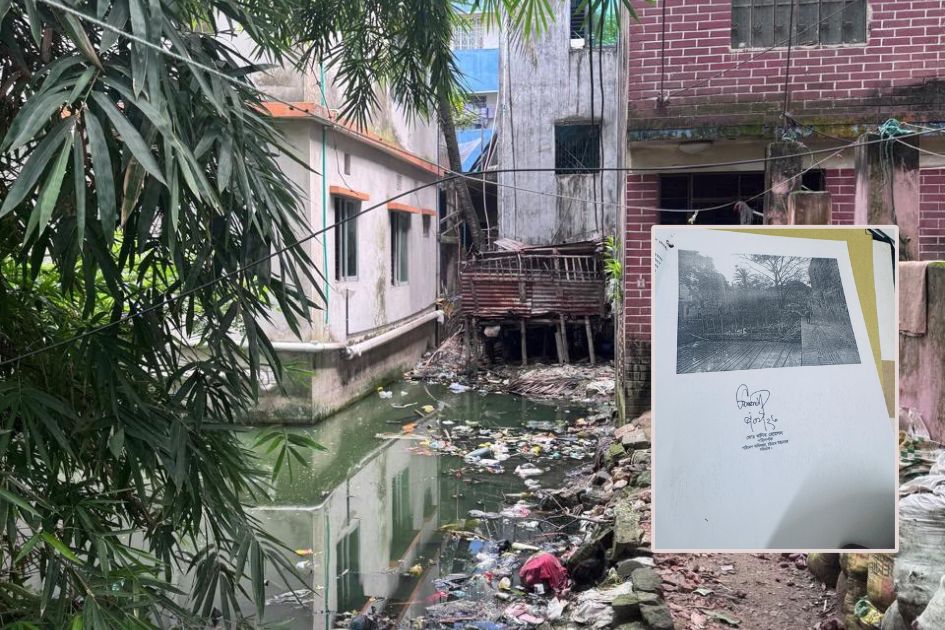



Once vital for rainwater storage, cooling and firefighting, Chattogram’s ponds are vanishing under urban pressure, exposing residents to worsening heat, waterlogging and groundwater stress.
Chattogram, Bangladesh’s main port city, is becoming hotter and more vulnerable to water shortages, flooding and fire risks after losing nearly 3,000 ponds and water bodies over four decades, according to government agencies, researchers and environmental campaigners.
Average temperatures in Chattogram have risen by 0.5 to 1 degree Celsius over the past decade, with significant impacts on the environment and daily life. According to the Department of Geography and Environmental Studies at the University of Chittagong, daytime maximum temperatures in May and June this year ranged between 34 and 36 degrees Celsius, the highest in the past 10 years.
Environmental experts say the disappearance of ponds, reservoirs and other water bodies has intensified heat in the city, hitting low-income residents hardest. It has also worsened waterlogging, increased fire risks and deepened water shortages. As groundwater levels continue to fall, many parts of the city are facing growing pressure on water supplies.
Ponds, large tanks and low-lying water bodies were once part of almost every neighbourhood in Chattogram. They stored monsoon rainwater, supplied water for daily use and served as emergency sources during fires. But decades of unplanned urbanisation, rising land prices and weak oversight have led to the steady disappearance of water bodies.
Data from the Department of Environment and the Chattogram Development Authority, the public agency responsible for urban planning in the city, show that nearly 3,000 ponds, tanks and low-lying water bodies have disappeared from Chattogram over the past four decades.
The impact is now visible in the city’s environment and public life. Temperatures are rising, waterlogging is worsening, groundwater levels are falling and firefighting is becoming more difficult.
In Gosaidanga’s Abidarpara area, a court case over the alleged filling of a 6.87 decimal pond for building construction has yet to be concluded. On November 17, 2021, the Chattogram Development Authority approved the construction of a three-storey building on the land. Although part of plot 376 was classified as pond land, construction work began there.
After a complaint by local resident Akhtaruzzaman, the Department of Environment carried out an inspection and found evidence that the pond had been filled.
On February 5, 2023, Department of Environment inspector Md Monir Hossain filed a case against seven people. The case statement said part of the building plan approved by the CDA was being implemented on land classified as a pond. Local residents also confirmed that a pond had previously existed there and had been filled for construction.
Asked about the latest progress of the case in 2026, the investigating officer said the case was still under investigation and that the death of one accused had complicated the filing of the charge sheet. The charge sheet will be submitted to the court after the death certificate of the deceased accused is collected from the city corporation, he said.
The officer said investigators had found no fresh evidence of further filling and that only the portion filled earlier remained as it was. According to the officer, the pond is under joint ownership and there are allegations that different owners partially filled their respective portions.
More recently, allegations over the filling of an old community pond in Nazir Para of Panchlaish have brought the question of water body protection back into focus.
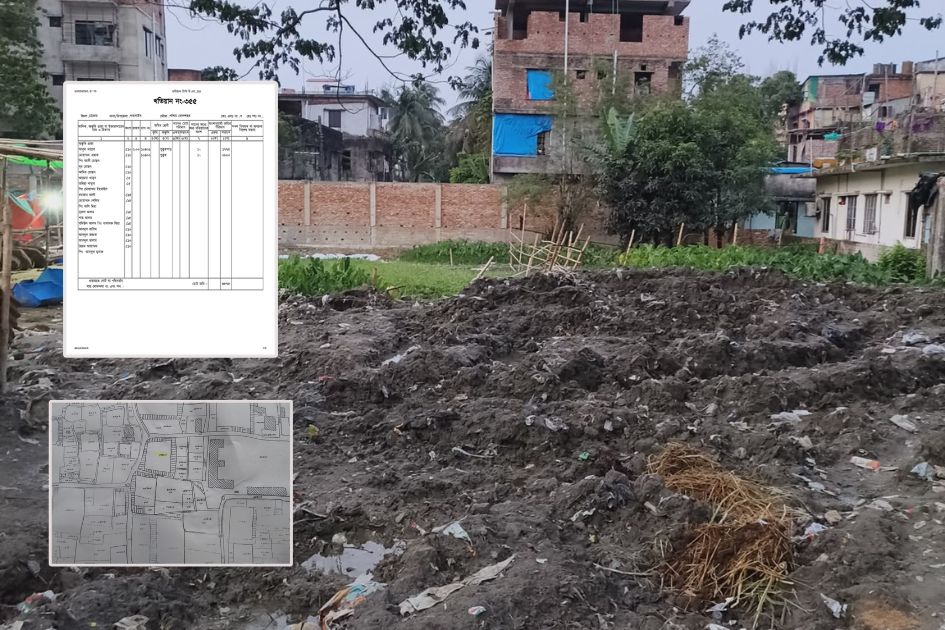
Residents of Nazir Para in the West Sholoshahar ward under Panchlaish police station have alleged that a locally known pond called “Putu Pukur” is being filled.
They say an influential group has been dumping sand and soil into the long-used pond in an attempt to create commercial plots. Residents have also alleged that they faced intimidation and threats when they tried to resist.
Locals fear that if the pond is lost, water shortages will worsen for several hundred people. They say the loss will also reduce groundwater recharge, damage biodiversity and create major risks during fires because of a lack of emergency water.
On behalf of Nazir Para residents, environmental activist Md Imtiaz Ahmed, chief coordinator of the Chattogram Divisional Environment Protection Movement, submitted a written complaint to the Department of Environment.
But residents alleged that no effective action had been taken more than 32 days after the complaint was filed.
Asked about the matter, Sonia Sultana, director of the Department of Environment’s metropolitan office in Chattogram, said: “After receiving complaints, we carry out inspections and take necessary legal action. In many cases, complaints come after ponds have already been filled. Even so, we will look into the matter.”

The Nazir Para case is not an exception. Similar scenes can be found across the city.
In Agrabad’s Yasin Goli, dense housing, small dwellings and several hundred residents now occupy the area. But locals say there was a large pond of about three acres there around 35 years ago.
Md Al Amin, who has lived in Yasin Goli for four decades, said: “When I was a child, there were three or four ponds in this area. We used to swim there. There was no Wasa water then, and the pond was the main source of water. Now all the ponds have been filled and turned into buildings and slums.”
Residents of the Lalkhan Bazar area tell a similar story. According to locals, there was once a nearly two-acre water body there known as Tula Pukur. The site has now become a settlement of about 300 families.
Environmental and climate experts say urban water bodies do more than store water. They are also a key part of a city’s natural cooling system.
In May and June this year, Chattogram’s maximum temperature ranged between 34 and 36 degrees Celsius, about 1 degree Celsius higher than the long-term average. Experts say the city’s average temperature has risen by about 0.5 to 1 degree Celsius over the past decade.
They say the loss of water bodies and green spaces is gradually turning Chattogram into an “urban heat island”, where heat is felt more intensely than in surrounding areas.
Dr Md Iqbal Sarwar, a professor at the Department of Geography and Environmental Studies at the University of Chittagong, said: “The impact of losing water bodies is not limited to rising temperatures. Earlier, heavy rainwater would accumulate in these ponds and low-lying areas. Now that they have been filled, water quickly gathers on roads and in low-lying areas, creating waterlogging.”
Climate experts say that in many cases, the absence of water bodies can make heat feel 5 to 7 degrees Celsius higher than the actual temperature.
According to the latest CDA survey, 2,776 water bodies disappeared from Chattogram city over four decades up to 2023.
In 2008, the city had 5,031 ponds and water bodies. By 2023, the number had fallen to about 2,000.
Research data also show that in 1989, the city had 1,605 ponds, large tanks and low-lying water bodies. By 2015, the number had declined to 1,352.
Experts say rising land values, land grabbing by influential local groups, the division of family property and inheritance-related complications are among the main causes behind the loss of water bodies.
Chattogram’s history is also closely tied to its water bodies.
Kamaldaha Dighi in Chawkbazar, Hamza Khan’s Dighi, Rajapukur in Anderkilla, Karbala Pukur, Hazari Pukur, Mailyar Pukur and Michi Pukur in West Madarbari are among many water bodies whose existence is now mostly confined to place names.
Historians and local researchers say many of these water bodies were excavated during the Mughal and Sultanate periods. Over time, most have disappeared beneath housing projects, educational institutions, markets and commercial buildings.
Under the Bangladesh Environment Conservation Act, 1995, amended in 2010, and the Natural Water Reservoir Conservation Act, 2000, filling ponds, large tanks, low-lying areas or any other natural water reservoir is a punishable offence.
Environmentalists, however, allege that enforcement of the law remains extremely weak.
Md Aliur Rahman, general secretary of the Chattogram River and Canal Protection Movement, said: “From the Mughal period to the British period, rulers excavated large tanks for the city. But under the pressure of modern urbanisation, we are destroying them ourselves.”
He said water bodies could not be protected without coordinated monitoring by the district administration, land offices and the Department of Environment.
River researcher Dr Muhammad Idris Ali said Chattogram’s natural balance had long been damaged through planned hill cutting, pond filling and the occupation of canals and drains. He said environmental protection was not possible through tree-planting programmes alone. If hill cutting and the destruction of water bodies continue on one side while afforestation goes on elsewhere, the environmental crisis will deepen.
He said Chattogram’s ponds, hills and rivers play an important role in regulating the city’s climate, biodiversity and waterlogging. As these natural resources disappear, the urban environment is now at risk. He also raised questions about the manpower, capacity and effectiveness of law enforcement by the Department of Environment. In many cases, he said, the agency becomes active only after environmental damage has already occurred.
Dr Idris Ali said political and economic influence has made it difficult to take effective action against environmentally destructive activities. As a result, pond filling, hill cutting and river encroachment continue. He also said that although large budgets are discussed for tackling climate change, there is a lack of effective local-level action to protect natural water bodies and the environment.
He said existing laws on pond conservation were not being properly implemented, allowing one water body after another to disappear. Protecting the environment cannot depend only on government agencies, he said, adding that active public participation, social resistance and civic awareness are essential.
He warned that if the current trend continues, the number of ponds, rivers and hills in Chattogram will decline further and environmental risks will increase.
Environmentalists say water bodies are among the main sources of groundwater recharge. As one reservoir after another disappears, groundwater levels are steadily falling, posing a major threat to the city’s future water security.
They warn that if the current trend continues, Chattogram will face more severe water shortages, waterlogging, heatwaves and fire risks in the coming years.
Strict enforcement of existing laws, rapid action against illegal filling and a coordinated list of lost water bodies are now urgent, experts say.




