

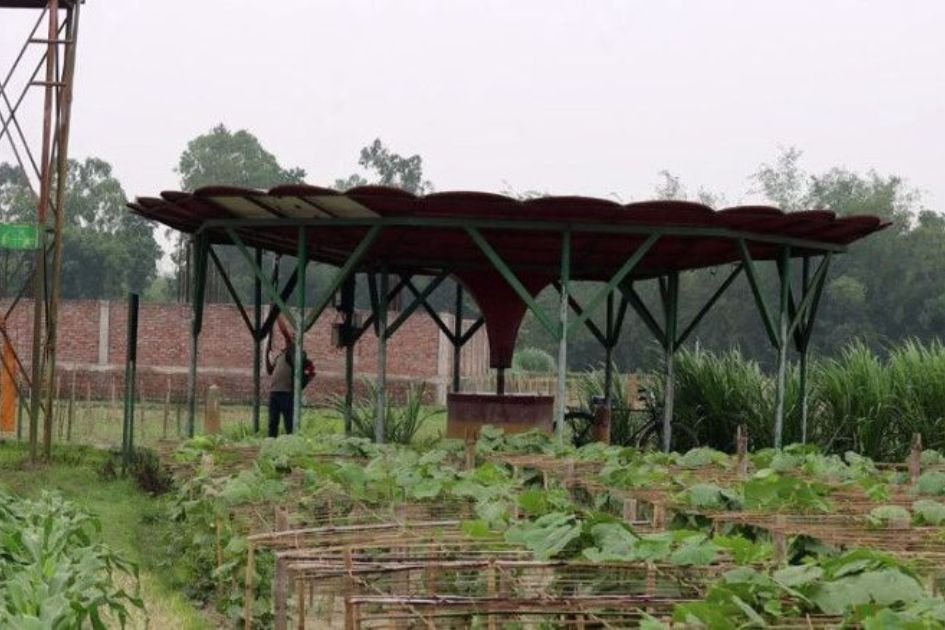



Rising diesel prices and shortages are accelerating Bangladesh’s shift to solar irrigation, helping farmers reduce costs, secure water supply, and build resilience amid growing energy and climate challenges.
As diesel prices rise and supply disruptions hit irrigation systems, farmers across Bangladesh are increasingly turning to solar-powered solutions to protect crops, reduce production costs and ensure reliable water access.
The shift comes at a critical time for the country’s agriculture sector, where irrigation depends heavily on fuel. Bangladesh requires more than 4 million tonnes of diesel annually, a large share of which powers over 1.2 million irrigation pumps. A recent 15 percent hike in diesel prices has intensified concerns over rising cultivation costs and potential crop losses.
At the same time, in northern Bangladesh, particularly in Rangpur Division, solar irrigation is emerging as a practical and scalable alternative. By reducing dependence on diesel, these systems are helping farmers stabilise production and adapt to growing energy uncertainties.
For Afzal Hossain, a farmer in Gobindaganj upazila of Gaibandha, the shift has brought immediate relief. Cultivating Boro paddy on six bighas of land, he no longer worries about irrigation.
“I am not worried about irrigation,” said Afzal Hossain, noting that neighbouring farmers who rely on diesel or electric pumps are struggling with fuel shortages and load shedding.
Rising Costs Add Pressure on Farmers
Across Rangpur Division, where more than 500,000 hectares of Boro paddy have been cultivated this season, between 35 percent and 40 percent of farmland still depends on diesel-powered irrigation.
The recent fuel price hike has led service providers to increase charges for irrigation, harvesting and processing, placing additional strain on farmers already dealing with volatile input costs.
For many cultivators, irrigation has long been one of the most expensive components of production. The diesel crisis has only deepened this burden, making affordable alternatives increasingly necessary.
Solar Systems Offer Reliable and Cost-Effective Irrigation
Solar-powered irrigation systems are now gaining ground as a dependable solution. In Rangpur, a growing number of farmers are using solar pumps that provide uninterrupted water supply without the challenges of fuel shortages or fluctuating prices.
According to the Bangladesh Agricultural Development Corporation, nearly 600 solar irrigation systems were operational in Rangpur during the last irrigation season. These systems generate an estimated 5.9 megawatts of electricity daily.
Over a four-month irrigation period, they are estimated to save around 7.5 million litres of diesel, significantly reducing both operational costs and environmental impact.
Farmers say the benefits are clear.
“There is no worry about fuel. Electricity comes from solar power and we get water regularly,” said Sudhan Chandra Sen, a farmer from Rangpur, highlighting improved crop conditions and reduced irrigation costs.
In Kurigram’s char areas, renewable irrigation has enabled cultivation on previously unused land.
“Land that once remained unused is now producing crops,” said Meher Jamal from Char Paschim Bajra in Ulipur upazila.
In Bogura, Abdul Hamid cultivated Boro paddy on five and a half bighas using solar irrigation and said the system has reduced both expenses and stress.
“I haven’t had to worry about irrigation or rising fuel costs,” he said.
Another farmer from the same area, Abu Hasan, pointed to the consistency of water supply.
“I face no water shortages. Irrigation is consistent and crops are better,” he added.
Untapped Potential Beyond Irrigation
Despite its success, solar irrigation still faces structural limitations. Experts note that these systems are typically used for only about six months during the irrigation season, remaining largely idle for the rest of the year.
This leads to underutilisation of generated electricity.
To address this, specialists are calling for the introduction of net metering, which would allow surplus electricity produced during the off-season to be supplied to the national grid.
Hussain Mohammad Altaf, Executive Engineer at the Bangladesh Agricultural Development Corporation in Rangpur, said such a system could significantly expand the value of solar irrigation.
“If net metering is introduced, these systems can contribute not only to agriculture but also to the national power supply,” he said, adding that the generated electricity could run around 80,000 fans.
Expansion Continues, but Challenges Persist
Solar irrigation is expanding through both public and private initiatives. Atiar Rahman manages a solar-powered deep tube well in Lalmonirhat, supplying water to maize and vegetable fields.
“Even if diesel is unavailable or prices rise, farmers no longer have to worry,” he said.
Private operators are also scaling up solutions. Abu Jafar Sujan, a regional manager of a solar energy company, said pumps with capacities ranging from 5 to 20 horsepower can irrigate between 30 and 120 bighas of farmland.
At the national level, Infrastructure Development Company Limited has supported the installation of more than 1,500 solar pumps, covering around 15,000 hectares. The government aims to expand this to 10,000 systems by 2030.
Development estimates suggest that replacing diesel pumps with solar alternatives could reduce diesel consumption by up to one million tonnes annually while significantly lowering carbon emissions.
However, expansion has slowed in recent years due to technical challenges, shortages of spare parts and limited new investment. Some existing systems also remain inactive.
A Community-Led Transition
Experts say scaling up solar irrigation could reduce dependence on imported fuel, ease pressure on foreign currency reserves and strengthen climate-resilient agriculture.
They also emphasise that the transition must prioritise farmers and local communities.
Sohanur Rahman, Executive Coordinator of YouthNet Global, said the shift to renewable energy in agriculture should not be driven solely by corporate interests.
“A just transition in Bangladesh’s agriculture must be community-led, not corporate-led,” he said. “Farmers are not just end-users of technology, they are central actors in shaping solutions. Expanding solar irrigation should empower local communities, reduce inequalities and ensure that small and marginal farmers are not left behind in the shift to clean energy.”
For farmers, the economic gains are already visible. Reduced reliance on diesel means lower irrigation costs per season, more predictable expenses and greater resilience against price shocks.
Toward a More Resilient Future
As fuel uncertainty continues, solar-powered irrigation is moving from an alternative option to a practical necessity for Bangladesh’s farming sector.
With stronger policy support, improved maintenance systems and wider adoption of solutions such as net metering, solar irrigation could play a central role in ensuring food security, stabilising rural incomes and advancing a more sustainable and inclusive agricultural future in one of the world’s most climate-vulnerable countries.




