

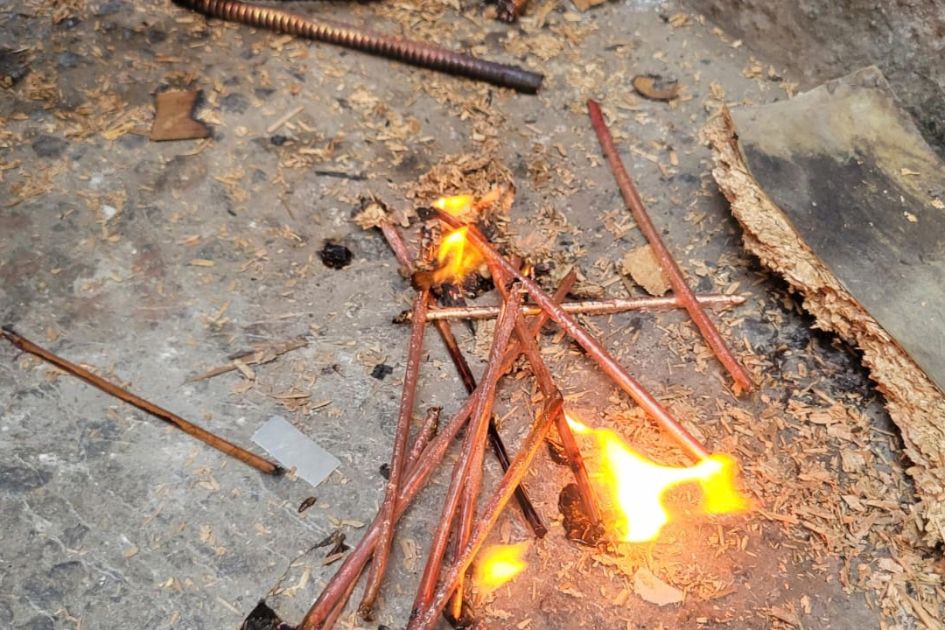



Old laptops, mobile phones and batteries collected by street vendors across Dhaka often end up in small scrap shops, where they are dismantled to recover valuable metals and reusable components such as chips. The process involves many workers, including women and children, who often handle electronic waste without protective equipment, exposing themselves and the environment to potentially harmful substances.
Dhaka, Bangladesh, Friday morning.
The city’s narrow lanes carry a familiar but unusual call compared with other days. It is not exactly a sound, but rather a distinctive announcement echoing through neighbourhoods.
“Old laptops, old mobile phones, old batteries? You can sell them to me.”
The call is not a temporary campaign. It is a regular part of Dhaka’s invisible market for discarded and damaged electronic goods.
Mobile phones and laptops that once served people’s daily needs often get a second life after they stop working. But that second life frequently begins in places where safety, health risks and environmental concerns receive limited attention.
Most days, street collectors pick up damaged mobile phones, power banks and small electronic devices. On occasions when they find an old laptop, it becomes an opportunity for additional income.
In Rajabazar, one such collector was found working on the streets. His name is Md Limon.
Originally from Kishoreganj district, he came to Dhaka in search of work. He later became involved in collecting old and broken electronic items.
When asked what he does with the items he collects, his answer was simple: he sells them.
But the question remained: who buys them?
Following that trail led deeper into Dhaka’s e-waste economy.
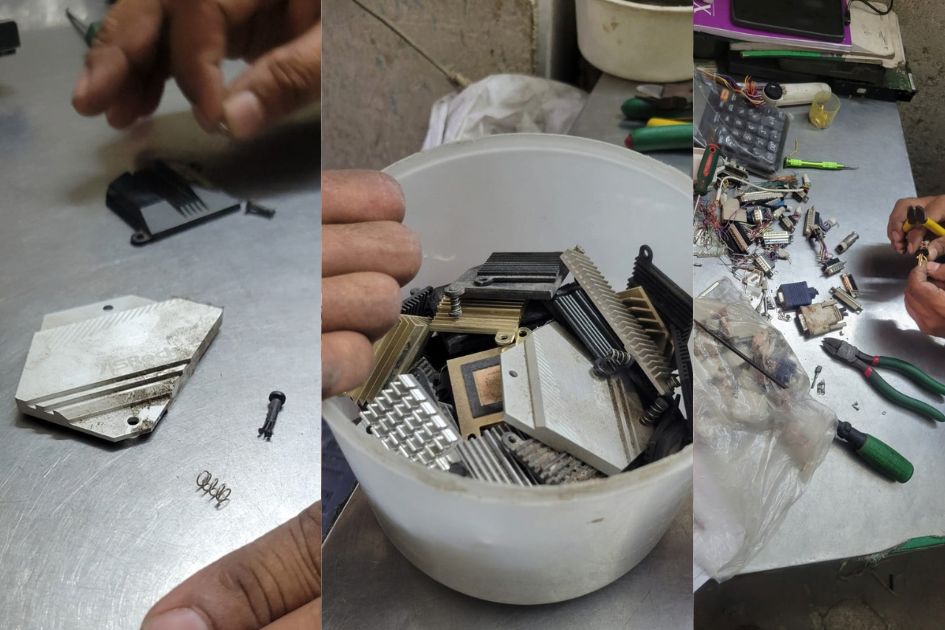
From street collectors to scrap shops
At the bottom of a four-storey building in Rajabazar is a small shop run by Md Suman Mia.
He buys old and damaged laptops and other discarded products from street collectors. His shop also receives other recyclable materials besides electronic goods.
The next step is sorting.
Some items are sent for metal separation, some are sold to other buyers and some parts are sent for reuse.
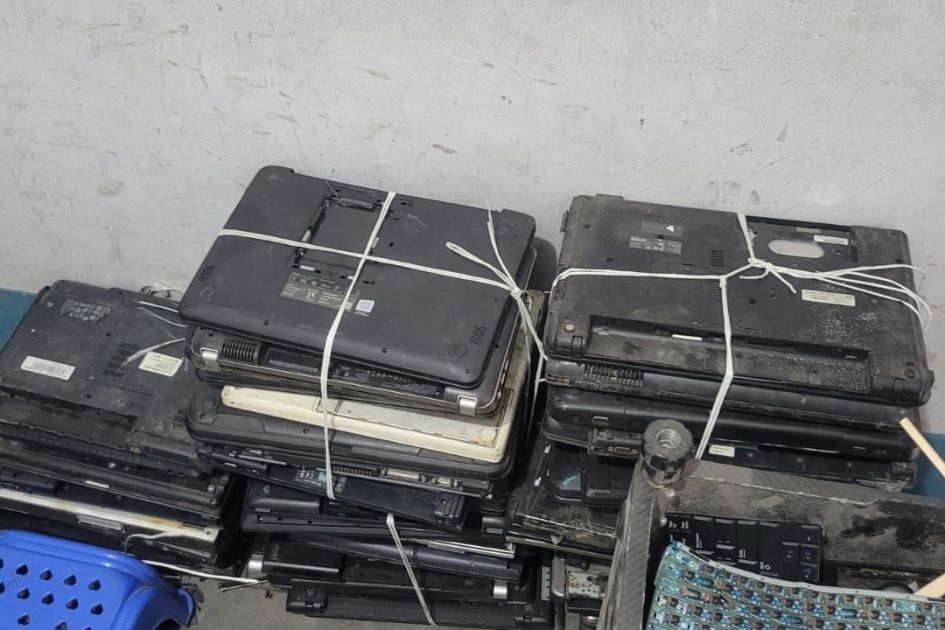
Asked how many old laptops he buys and sells each month, Suman Mia said the average number is around 50.
Some of these devices come from households, while others are purchased in bulk from offices and institutions.
While observing the shop, another man named Khokon Mia arrived and asked whether there were any new items available.
Suman Mia showed him an HP laptop. Khokon Mia examined it carefully, turned it over and took it away.
What would he do with it?
Khokon Mia explained that he would sell it again.
The question of where he would sell it revealed another layer of Dhaka’s used electronics market.
Inside the lanes of Nimtoli
Dhaka’s Nimtoli area.
Standing at the entrance of Nawab Katara Lane, the first thing noticeable was the smell. The air was heavy with a mixture of chemicals, smoke and the odour of burnt materials.
After passing Chanakharpul General Hospital and walking further inside, numerous small shops appeared.
Calling them shops might not fully describe them. They looked more like small storage rooms or cramped spaces.
In some one-room units, piles of old electronics were stacked. Elsewhere, wires, circuit boards, chips and broken equipment were scattered around.
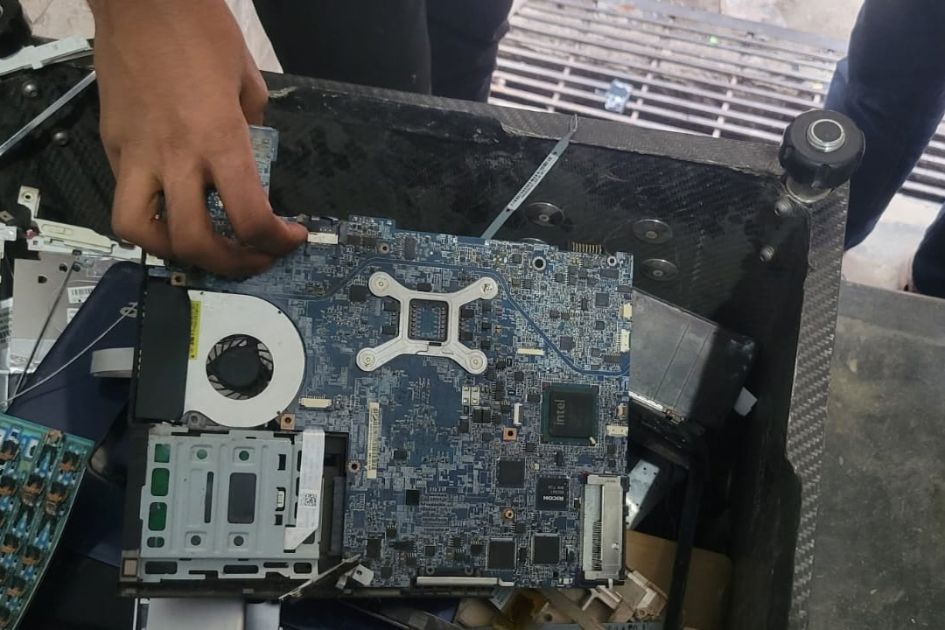
Inside one such room, two people were seen dismantling old laptops. One was a woman and the other was a teenage boy. They agreed to speak on condition that their identities were not disclosed.
Approaching the woman, the question was asked: what are you doing?
She replied with a hint of irony, as if the answer was obvious.
“Working.”
She has been extracting valuable materials from old electronic goods for nearly nine years.
She has a four-year-old child whom she leaves with her grandmother when she comes to work.
When the child was one year old, the child’s father left them. Since then, work with e-waste has been her source of livelihood.
“I have got used to it”
The woman had no gloves on her hands. She was not wearing a mask. The teenage boy working beside her also had no protective equipment.
Both were using their bare hands to break apart, open and separate old electronic items.
Asked why they worked without gloves, she replied:
“I have got used to it.”
Asked whether she faced any problems while working, she said sometimes her hands get cut, often she feels pain and sometimes marks remain on her body. But she has no choice but to continue working.
When asked whether she experienced any other health problems, she said she did not know.
This inability to understand the risks may be one of the biggest dangers of the work.
The effects of e-waste exposure are often not immediately visible. Workers dismantling old devices may come into contact with harmful substances. Separating metals, plastics, batteries and other components can produce toxic dust and fumes.
E-waste expert Professor Dr Ahmad Kamruzzaman Majumder, founder and chairman of the Centre for Atmospheric Pollution Studies (CAPS), explained the harmful impacts of electronic waste.
Speaking about the issue, the environmental specialist said that when e-waste is opened, dismantled or burned in unsafe conditions, heavy metals such as lead and mercury can spread into the environment. Exposure to these substances can create health risks including skin and lung problems. The risks are higher for children and pregnant women.
However, no samples of soil, water or air from the workplace in Nimtoli were tested, nor were the workers’ health conditions examined. As a result, it cannot be confirmed what level of toxic substances exist there or whether any specific health problems among workers were directly caused by e-waste exposure.
But for many people, the need to survive leaves little room to consider these risks.
“If I study, who will work?”
The teenage boy working beside the woman appeared to be around 15 to 16 years old.
He studied up to Class Eight. In 2025, he stopped going to school. Since then, he has been doing this work.
Why did he leave his studies?
Hearing the question, he responded with another question:
“If I study, who will work? Where will I get money?”
His response revealed another reality of Dhaka’s hidden economy.
When families have to choose between a child’s education and household income, working often becomes the practical decision for many children.
The e-waste market is therefore not only a marketplace for old electronic products. It is also a source of livelihood and, in some cases, a place where child labour exists.
What is inside a laptop?
To find the answer to this question, the search continued for factory owners or people responsible for processing the materials.
After passing four or five shops, a small room was found at a crossroads. Inside were a table and a chair, where a factory manager was sitting.
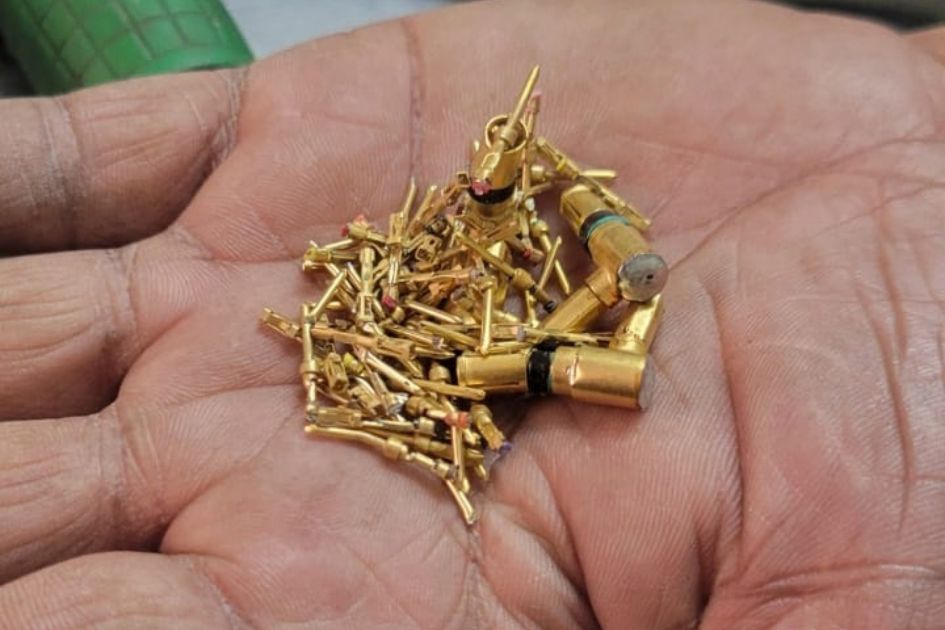
In front of him were small square electronic components. He was separating tiny golden parts from them.
He explained that gold is extracted from these components. Goldsmiths in Tantibazar melt them to separate the gold.
However, the manager was wearing a mask while working.
Why?
He explained that the shop was located beside the road and he used the mask mainly to protect himself from dust.
But is gold the only valuable material found inside a device?
His answer was no.
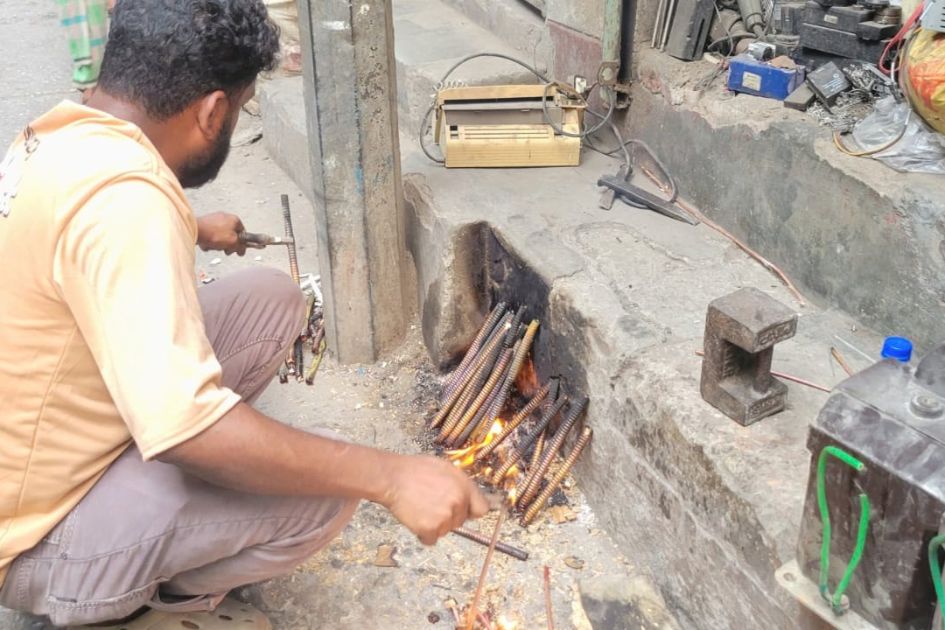
From motherboard ICs and chips to gold, silver, aluminium and iron, different materials are separated from electronic devices.
These materials are then sold to different buyers.
Plastic and metal parts are also separated. Aluminium is sold to buyers who melt it and use it to manufacture new products.
According to the manager, chips and some valuable components are sent by ship to Singapore, Thailand, Malaysia and China.
However, supporting documents such as export records from the relevant organisations, customs information or details of foreign buyer companies were not available to verify this claim. Therefore, it was not independently possible to confirm exactly which components are exported from the Nimtoli facility, in what quantities and to which countries.
This means the life of an old laptop does not end there. Different parts enter the recycling market again. But the question remains: how safe are people and the environment throughout this recycling process?
The parts that do not go abroad
Not all old electronic materials are sent overseas. Different components and materials are also sold within Bangladesh for recycling.
These materials are reused through processes including melting metal parts. However, the method of processing and environmental risks depend on the type of component and the technology used.
Dr Ahmad Kamruzzaman said that after valuable metals are collected, some remaining materials are melted in furnaces and used to make new products. If such activities are carried out unsafely, pollutants can spread into the environment.
However, the exact methods used to process different components at facilities in Nimtoli have not been verified through technical assessments.
In front of me, a person arrived carrying two laptops and several electronic components. Only a short time earlier, these had been parts of usable machines. Now they were simply “scrap”.
But within this scrap lies economic value. There is gold, silver, copper, aluminium and other valuable materials.
At the same time, there are substances that can become harmful to human health and the environment if they are managed incorrectly.
Growing e-waste, growing risks
In Bangladesh, the use of smartphones, laptops, computers, household electronic appliances and batteries for electric vehicles is increasing. Once these products reach the end of their usable life, they become electronic waste.
However, no updated and comprehensive estimate is available on the exact amount of e-waste generated annually in the country. Different studies have provided varying figures on the volume of waste produced.
According to Transparency International Bangladesh (TIB), around 3 percent of the country’s e-waste is processed through formal institutions. However, formal processing does not necessarily mean that the recycling process is completely safe.
A portion of e-waste ends up in the hands of informal scrap businesses. There is no updated reliable data on exactly how many workers are involved in this sector or how many of them are children.
However, field visits to Rajabazar and Nimtoli found workers of different ages involved in collecting old electronic products, sorting them and separating components. Women and teenagers were among those engaged in the work.
According to the World Health Organization, unsafe e-waste management can expose workers to harmful substances including lead, mercury and cadmium. Dr Ahmad Kamruzzaman said exposure to these materials can have harmful effects on brain development, respiratory health and reproductive health, particularly among children and pregnant women.
But for the woman working in that small room in Nimtoli, the scientific warnings are less immediate than a more urgent question: what will she do if she cannot continue this work?
How much oversight exists in e-waste management?
Bangladesh has the E-waste Management Rules, 2021, to regulate the management of electronic waste. However, questions remain over implementation of the rules on the ground and monitoring of informal recycling facilities.
According to information from the Department of Environment, Bangladesh has 19 registered e-waste management companies and seven companies with environmental clearance.
The list of registered and environmentally cleared e-waste recycling companies provided by the Department of Environment includes:
- JR Enterprise, Savar, Dhaka
- Messrs Zaman Enterprise, Kadamtali, Dhaka
- Messrs Yusuf Enterprise, Savar, Dhaka
- NH Enterprise, Savar, Dhaka
- Azizu Recycling and E-Waste Co Ltd, Fatullah, Narayanganj
- Pro Recycling Ltd, Pubail, Gazipur
- MM Enterprise, Jadurchar, Savar, Dhaka
- JR Enterprise, Savar, Dhaka
- Messrs Yusuf Enterprise, Savar, Dhaka
- NH Enterprise, Savar, Dhaka
- Messrs Zaman Enterprise, Kadamtali, Dhaka
- Messrs Rahe Madina Enterprise, Kadamtali, Dhaka
- Pro Recycling Ltd, Pubail, Gazipur
- Pro Recycling Ltd, Taltoli, Sreepur, Gazipur
- Protec Electronics Ltd, Gosinga, Sreepur, Gazipur
- RFL Electronics Ltd, Palash, Narsingdi
- Kishan Accumulator Ltd, Narail Sadar, Narail
- Three MJS and E-Waste Recycling Ltd, Nabinagar, Brahmanbaria
- Azizu Recycling and E-Waste Co Ltd, Fatullah, Narayanganj
Among them, the first seven have both registration and environmental clearance, while the remaining companies appear only on the registration list.
However, there is no specific data available on how much e-waste is being processed through these facilities.
According to the Department of Environment, permission was granted in 2025 to export 47,160 metric tonnes of e-waste to different countries under the Basel Convention through the Prior Informed Consent (PIC) procedure.
However, information was not available on how much of the approved quantity was actually exported and which companies carried out those exports.
Asked when the e-waste facilities in Rajabazar and Nimtoli were last inspected, Md Shamsur Rahman, an inspector of the Monitoring and Enforcement Wing of the Department of Environment, said regular inspections are not carried out at these facilities.
He said inspections are conducted when complaints are received.
Asked what action had been taken against unregistered facilities and illegal exports, Rajinara Begum, managing director of the Waste and Chemical Substances Division of the Department of Environment, said recycling e-waste is positive for the country.
She said the department views recycling positively whether a facility is registered or not.
Officials also said they had no information about illegal exports.
However, despite the economic importance of e-waste recycling, issues such as worker safety, environmental clearance and pollution control cannot be ignored.
No separate system to collect household e-waste
To understand e-waste management practices, a discussion was held with Dr Mohammad Safiullah Siddique Bhuiyan, supervising engineer of the Waste Management Department of Dhaka South City Corporation.
Asked whether there is a separate system for collecting e-waste from households and businesses, he said the city corporation does not have any separate collection system for household e-waste.
Usually, old electronic items from households are sold.
Asked how many e-waste facilities operate in Nimtoli and whether they have trade licences, he said, to his knowledge, two or three facilities carry out this type of work there. However, he did not have specific information on the total number of such facilities.
Asked where waste such as used batteries, dust, ash and broken screens is disposed of, he said those who generate such waste have been instructed to manage it. He added that the government is working further on the issue.
Asked what measures are being taken to control environmental and public health risks, he said efforts are being made to ensure that cleaners involved in e-waste management use aprons, gloves and masks. Collectors have also been instructed to use protective equipment.
However, he said many workers do not always want to use such equipment.
According to him, the city corporation is working to reduce environmental risks, while the Department of Environment is also working on the issue.
However, workers at the Nimtoli workplaces visited during reporting were found working without protective equipment.
Testing needed to determine pollution levels
Professor Dr Ahmad Kamruzzaman Majumder said scientific testing is needed to determine what types of pollution are being created at e-waste processing facilities.
He said soil, water and air samples from areas where e-waste is processed should be tested. The presence and concentration of heavy metals such as lead and mercury should be identified through these samples.
Such testing could provide an understanding of the level of pollution in affected areas.
Proper health examinations are also needed to assess workers’ health risks, along with evaluations of their working conditions and the extent of their exposure to harmful substances.
According to the expert, workers must use necessary protective equipment including masks and gloves. Safe working procedures should also be followed during e-waste processing.
However, simply using masks and gloves does not eliminate all risks. Appropriate safety measures must be ensured based on the types of equipment being handled, the processing methods used and the potentially harmful substances involved.
Technological progress and waste management challenges
Although the use of electronic products is increasing in Bangladesh, significant challenges remain over how these products will be collected and processed after they reach the end of their useful life.
The number of registered e-waste facilities provided by the Department of Environment, the lack of regular inspections and Dhaka South City Corporation’s absence of a separate e-waste collection system highlight some of these challenges.
At the same time, visits to Rajabazar and Nimtoli showed that an informal market for collecting and recycling old electronic products has developed. Street collectors, scrap traders, component buyers and workers are connected through this network.
Through this market, valuable materials from old electronic products return to economic activity. But unsafe working conditions can create health risks for workers.
In this reality, simply creating new recycling facilities is not enough. The safety and livelihoods of existing informal workers must also be considered.
This brings forward the question of a “just transition”.
Why a “just transition” is important
The solution to e-waste management is not only about creating new recycling plants. The people involved in this sector must also become part of the transition.
It is difficult to ensure safe e-waste management without considering the livelihood and future of the woman breaking laptops with her bare hands or the teenage boy who left school after Class Eight to enter this work.
Safe working environments, proper protective equipment, training, healthcare and workers’ rights need to be ensured. In the case of children, support is needed to remove them from hazardous work and provide access to education and alternative assistance.
The core idea of a “just transition” is to ensure workers’ rights, livelihoods and social protection during the shift towards environmentally sustainable and safer systems.
This means environmental protection measures cannot create a situation where informal workers lose their livelihoods and fall into greater uncertainty. At the same time, the need for livelihoods cannot be used as a reason to keep them in unsafe working conditions.
Training, safe employment opportunities and alternative income options for workers in this sector are therefore important parts of transforming e-waste management.
The future of Dhaka’s e-waste challenge
Yet on the narrow streets of Dhaka, the call can still be heard on Friday mornings:
“Old laptops, old mobile phones, old batteries? You can sell them to me.”
Behind this call lies not only the story of discarded electronic products, but also the story of a city’s growing consumption. It reflects the rapid pace of technological change and the lives of people who accept risks because they need a livelihood.
It also reflects the challenge of managing a waste stream where unsafe processing can create risks for soil, water, air and human health.
An old laptop is therefore not simply a discarded device. It is part of a complex reality involving the economy, labour, health and the environment.
The future of that reality depends on how responsibly society manages electronic waste after products reach the end of their useful lives and how effectively it can ensure the safety and livelihoods of the people involved in managing that waste.
This story is published as part of the CPRD-TCW Reporting Fellowship 2025.




