

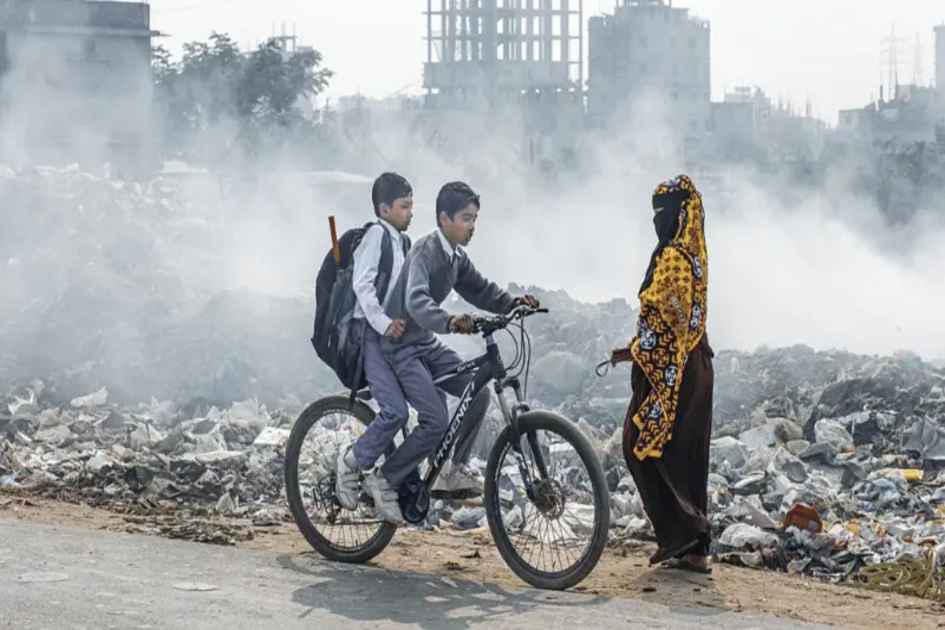



Dhaka ranked the world’s most polluted city Monday morning, with unhealthy AQI levels threatening public health as persistent air pollution continues to worsen conditions across Bangladesh’s overcrowded capital.
Bangladesh’s overcrowded capital Dhaka once again recorded the worst air quality in the world on Monday morning, as pollution levels remained at an unhealthy level for residents.
The city logged an Air Quality Index (AQI) score of 174 at 10:20 am, according to air monitoring data.
India’s Delhi ranked second with an AQI of 153, followed by Tashkent at 147 and Hanoi at 145.
An AQI reading between 101 and 200 is considered “unhealthy”, especially for sensitive groups. Readings from 201 to 300 are categorised as “very unhealthy”, while levels between 301 and 400 are deemed “hazardous” and pose serious health threats.
The AQI is widely used by government agencies to measure daily air pollution levels and warn the public about potential health risks.
In Bangladesh, the AQI is determined based on five key pollutants: particulate matter including PM10 and PM2.5, nitrogen dioxide, carbon monoxide, sulphur dioxide and ozone.
Dhaka has struggled with persistent air pollution for years, with conditions usually worsening during winter before improving during the monsoon season.
Air pollution continues to rank among the world’s leading health risks. Studies have shown that prolonged exposure to polluted air raises the likelihood of heart disease, chronic respiratory illnesses, lung infections and cancer.
According to the World Health Organization, air pollution causes around seven million premature deaths globally every year, largely from stroke, heart disease, chronic obstructive pulmonary disease, lung cancer and acute respiratory infections.




