

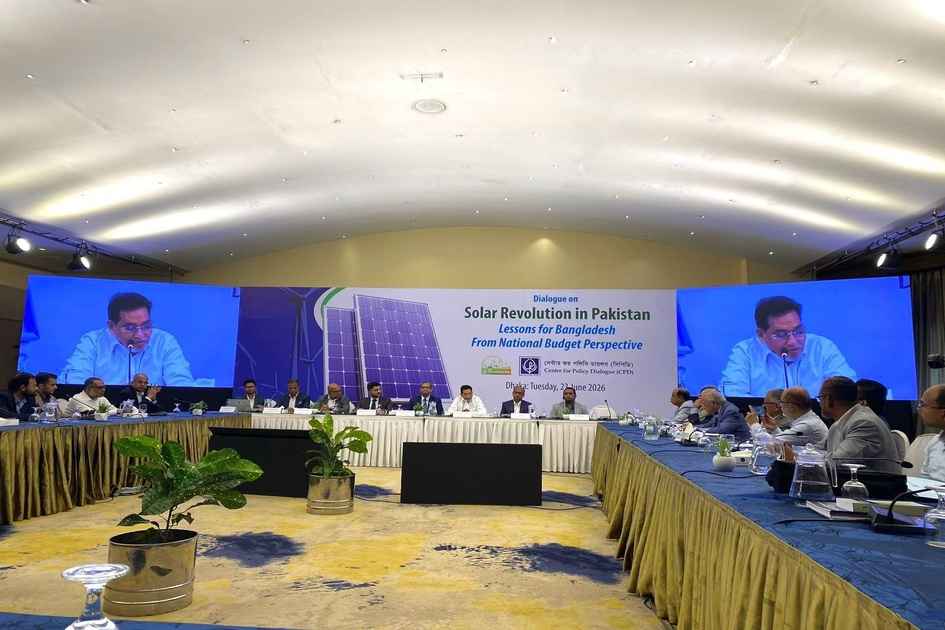



Energy experts at a CPD dialogue urged Bangladesh to cut solar taxes, ease financing and streamline approvals, warning that delays could stall the country’s clean energy transition.
Energy experts and policymakers have called for urgent reforms to accelerate Bangladesh’s renewable energy transition, warning that high taxes, financing constraints and regulatory bottlenecks continue to slow investment despite rising demand for solar power.
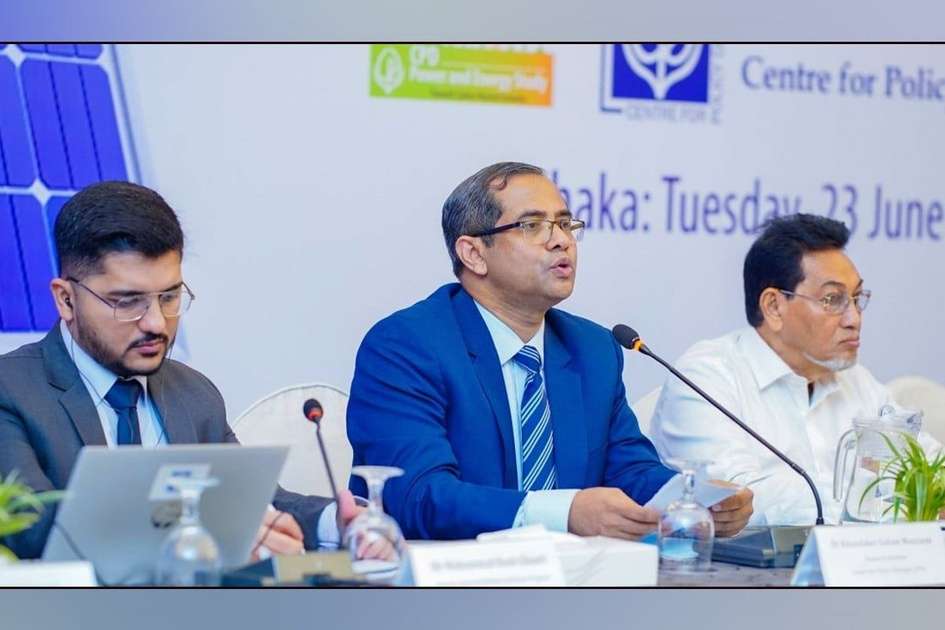
The call came at a dialogue titled “Solar Revolution in Pakistan in the Eyes of Country’s Leading CSOs: Lessons for Bangladesh from National Budget Perspective”, organised by the Centre for Policy Dialogue (CPD) in Dhaka on Tuesday.
Speakers said Bangladesh has made clear political commitments to renewable energy, but structural barriers in taxation, financing and approval processes are undermining implementation, particularly in rooftop solar and distributed generation systems. They stressed that without a more investment-friendly framework, the country risks missing its clean energy targets.
Bangladesh’s solar transition at a critical juncture
Experts noted that Bangladesh’s Solar Home System (SHS) programme, once one of the world’s largest off-grid electrification initiatives, expanded electricity access to around 20 million people. However, the programme has slowed in recent years due to grid expansion and market saturation.
A research paper presented at the dialogue found that nearly 47 percent of installed Solar Home Systems are currently non-functional, largely due to battery degradation and the absence of structured maintenance and transition mechanisms.
At the same time, on-grid solar adoption remains limited. Only 4,551 net-metering installations currently contribute about 213.3 megawatts of electricity despite significant potential in the industrial, commercial and agricultural sectors.
Speakers said this gap highlights the need to shift from a donor-driven off-grid model to a scalable, market-based distributed renewable energy system supported by stronger policy and financial frameworks.
Pakistan’s solar expansion and driving forces
Presenting comparative insights, experts said Pakistan’s rapid solar expansion offers important lessons for Bangladesh, particularly in how market conditions and policy incentives can trigger large-scale adoption.
They noted that rising electricity tariffs, reportedly increased nearly threefold in recent years amid subsidy reforms and fiscal adjustments, combined with unreliable supply and energy shortages, pushed households and businesses toward solar adoption.
Lower global panel prices, simplified net-metering systems and improved access to imports further accelerated deployment. In 2024, Pakistan reportedly imported a large volume of solar panels equivalent to tens of gigawatts of capacity, driving rapid growth in distributed and rooftop systems.
Around 7.3 million households are estimated to have adopted solar solutions, particularly in rural and peri-urban areas, reducing electricity costs and dependence on diesel and imported fuels.
A strong net-metering framework with relatively fast payback periods, along with concessional financing schemes introduced by financial institutions, also helped reduce upfront investment barriers.
However, experts cautioned that this rapid expansion also exposed system challenges, including grid integration constraints, storage gaps and rising financial pressure on the power system due to underutilised thermal capacity.
Structural barriers slowing Bangladesh’s solar growth
Participants identified high import duties on solar equipment, ranging between 27.5 and 33.6 percent, as a major deterrent to investment. Limited access to affordable financing, strict collateral requirements and weak recognition of solar assets as bankable collateral were also highlighted as key constraints.
Delays in net-metering approvals, the absence of standardised power purchase agreements and continued subsidies for diesel-based irrigation were cited as additional distortions affecting competitiveness.
Speakers said these barriers are discouraging private investment and slowing the shift toward distributed renewable energy systems, particularly in agriculture and small industries.
Reform priorities for accelerated transition
Experts urged the immediate rationalisation of taxes and duties on solar components, alongside the introduction of a unified digital platform to streamline net-metering approvals and reduce administrative delays.
They also called for expanding leasing and OPEX-based financing models to lower upfront costs and improve accessibility for households, farmers and small businesses.
In addition, participants recommended integrating solar irrigation systems with the national grid to enable electricity sales and improve system efficiency while reducing dependence on diesel-based irrigation.
Policy planners were further urged to shift from installation-based targets to performance-oriented metrics that prioritise reliability, system efficiency and long-term energy output.
Government position
Chief Whip of the Jatiya Sangsad Md Nurul Islam Moni, who attended the event as chief guest, reaffirmed the government’s commitment to expanding renewable energy as part of efforts to enhance energy security, reduce import dependency and promote sustainable growth.
He said the government has already introduced tax incentives for renewable energy and is promoting solar-based solutions in irrigation and other productive sectors.
Stakeholder views and outlook
Representatives from Infrastructure Development Company Limited, Bangladesh Independent Power Producers Association, Bangladesh Sustainable and Renewable Energy Association and Coastal Livelihood and Environmental Action Network also stressed the need for regulatory stability, innovative financing mechanisms and stronger coordination between public and private stakeholders.
The dialogue concluded that Bangladesh’s solar transition is at a decisive stage. While its off-grid programme remains a globally recognised success, experts warned that future progress will depend on removing structural bottlenecks and enabling a fully bankable, scalable distributed renewable energy market. Without timely reforms, they cautioned, the country risks losing momentum in its clean energy transition.




