





A new Climate Central analysis finds Bangladesh now faces about 200 dangerous humid heat days annually, with climate change adding one extra month of hazardous heat each year.
Bangladesh now faces about 200 dangerous humid heat days a year as climate change intensifies global heat risks, according to a new Climate Central analysis that found hazardous heat and humidity conditions have more than doubled worldwide since the 1970s.
Globally, dangerous humid heat days increased from an average of 10 days per year in the 1970s to 23 days annually during 2016-2025, the analysis said. Nearly two-thirds, or 64%, of dangerous humid heat days worldwide since 1970 can be attributed to climate change, making it the primary driver of increasingly dangerous heat-humidity conditions across the planet.
In Bangladesh, where high temperatures frequently combine with intense humidity, dangerous humid heat has already become a common part of daily life. The country experienced an average of 200 dangerous humid heat days per year during 2016-2025, up from 175 days annually in the 1970s.
The study found that climate change is now adding around 30 dangerous humid heat days to Bangladesh each year, equivalent to an additional month of potentially hazardous conditions. In the 1970s, climate change contributed only five such days annually. The share of dangerous humid heat linked to climate change has increased fivefold, from 3% in the 1970s to 15% during the last decade.

(2016-2025). Dangerous humid heat days are defined as having daily maximum wet-bulb temperatures
of 25°C (77°F) or higher. Analysis based on ECMWF ERA5 data and the Climate Shift Index (CSI)
system. Produced June 10, 2026.
The findings underscore how climate change is transforming heat exposure around the world. While dangerous humid heat has increased across tropical regions including South and Southeast Asia, Bangladesh’s dense population, large outdoor workforce, rapid urbanization and limited access to cooling make the country particularly vulnerable to its impacts.
The impacts are already evident across Bangladesh’s major cities.
Khulna now experiences an average of 224 dangerous humid heat days each year. Dhaka, a capital of more than 20 million people, now experiences an average of 210 dangerous humid heat days each year, with 25 days annually added by climate change. In Chattogram, one of Bangladesh’s major commercial hubs and a major coastal city, residents experience an average of 211 dangerous humid heat days per year, while climate change contributes an additional 36 days annually, more than a full month of dangerous humid heat that would not have occurred without global warming.
Unlike dry heat, humid heat prevents the body from cooling effectively through sweating. As humidity rises, the risk of dehydration, heat exhaustion, heat stroke, cardiovascular stress and other heat-related illnesses increases substantially. Health experts warn that older adults, children, pregnant women, outdoor workers and people with underlying medical conditions face the greatest risks.
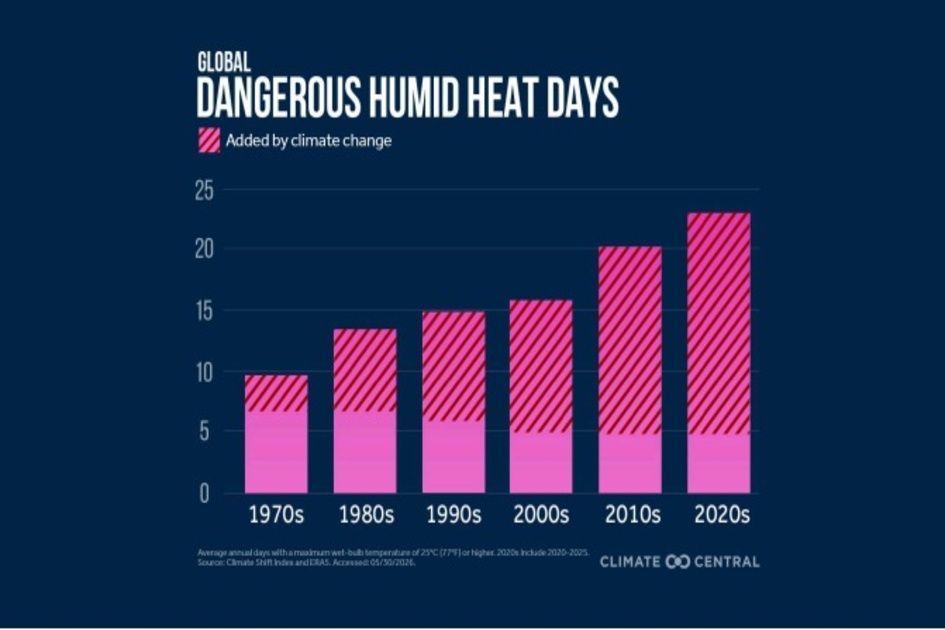
during each decade (1970s to 2020s). The 2020s include data through 2025. Dangerous humid heat
days are defined as having daily maximum wet-bulb temperatures of 25°C (77°F) or higher. Analysis
based on ECMWF ERA5 data and the Climate Shift Index (CSI) system. Produced June 10, 2026.
“Extreme heat and humidity driven by climate change are increasingly affecting children’s health. We are seeing more cases of cough, breathing difficulties and asthma-related illnesses among children. Compared to previous years, asthma and related respiratory conditions have risen by nearly 70%, highlighting the growing health risks posed by extreme heat,” said Dr Shimul Mazumder, Senior Consultant in Child Health at Comilla General Hospital.
Doctors said the health impacts extend beyond heat-related illnesses, with extreme heat also contributing to a rise in waterborne diseases as people struggle to stay hydrated during prolonged hot weather.
“Rising heatwaves are increasing the risk of waterborne diseases. As people consume more water during hot weather, many rely on unsafe sources, leading to higher cases of diarrhoea, typhoid and jaundice,” said Dr Rashedul Hasan, Associate Professor in the Department of Medicine at Green Life Medical College and Hospital.
The global analysis comes as extreme heat is becoming one of the deadliest consequences of climate change. More than a quarter of a million people worldwide have died from extreme heat since 2000, and researchers warn that rising humidity is making heat increasingly dangerous by pushing conditions closer to the limits of what the human body can safely tolerate.
As Bangladesh continues to face rising temperatures and increasingly humid conditions, the findings highlight the need for stronger heat-health preparedness, workplace protections, urban cooling measures and greater investment in climate-resilient public health systems.
This analysis builds on new peer-reviewed research published in May 2026.




