

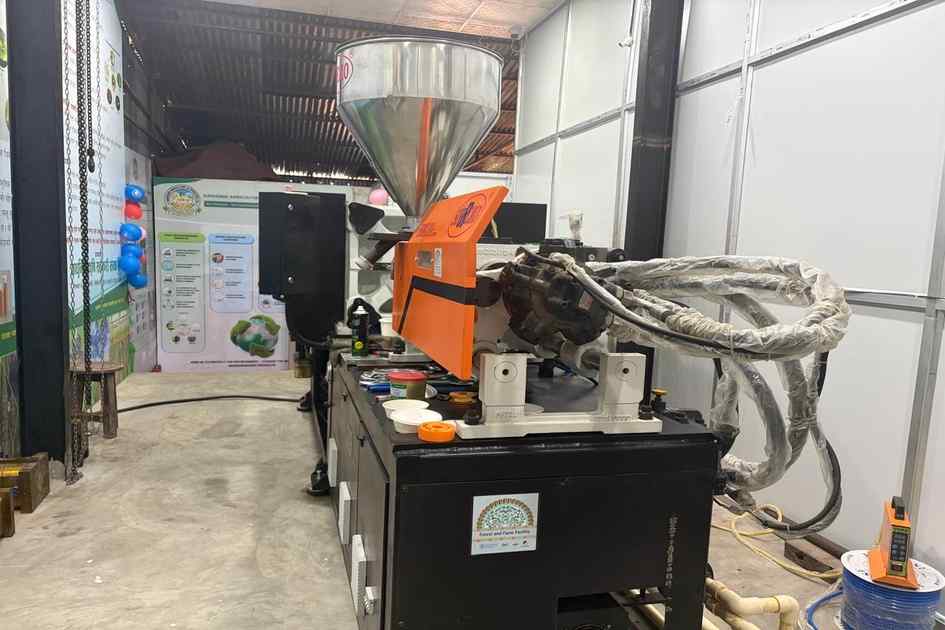

A Chitwan cooperative has begun producing biodegradable packaging from agricultural waste with FAO support, aiming to reduce plastic pollution and promote sustainable alternatives for dairy and food industries.
Chitwan: The Aadhunik Agriculture Cooperative Limited in Ratnanagar Municipality-10, Tandi, Chitwan, has started producing environmentally friendly biodegradable packaging products to help reduce plastic use.
According to Deepak Gautam, secretary of the cooperative, the organization has been working with farmers for the past 10 years and recently launched this new initiative with support from the Forest and Farm Facility (FFF) program of the Food and Agriculture Organization (FAO). The FAO supported the initiative with NPR 59,93,866 out of the total project cost of NPR 74,94,983.
The Forest and Farm Facility (FFF) supports forest and farm producers in improving livelihoods and building climate-resilient communities. The program has been operating in Nepal since 2018 and also contributes to achieving the Sustainable Development Goals (SDGs) and Nepal’s climate commitments under the Paris Agreement.
Nepal produces around 165,000 tons of plastic products every year and imports large quantities of plastic to meet demand. The country also generates more than 242,000 tons of plastic waste annually, with a significant amount leaking into the environment.
According to the cooperative, the new machine can produce around 5,000 biodegradable packaging ‘batta’ every day. These biodegradable ‘batta’ can be used for packaging dairy products such as curd, ice cream, honey and pickles.
The packaging is made from natural materials including corn husks, sugarcane waste and banana stalks using bio-chemical processing technology.
“We have been selling organic products, but they were packed in plastic, which is harmful to both human health and the environment,” said Gautam. “We were looking for support and planning an alternative, and FAO supported our initiative.”
This week, the technology was officially handed over to the cooperative by Ken Shimizu, FAO Nepal and Bhutan Representative.
He said the project would help promote a green economy in the community.
“Plastic waste management is a major problem around the world and it harms both the environment and human health,” Shimizu said. “I hope this innovation becomes a turning point.”
Secretary of the cooperative Gautam said the cooperative is contacting different industries that have been using plastic ‘batta’ in their businesses.
“Our goal is to reduce plastic use. We are talking to different business houses, especially dairy farms,” he said.




