

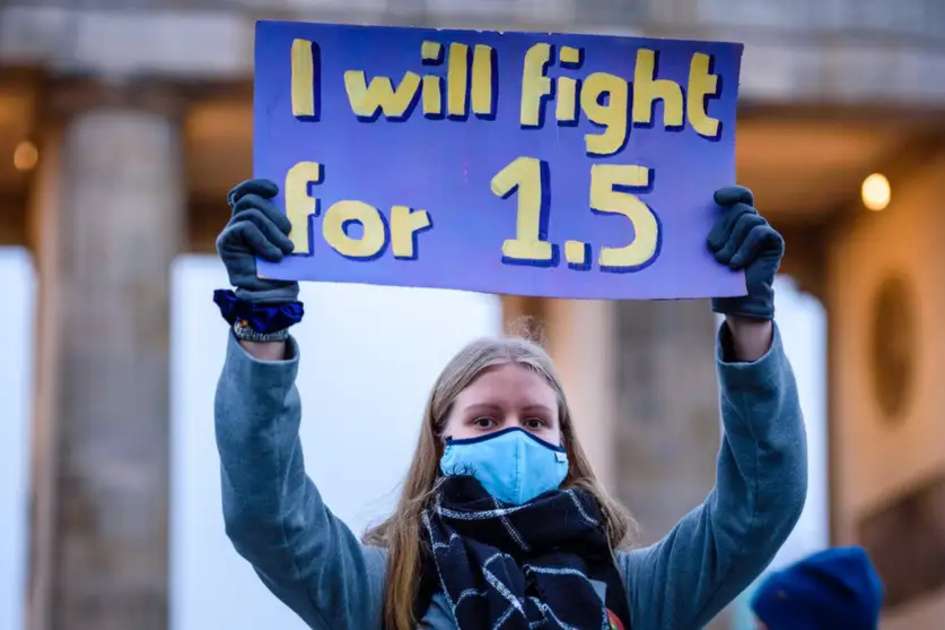



New research finds that even full implementation of current national climate pledges could push global warming to 2.48°C by 2300, exceeding Paris Agreement limits and raising economic and environmental risks.
International efforts to curb global warming marked a historic breakthrough with the 2015 Paris Agreement, adopted by more than 190 countries and aimed at limiting temperature rise to well below 2 °C and ideally to 1.5 °C. Yet fresh research suggests current national commitments may still leave the world far off course.
A new study led by Assistant Professor Taeyoung Jin of Jeonbuk National University in collaboration with researchers from Pusan National University finds that even if governments fully implement their existing climate pledges, global temperatures could climb to about 2.48 °C by the year 2300.
The findings, published in the journal Environmental Science & Policy, raise concerns about whether current targets are ambitious enough to meet internationally agreed limits.
“Even if every country keeps its current promises to cut carbon emissions, the world is still on track to warm by about 2.5 °C, which is higher than the internationally agreed 2 °C safety limit,” Jin said.
The researchers based their projections on the Regional Integrated Model of Climate and the Economy, known as RICE-2010. The model examines how economic growth drives emissions, how those emissions accelerate climate change and how climate impacts in turn cause economic damage that can slow future growth.
The team fed into the model real-world policy commitments, including countries’ 2030 emission reduction targets and long-term net-zero pledges. They then simulated outcomes through to 2300 under four different scenarios: a business-as-usual pathway with no emission cuts, a social optimum scenario designed to maximise welfare, a net-zero pathway reflecting current national commitments and a trajectory aligned with the 1.5 °C target.
Under a business-as-usual scenario, global temperatures could surge by as much as 7 °C by 2300. By contrast, the net-zero scenario based on existing pledges would cap warming at around 2.48 °C. While that marks substantial progress compared with inaction, it still exceeds the 2 °C threshold set under the Paris framework.
To stay within 2 °C, the study estimates that countries would need to cut an additional 5 gigatons of carbon dioxide equivalent emissions by 2030.
The economic stakes are also high. Without stronger mitigation, cumulative global climate-related damages could approach 65 trillion US dollars by 2200. That figure could fall to roughly 19 trillion dollars under the net-zero scenario and to about 15 trillion dollars if the world follows a pathway consistent with the 1.5 °C goal.
The researchers warn that failing to ramp up ambition could bring more intense heatwaves and floods, rising food and energy prices and heightened economic instability. Earlier and deeper cooperation, they argue, would significantly reduce long-term risks even if it requires short-term economic adjustments.
“Our data reveal that today’s climate promises are important but they are not enough,” Jin said. “If countries act earlier and more decisively, the overall damage from climate change can be significantly reduced.”
The study offers timely evidence for policymakers preparing to revise national climate plans, underscoring the need for faster and more ambitious action.




