




A commentary argues that climate goals can only succeed when global policies are matched by individual actions on waste, transport, water conservation and sustainable consumption, particularly in vulnerable countries like Bangladesh.
The battle against climate change will be won not only through international agreements and government policies but also through the everyday decisions of ordinary people, according to a commentary that argues environmental protection must be rooted in both global action and individual responsibility.
The article contends that climate discussions are often dominated by high-profile summits and ambitious decarbonisation pledges, while the environmental crisis continues to worsen. It says this focus on top-level policymaking overlooks a critical reality: environmental degradation is ultimately the cumulative outcome of billions of individual economic choices made each day.
For countries such as Bangladesh, which faces severe environmental challenges, bridging the gap between policy and personal behaviour is particularly urgent. Citing World Bank estimates, the article notes that pollution is responsible for around 272,000 premature deaths annually in Bangladesh.
While governments, non-governmental organisations and researchers continue to pursue large-scale reforms, the piece argues that institutions alone cannot replace individual action. Effective environmental stewardship requires macroeconomic policies that encourage environmentally responsible behaviour at the household level.
The article highlights resource management as a central pillar of sustainability, focusing on the traditional principles of reducing, reusing and recycling. These measures, it says, improve resource efficiency by limiting unnecessary consumption and extending the lifespan of products, thereby reducing pressure on natural resources.
Transforming waste into productive industrial inputs allows economies to move away from the conventional “extract, manufacture, discard” model toward a circular economy. Germany’s Kreislaufwirtschaft, or circular economy law, is cited as a successful example of how strict recycling policies can support economic growth while reducing environmental harm.
According to the article, Germany’s experience demonstrates that effective waste management can convert environmental liabilities into economic assets.
Urban forestry is also presented as a practical and cost-effective climate solution. Trees remain one of the most efficient means of capturing carbon dioxide through photosynthesis while also helping to cool cities affected by the urban heat island effect, where concrete and asphalt absorb and retain heat.
Research cited in the article suggests that strategic urban greening can lower local temperatures by between one and eight degrees Celsius.
Several international examples are highlighted. Medellin in Colombia reportedly reduced average temperatures by two degrees Celsius after transforming traffic corridors into green corridors. Santiago in Chile launched its “Brotar” initiative using drought-resistant plants to address increasing aridity, while Sierra Leone has planted more than five million trees and employs digital monitoring systems to improve sapling survival rates.
The article describes such projects as practical investments in urban resilience that help protect public health and economic productivity from rising temperatures.
However, it argues that public investment alone is insufficient without widespread citizen participation.
Singapore’s environmental transformation is presented as a notable example. During the 1960s, the city-state struggled with polluted waterways, widespread littering and inadequate sanitation. The “Keep Singapore Clean” campaign launched under former Prime Minister Lee Kuan Yew combined enforcement with efforts to reshape public attitudes, eventually making cleanliness a source of national pride.
The article argues that this experience demonstrates how government initiatives become significantly more effective when citizens understand and accept the consequences of environmental neglect.
The transport sector is identified as another area where individual behaviour can make a substantial difference. Vehicular emissions remain a major source of urban air pollution. The United Nations Environment Programme estimates that outdoor air pollution linked largely to internal combustion engines contributes to hundreds of thousands of premature deaths across Europe each year.
For short urban journeys, the article promotes cycling as a simple and emissions-free alternative. The Netherlands is highlighted as a model, having invested heavily in cycling infrastructure and developed a society where bicycles outnumber people.
According to the article, the benefits extend beyond lower carbon emissions to include reduced healthcare costs, less traffic congestion and longer life expectancy.
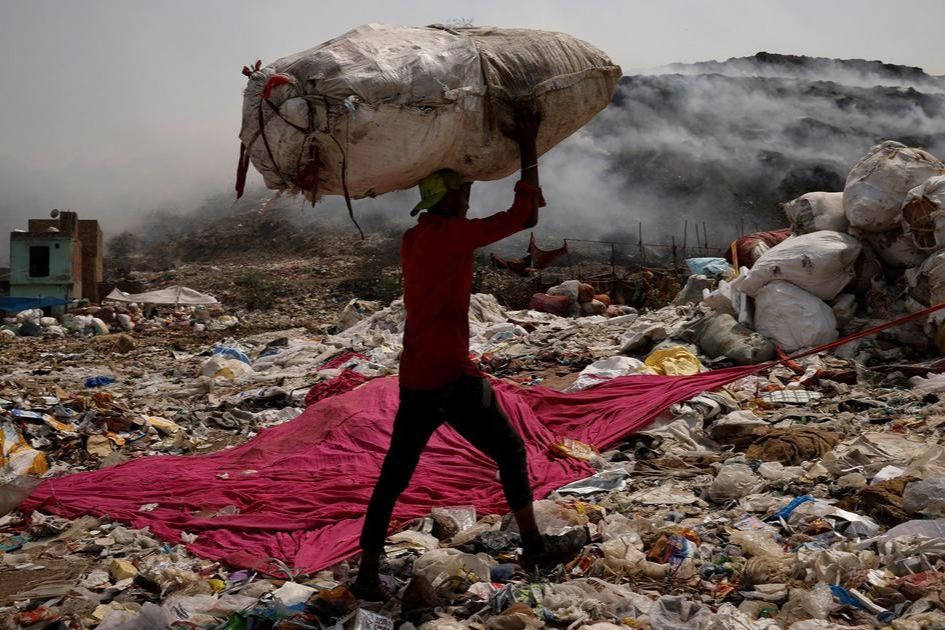
Plastic pollution is also identified as a growing environmental threat, with plastic waste damaging marine ecosystems, obstructing waterways and remaining in the environment for centuries.
The article argues that Bangladesh has a unique opportunity to address this challenge through its long-established jute industry. Expanding the use of biodegradable jute-based packaging could help reduce dependence on single-use plastics while strengthening a traditional economic sector.
It also advocates installing public water refill stations in transportation hubs, commercial centres and parks to reduce demand for bottled water and cut plastic waste at its source.
Water management is another priority area highlighted in the article. It argues that freshwater shortages are increasingly driven not only by drought but also by inefficiency and excessive consumption.
Simple actions such as turning off running taps can generate substantial cumulative water savings, it says.
At a larger scale, the article recommends wider adoption of decentralised greywater recycling systems that treat wastewater from sinks and laundry facilities for agricultural and industrial reuse. Similar approaches are already being used in Australia and parts of the western United States.
The article further points to Singapore’s water-sensitive urban design model, which captures and stores rainwater as a valuable resource instead of allowing it to flow away as stormwater runoff.
Ultimately, the piece argues that environmental collapse cannot be prevented through government regulation alone. While governments must establish policy frameworks and businesses must develop cleaner technologies, it says the future of the planet will largely depend on the everyday choices made by individuals.
Bangladesh’s clogged drainage systems, plastic-polluted rivers and increasingly hot urban environments are cited as warnings of the consequences of inaction.
“The future of the habitable world will not be written exclusively in the halls of parliaments, but in the micro-decisions of the millions who inhabit it,” the article concludes, stressing that a sustainable future depends on those choices.
The article was authored by Dhaka-based journalist Faisal Mahmud.




