


A new Climate Impact Lab report warns heat-related deaths will rise sharply in poorer countries, highlighting deep climate inequality and the urgent need for targeted adaptation investments to save lives.
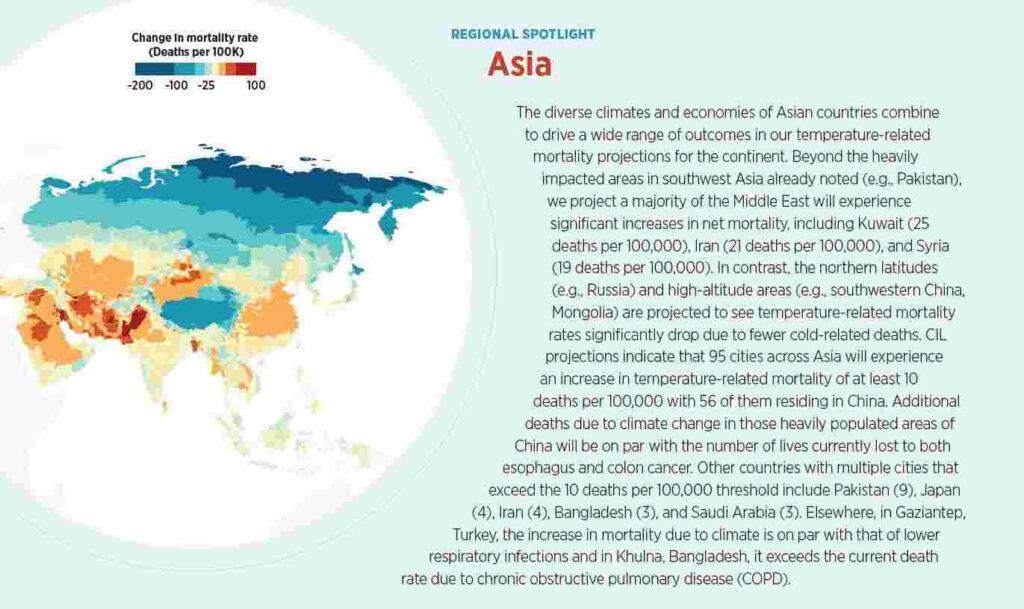
Climate change is projected to cause 10 times more heat-related deaths in poor countries than in rich ones by 2050, according to a new report that places Bangladesh among the 25 countries expected to be hardest hit by rising temperatures.
The report by the Climate Impact Lab says more than 90 percent of projected premature deaths linked to rising temperatures are expected to occur in low- and middle-income countries, underscoring what researchers describe as one of the starkest inequalities of the climate crisis.
It says targeted adaptation investments could save large numbers of lives, as future temperature-related mortality will depend not only on the direct effects of a warming planet but also on the steps governments and communities take to protect public health.
The study is the first in a new “Adaptation Roadmap” series aimed at identifying where climate adaptation investments are likely to have the greatest impact and what kinds of measures could be most beneficial. It is also based on the Climate Impact Lab’s landmark projections of temperature-related mortality, described by the group as the first highly localised global projections of how rising temperatures affect mortality.
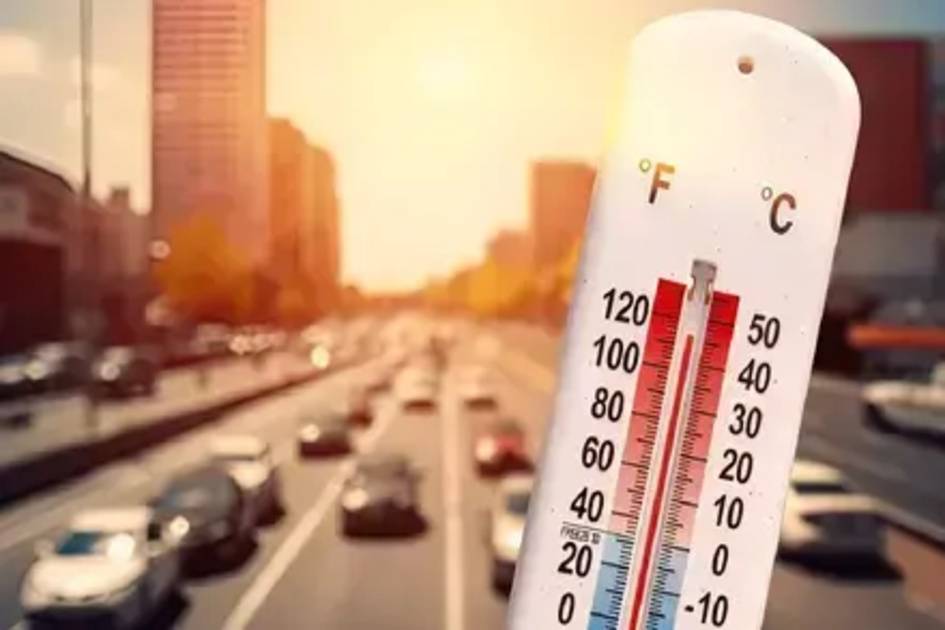
Record-breaking heat waves make headlines every summer because they kill tens of thousands of people, but the report says climate change is expected to raise those death tolls significantly in coming decades.
“This report uncovers one of climate change’s cruelest ironies – it is projected to kill millions of people in the countries that have generally done the least to cause it. Further, their relatively low income levels mean that they are not as well positioned as people in rich countries to confront the new and unfolding risks from climate change,” said Michael Greenstone, co-founder of the Climate Impact Lab and director of the Institute for Climate and Sustainable Growth and Energy Policy Institute at the University of Chicago.
“In this report, we’ve identified the regions around the world where climate adaptation investments can save the most lives,” he added.
The report says the burden of warming will not fall evenly across the globe. The problem is not only that hotter regions are projected to face higher mortality than cooler ones, but also that the heaviest impacts are expected in places that are both hot and poor, where governments and households have fewer resources to adapt.
As an example, it says Burkina Faso is projected to suffer twice as many deaths from heat as the wealthier Gulf state of Kuwait, despite their similar climates.
A similar pattern is projected at the city level. More than 15 times more people are expected to die from heat in Faisalabad in Pakistan than in Phoenix, Arizona, which is also hot but far wealthier. The report adds that by 2050 heat-related deaths in many Pakistani cities are projected to exceed the number of people dying from chronic obstructive pulmonary disease and stroke today.
“The report reveals who stands to gain the most from targeted adaptation investments. The regions where increases in mortality are highest are also those with few resources, limited government capacity and a weak history of attracting international private investment,” said Tamma Carleton, faculty head of research for the Climate Impact Lab and an assistant professor at the University of California, Berkeley.
“The stakes are too high for the past to be the prologue. Correctly choosing where to spend limited dollars on adaptations could have massive impacts on who lives and who dies,” she said.
The report says adaptation measures such as air conditioning, cooling centres and other steps to reduce heat exposure could play a critical role in lowering death rates. It stresses that the scale of future mortality will depend heavily on choices made by governments and people.
The Adaptation Roadmap series is part of what the Lab describes as an expanded mission. Building on a decade of research into climate impacts, it is now seeking to identify not only where adaptation will be most needed but also the likely benefits of specific investments.
Alongside mapping the risks faced by local communities, the Lab says it is developing a global playbook of data-driven and tested adaptation strategies for investors, national and local governments and communities confronting growing climate threats.
“Just as a journey requires a map, effective climate adaptation depends on knowing where action is most needed and which investments will have the greatest impact,” Greenstone said when the Lab announced its expanded mission.
“We’re providing that roadmap by pinpointing climate risks and the places where adaptation investments can deliver the biggest benefits,” he said.
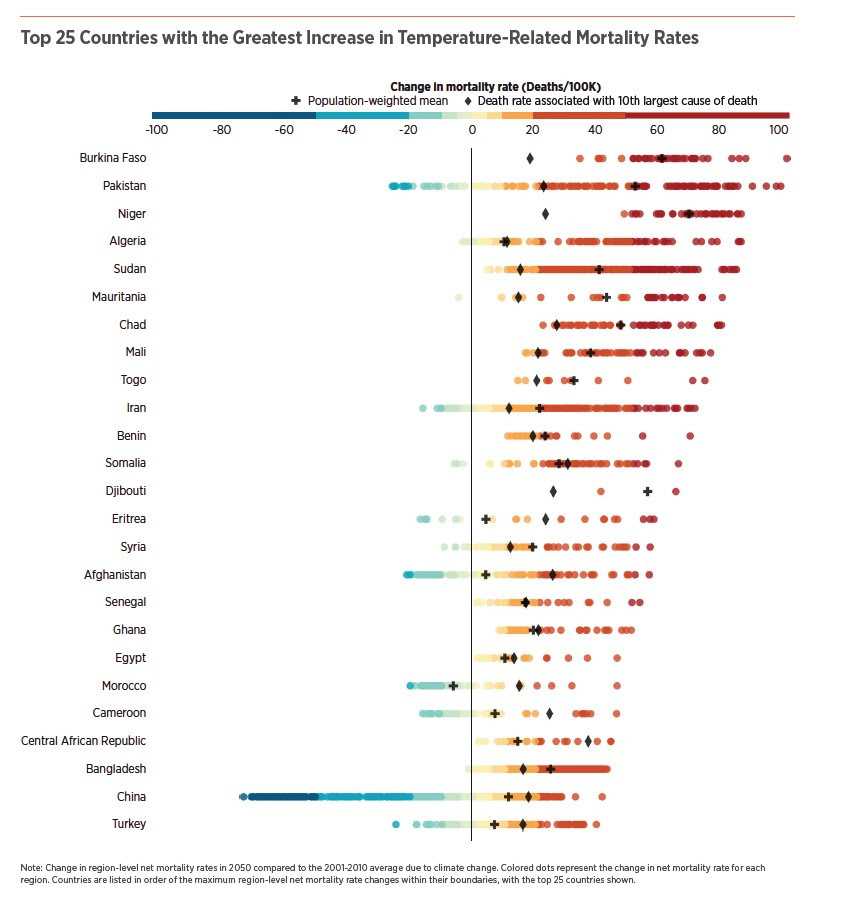
A few numbers that stand out for Bangladesh specifically:
- Bangladesh is projected to see 24 additional deaths per 100,000 people annually due to rising temperatures.
- In Khulna, that number rises to 36 deaths per 100,000 — exceeding the current death rate from chronic obstructive pulmonary disease in the country.
- Dhaka is projected at 22 deaths per 100,000, Chittagong at 12.