


With acacia nectar failing and migratory colonies under stress, Kashmir’s honey crisis is raising alarms for apple orchards that depend heavily on bees for pollination across the valley.
Erratic rainfall and sharp temperature swings have devastated honey production across Kashmir this season, with some beekeepers reporting losses of up to 90 per cent after weather disruptions badly affected the valley’s crucial acacia bloom.
Experts and officials have linked the decline to disrupted flowering, cold spells during the blooming season, pesticide use and the strain caused by seasonal hive migration. The fall has also heightened concerns about pollination in Kashmir’s orchards, particularly in its apple-growing areas.
In Balhama village, about 15 kilometres southeast of Srinagar, 21-year-old entrepreneur Sania Zehra keeps 650 beehives in the Khonmuh hills. Known locally as the “Bee Queen of Kashmir”, she has worked in the sector for six years.
Until this season, Zehra said her beekeeping business had expanded steadily and appeared to offer a secure livelihood. But her honey yield plunged from 300 buckets to just 30 this year.
She said she had never experienced such a severe production decline since she began keeping bees on the same hillside. Her hives were still in place and the bees remained alive, but they produced little honey.
For the young entrepreneur, who had established a name in the industry, the setback has been more than financial. It has also raised doubts about the future of beekeeping in the valley.
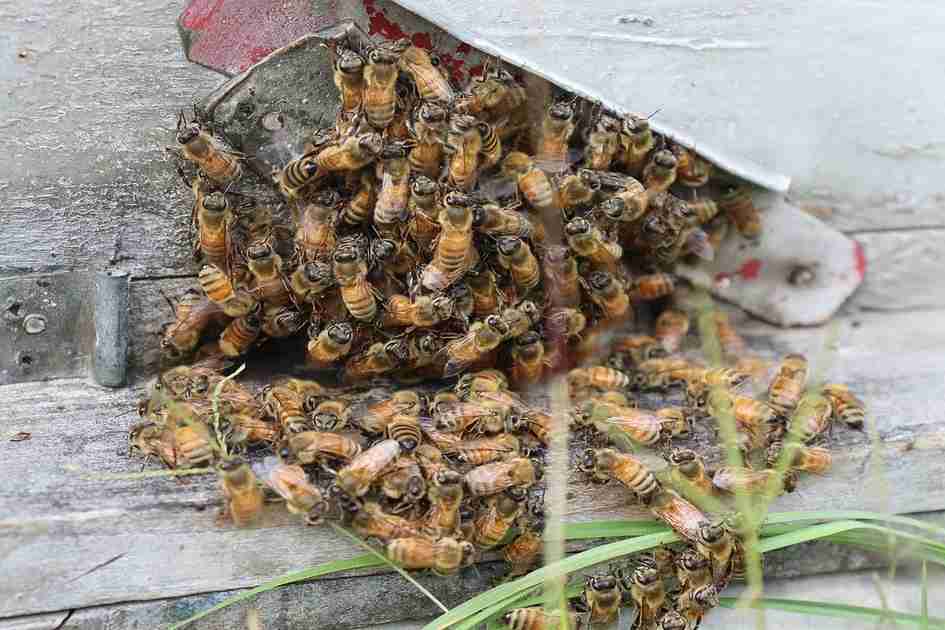
Honeybees at a bee farm in Khonmoh Hills, Srinagar, have been observed gathering outside hive entrances to regulate colony temperatures during hot weather.
About 40 kilometres south of Srinagar, brothers Abid Ali and Sher Ali have suffered a similar setback in Pulwama district.
The brothers moved their hives to Rajasthan in December and then to Pathankot in Punjab in March before returning to Kashmir in late April. They have followed the same route for years to keep their colonies alive during winter.
“We have more than 200 hives. Every year we get around 200 buckets of honey, but this year we could collect just 40,” Abid Ali said.
The decline is particularly significant because the brothers live in Pulwama’s horticultural belt, where flowers generally bloom in greater abundance and variety than in Balhama.
Abid Ali said the family business relies mainly on Kashmir’s acacia honey, which commands a higher price than honey produced outside the valley.
“The honey we extract outside Kashmir is not of good quality. That sells for Rs 500 per kg,” he said. “Our main business depends on Kashmir, particularly acacia honey, which ranges from Rs 1,000 to Rs 1,200 per kg.”
Entomologist Shabir Ahmad said the scale of the production fall was considerable.
Kashmir has 2,120 registered beekeepers, nearly 90 per cent of whom migrate to warmer parts of India each winter, he said. The valley produces more than 1,200 metric tonnes of honey annually.
Ahmad said final production figures for the current season would not be calculated until March 2027. However, he said the acacia season, which is a major source of Kashmir’s honey, had been severely disrupted this year.
“We witnessed almost a 90 per cent drop in honey this year, which is huge,” he said.
April and May are critical months for the flowering of acacia, locally known as kikar. The species, Robinia pseudoacacia, commonly called black locust, was introduced to Kashmir in 1919.
“Most of the honey we extract comes from these trees. This year, unseasonal rains disrupted acacia flowering, and that is the reason April-May honey production dropped significantly,” Ahmad said.
Some honey was harvested in the upper reaches of Ganderbal and Kangan, where acacia trees flowered later, but the output was minimal, he added.
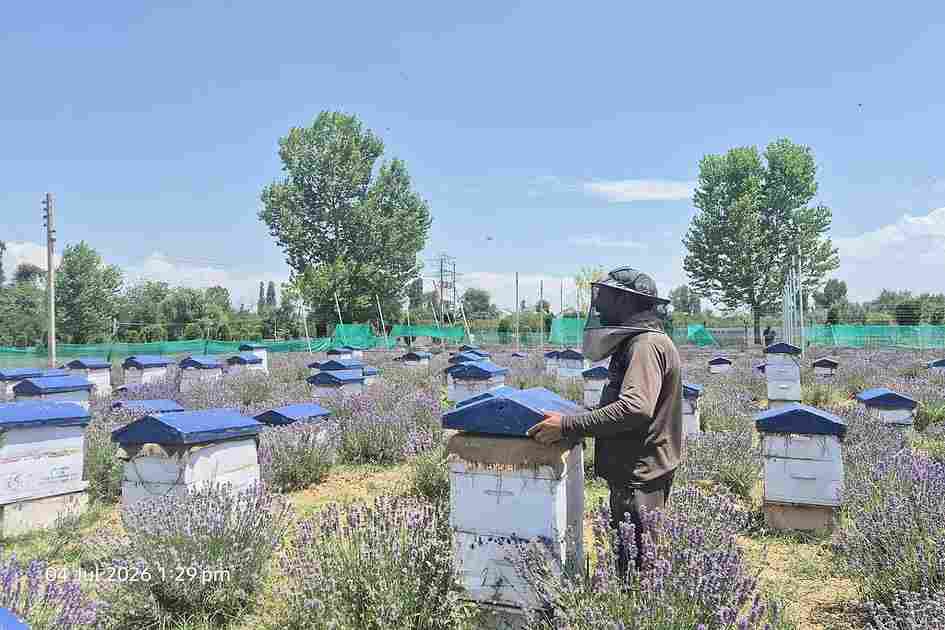
At the lavender research apiary of the Indian Institute of Integrative Medicine field station in Bonoora, Pulwama district, Jammu and Kashmir, an employee was seen inspecting beehives.
The production decline may have resulted from several factors.
Noor-ul-Islam, an agriculture extension officer at the District Agriculture Office in Pulwama, said farmers across the valley had reported lower honey yields this year.
He said erratic weather during the peak blooming months of March, April and May weakened bee activity and washed nectar from flowers.
Cold spells reduced the movement of bees, while periods of higher-than-normal temperatures shortened the lifespan of blossoms and reduced nectar secretion, he said.
Islam also pointed to widespread use of harmful pesticides, which he said had disrupted bee activity and increased honeybee mortality.
Kashmir-based environmentalist Mohammad Anees-ul-Mehmood said nectar availability was highly sensitive to temperature.
Sudden changes between warm periods and cold days and nights during April and May can reduce nectar secretion, restrict bee activity and disrupt pollination during the critical flowering period, he said.
The effects could extend beyond honey production to fruit set, the process through which pollinated flowers develop into fruit, in apples and other temperate crops.
Beekeepers describe the pattern more directly. A warm period prompts flowers to open early, but a sudden cold spell arrives before bees can gather sufficient nectar. By the time conditions improve, the bloom has diminished or rain has washed away the nectar.
Kashmir’s severe winters, characterised by snowfall and sub-zero temperatures, force many beekeepers to migrate seasonally with their colonies because the valley offers little nectar or pollen during that period.
An apiculture official said between 1,500 and 2,000 beekeepers move their colonies out of Kashmir each year.
“Seasonal migration comes with significant risks. Our conservative estimates suggest that 30 per cent to 40 per cent of honeybee colonies suffer mortality during transit. These challenges discourage many people from adopting beekeeping,” the official said.
Gulzar Ahmad Mir, a 50-year-old beekeeper from Srinagar, said producers spend substantial sums each year transporting hives to warmer states, including Rajasthan and Punjab, from November until summer begins in Kashmir around May.
The cost of trucks, fuel, labour and other expenses can reach about Rs 350,000 annually, he said. Those costs become difficult to recover when honey production fails.
Scientists at the Council of Scientific and Industrial Research-Indian Institute of Integrative Medicine said beekeeping in Kashmir plays a role beyond honey production.
Honeybees carry out around 70 per cent of pollination in the valley, which is known for its acacia and lavender honey, they said.
Under the CSIR Floriculture Mission, the institute is developing winter-management protocols to help beekeepers keep their colonies within Kashmir and reduce the need for seasonal migration.
Researchers are examining methods of controlling moisture, temperature and ventilation inside hives while ensuring that bees receive adequate nutrition during winter.
The technology has not yet been transferred to farmers and the protocols are still being finalised.
The decline in honey production could have broader consequences for Kashmir’s horticulture industry, particularly its apple orchards.
Farmers in Pulwama and Shopian, at the heart of Kashmir’s apple belt, have reported patchy blossoming this year. Final fruit yields will not be known until closer to harvest.
By Arjumand Wani
Erratic rainfall and sharp temperature swings have devastated honey production across Kashmir this season, with some beekeepers reporting losses of up to 90 per cent after weather disruptions badly affected the valley’s crucial acacia bloom.
Experts and officials have linked the decline to disrupted flowering, cold spells during the blooming season, pesticide use and the strain caused by seasonal hive migration. The fall has also heightened concerns about pollination in Kashmir’s orchards, particularly in its apple-growing areas.
In Balhama village, about 15 kilometres southeast of Srinagar, 21-year-old entrepreneur Sania Zehra keeps 650 beehives in the Khonmuh hills. Known locally as the “Bee Queen of Kashmir”, she has worked in the sector for six years.
Until this season, Zehra said her beekeeping business had expanded steadily and appeared to offer a secure livelihood. But her honey yield plunged from 300 buckets to just 30 this year.
She said she had never experienced such a severe production decline since she began keeping bees on the same hillside. Her hives were still in place and the bees remained alive, but they produced little honey.
For the young entrepreneur, who had established a name in the industry, the setback has been more than financial. It has also raised doubts about the future of beekeeping in the valley.
Honeybees at a bee farm in Khonmoh Hills, Srinagar, have been observed gathering outside hive entrances to regulate colony temperatures during hot weather.
About 40 kilometres south of Srinagar, brothers Abid Ali and Sher Ali have suffered a similar setback in Pulwama district.
The brothers moved their hives to Rajasthan in December and then to Pathankot in Punjab in March before returning to Kashmir in late April. They have followed the same route for years to keep their colonies alive during winter.
“We have more than 200 hives. Every year we get around 200 buckets of honey, but this year we could collect just 40,” Abid Ali said.
The decline is particularly significant because the brothers live in Pulwama’s horticultural belt, where flowers generally bloom in greater abundance and variety than in Balhama.
Abid Ali said the family business relies mainly on Kashmir’s acacia honey, which commands a higher price than honey produced outside the valley.
“The honey we extract outside Kashmir is not of good quality. That sells for Rs 500 per kg,” he said. “Our main business depends on Kashmir, particularly acacia honey, which ranges from Rs 1,000 to Rs 1,200 per kg.”
Entomologist Shabir Ahmad said the scale of the production fall was considerable.
Kashmir has 2,120 registered beekeepers, nearly 90 per cent of whom migrate to warmer parts of India each winter, he said. The valley produces more than 1,200 metric tonnes of honey annually.
Ahmad said final production figures for the current season would not be calculated until March 2027. However, he said the acacia season, which is a major source of Kashmir’s honey, had been severely disrupted this year.
“We witnessed almost a 90 per cent drop in honey this year, which is huge,” he said.
April and May are critical months for the flowering of acacia, locally known as kikar. The species, Robinia pseudoacacia, commonly called black locust, was introduced to Kashmir in 1919.
“Most of the honey we extract comes from these trees. This year, unseasonal rains disrupted acacia flowering, and that is the reason April-May honey production dropped significantly,” Ahmad said.
Some honey was harvested in the upper reaches of Ganderbal and Kangan, where acacia trees flowered later, but the output was minimal, he added.
At the lavender research apiary of the Indian Institute of Integrative Medicine field station in Bonoora, Pulwama district, Jammu and Kashmir, an employee was seen inspecting beehives.
The production decline may have resulted from several factors.
Noor-ul-Islam, an agriculture extension officer at the District Agriculture Office in Pulwama, said farmers across the valley had reported lower honey yields this year.
He said erratic weather during the peak blooming months of March, April and May weakened bee activity and washed nectar from flowers.
Cold spells reduced the movement of bees, while periods of higher-than-normal temperatures shortened the lifespan of blossoms and reduced nectar secretion, he said.
Islam also pointed to widespread use of harmful pesticides, which he said had disrupted bee activity and increased honeybee mortality.
Kashmir-based environmentalist Mohammad Anees-ul-Mehmood said nectar availability was highly sensitive to temperature.
Sudden changes between warm periods and cold days and nights during April and May can reduce nectar secretion, restrict bee activity and disrupt pollination during the critical flowering period, he said.
The effects could extend beyond honey production to fruit set, the process through which pollinated flowers develop into fruit, in apples and other temperate crops.
Beekeepers describe the pattern more directly. A warm period prompts flowers to open early, but a sudden cold spell arrives before bees can gather sufficient nectar. By the time conditions improve, the bloom has diminished or rain has washed away the nectar.
Kashmir’s severe winters, characterised by snowfall and sub-zero temperatures, force many beekeepers to migrate seasonally with their colonies because the valley offers little nectar or pollen during that period.
An apiculture official said between 1,500 and 2,000 beekeepers move their colonies out of Kashmir each year.
“Seasonal migration comes with significant risks. Our conservative estimates suggest that 30 per cent to 40 per cent of honeybee colonies suffer mortality during transit. These challenges discourage many people from adopting beekeeping,” the official said.
Gulzar Ahmad Mir, a 50-year-old beekeeper from Srinagar, said producers spend substantial sums each year transporting hives to warmer states, including Rajasthan and Punjab, from November until summer begins in Kashmir around May.
The cost of trucks, fuel, labour and other expenses can reach about Rs 350,000 annually, he said. Those costs become difficult to recover when honey production fails.
Scientists at the Council of Scientific and Industrial Research-Indian Institute of Integrative Medicine said beekeeping in Kashmir plays a role beyond honey production.
Honeybees carry out around 70 per cent of pollination in the valley, which is known for its acacia and lavender honey, they said.
Under the CSIR Floriculture Mission, the institute is developing winter-management protocols to help beekeepers keep their colonies within Kashmir and reduce the need for seasonal migration.
Researchers are examining methods of controlling moisture, temperature and ventilation inside hives while ensuring that bees receive adequate nutrition during winter.
The technology has not yet been transferred to farmers and the protocols are still being finalised.
The decline in honey production could have broader consequences for Kashmir’s horticulture industry, particularly its apple orchards.
Farmers in Pulwama and Shopian, at the heart of Kashmir’s apple belt, have reported patchy blossoming this year. Final fruit yields will not be known until closer to harvest.
The article is republished from The Down to Earth.




