

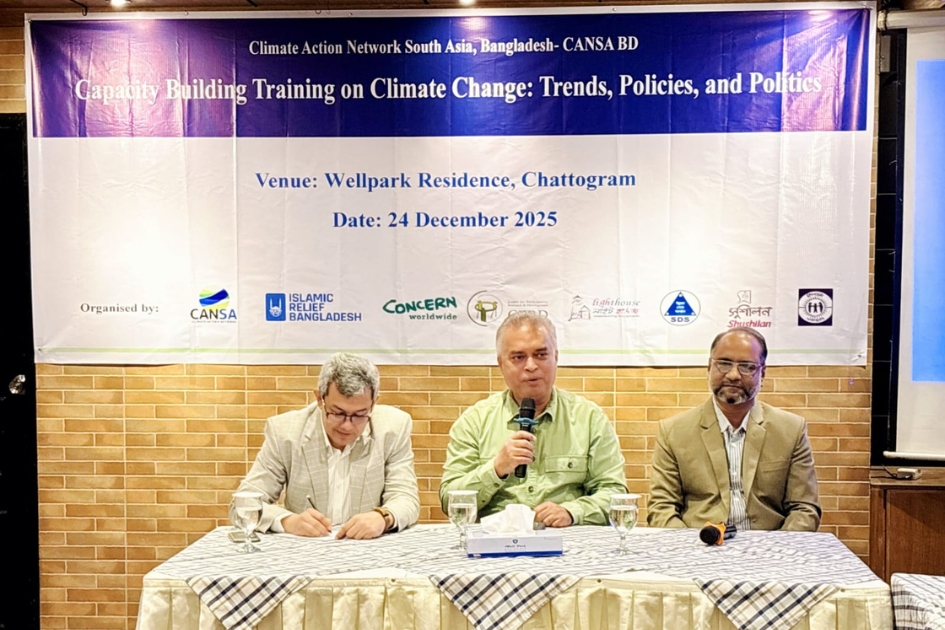



Cansa Bangladesh convened a day-long training in Chattogram, equipping local NGOs with insights on climate science, policy, politics and finance to strengthen grassroots climate action and regional stakeholder collaboration efforts.
CANSA Bangladesh organised a capacity-building training on climate policy and climate politics on Tuesday for 20 local non-governmental organisations and relevant stakeholders working in the Chattogram region, the second-largest city in Bangladesh. The aim was to strengthen regional engagement in addressing the evolving global climate crisis.
The training, titled “Climate Change: Trends, Policy, and Politics,” was held at Wellpark Residence in Chattogram. The programme was inaugurated by Dr Mohammad Arifur Rahman, founder and chief executive of YPSA, who highlighted the importance of informed local actors in advancing climate resilience and policy advocacy.
During the opening session, Mohammad Shahjahan, president of Climate Action Network South Asia Bangladesh Chapter and director of YPSA, presented an overview of CANSA Bangladesh’s activities. He was joined by Md Shamsuddoha, a CANSA board member, who delivered a detailed presentation on CANSA’s strategic interventions at the regional level.
The core sessions of the training focused on climate change science, its impacts and Bangladesh’s preparedness. These sessions were facilitated by Mohammad Shahjahan. A comprehensive discussion on climate policy, diplomacy and climate finance was led by Md Shamsuddoha, chief executive of CPRD and a member of the CANSA board.
Participants also engaged in discussions on various processes under the United Nations Framework Convention on Climate Change and the complexities of global climate politics. Emphasis was placed on linking global negotiations with national and local realities.
Local solutions featured prominently in the programme. Md Abdus Sabur, assistant director of YPSA, presented the organisation’s plastic waste management initiative as a model of circular economy practice. The session illustrated how community-based approaches can contribute to climate mitigation and sustainable development.
The training also explored practical opportunities and challenges for local stakeholders in accessing global and national climate funds, offering insights into financing mechanisms and implementation barriers.
The day-long programme concluded with a formal evaluation session followed by a vote of thanks, marking the close of the capacity-building initiative.




