

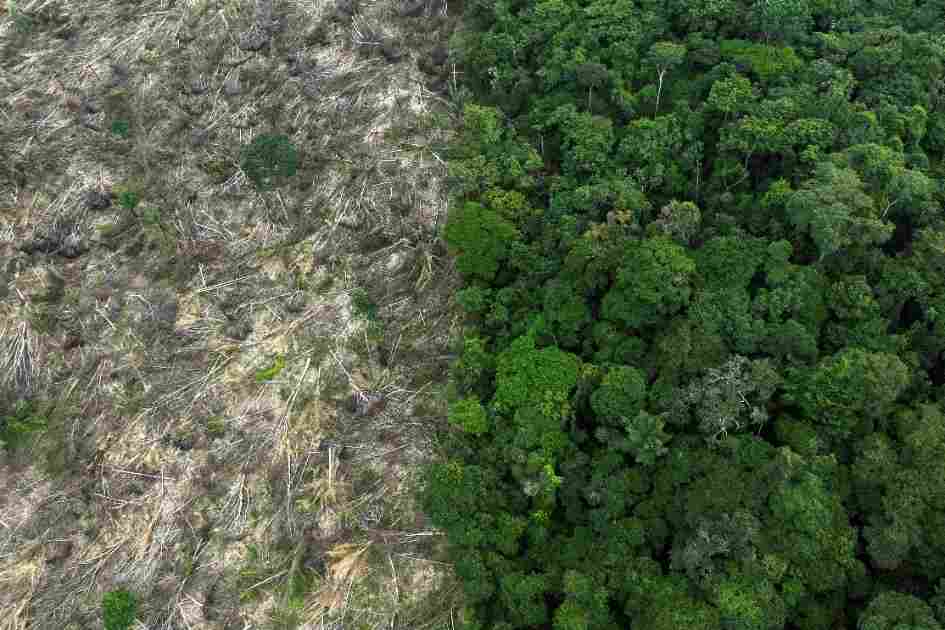



Brazil’s new climate plan targets deep emission cuts by curbing deforestation, but experts warn stronger economic reforms are needed to meet global 1.5°C goals and ensure long-term climate impact.
Brazil has launched an ambitious new national climate plan aimed at sharply cutting greenhouse gas emissions by prioritizing forest protection and tackling deforestation, a major driver of emissions in the country.
Unveiled Monday by President Luiz Inacio Lula da Silva’s government, the strategy sets a target to reduce emissions by 67 percent compared to 2005 levels, with a long-term outlook extending to 2035. It marks Brazil’s first major update to its climate mitigation framework since 2008.
Officials said around 40 percent of Brazil’s greenhouse gas emissions come from deforestation, often linked to illegal clearing of forests for agricultural expansion.
Lula has pledged to bring deforestation down to zero by 2030, placing forest conservation at the centre of the country’s climate agenda.
The announcement comes as Brazil faces a surge in extreme weather events, including floods, fires and droughts, which experts say are increasingly tied to climate change.
“We are living through a very serious situation of climate emergency,” Environment and Climate Change Minister Marina Silva told reporters.
Claudio Angelo of the NGO network Climate Observatory welcomed the plan, saying it “begins to address the thorny issue of how to finance” Brazil’s climate commitments.
However, he warned that the proposal still falls “far short of delivering the economic transformation needed” to keep global warming within 1.5 degrees Celsius.
Source: BSS




