

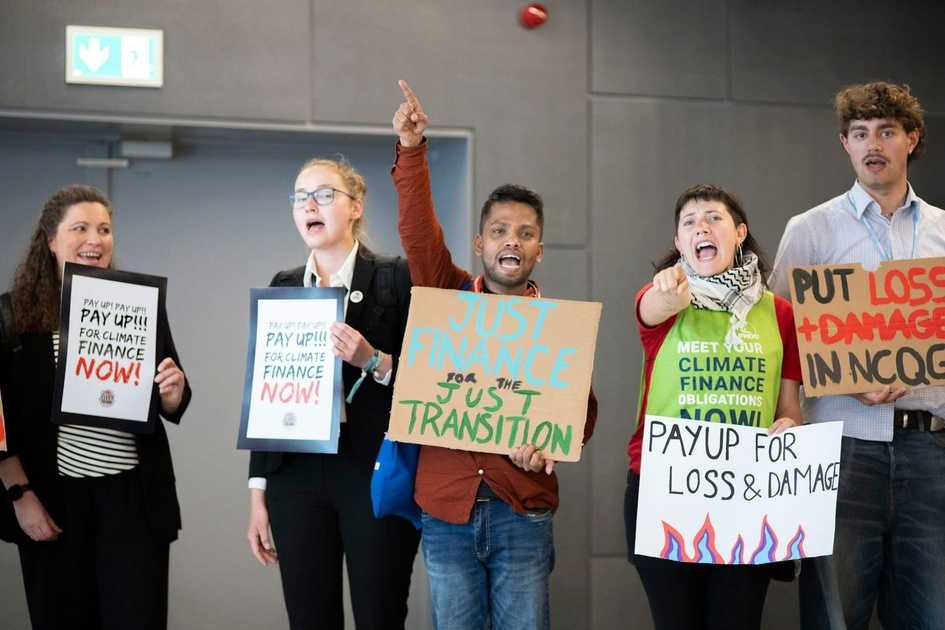

Bonn climate talks ended without resolving the finance divide in just transition negotiations, leaving developing countries concerned that a UN mechanism may lack real implementation support.
The conclusion of the Bonn Climate Conference (SB64) on June 18 has exposed a persistent structural divide in global climate negotiations over the future of just transition, with finance emerging as the central fault line between developed and developing countries.
Despite procedural progress through a co-chairs’ summary, the core political question remains unresolved. It is still unclear whether the proposed UN-led just transition mechanism will unlock means of implementation for developing countries or remain primarily a platform for dialogue and knowledge exchange.
The outcome reflects a broader reality in UN climate diplomacy. Consensus is easier to achieve on process than on the question of who pays for the transition and how equity is defined in practice.
Competing visions of a just transition mechanism
At the centre of the negotiations is the Just Transition Work Programme (JTWP), established at COP28 in Dubai, which aims to ensure that climate action does not deepen inequality or leave workers, communities and economies behind.
In Bonn, developing countries pushed for the emerging mechanism to become a practical tool for delivering nationally determined just transition pathways. For the African Group and Like-Minded Developing Countries (LMDCs), this means predictable access to grant based highly concessional finance, along with technology transfer and capacity building support.
They argue that without addressing the quality and accessibility of finance, the just transition agenda risks remaining largely rhetorical, particularly for countries already facing high debt burdens and acute climate vulnerability.
The African Group has consistently framed climate finance not only as a technical requirement but also as a matter linked to poverty eradication and the right to development.
Developed countries draw a narrower line
Developed countries including the European Union, the United Kingdom, Norway and Japan maintained a more limited interpretation of the mechanism’s purpose. Their emphasis remained on policy coordination, knowledge sharing and labour market adjustment, particularly workforce protection and social dialogue.
Several developed country interventions warned against expanding the mechanism into a financing channel, arguing that it could duplicate or fragment the existing international climate finance architecture.
The United Kingdom in particular said that the JTWP is not a means of implementation track, reinforcing the view that the mechanism should not be tied to finance commitments under the UNFCCC.
This divergence reflects not only a technical disagreement but also competing interpretations of what just transition means within the climate regime.
Beyond procedure, a political stalemate
While SB64 produced an informal note structuring future work into implementation, review and operationalisation tracks, observers say this procedural clarity masks continued political deadlock on substance.
Multiple negotiation sessions during the two week conference failed to narrow differences over the mandate, scope and governance of the proposed mechanism. The co-chairs’ closing summary reflected limited convergence on process but no breakthrough on core issues.
One key analytical reading is that the divide reflects a deeper structural tension in the UNFCCC system between climate action framed as economic transformation in developing countries and climate action framed as policy coordination in developed economies.
In that sense, the dispute is not only about design but also about competing understandings of climate justice itself.
What Bonn means for COP31
With COP31 in Türkiye expected to revisit the issue later this year, pressure is mounting to define whether the mechanism will be operationalised with a clear mandate on finance and implementation support.
However, the SB64 outcome suggests limited political appetite to expand its scope before COP31, particularly on issues linked to financial obligations.
For developing countries, this raises concerns that the mechanism could be diluted into a coordination platform without the tools needed to support real world transition pathways.
“Just transition cannot remain a discussion on principles alone. It must translate into real support, real finance, and real capacity for countries on the frontlines of the climate crisis. Without that, we risk deepening inequality under the banner of transition,” said Sohanur Rahman, Executive Coordinator of YouthNet Global.
As negotiations move forward, the just transition agenda increasingly reflects a central tension in global climate governance. Ambition is widely shared, but equity, especially in financial terms, remains unresolved.




