




Bangladesh begins a nationwide canal excavation programme to address water crises, but experts caution that without scientific planning, governance reforms and regional cooperation, it may fall short of long-term sustainability.
Bangladesh, a country at the frontline of Climate Change, is grappling with recurring floods, droughts and salinity intrusion. In response, the government has launched a massive canal and river excavation programme to improve irrigation, manage water resources and protect the environment.
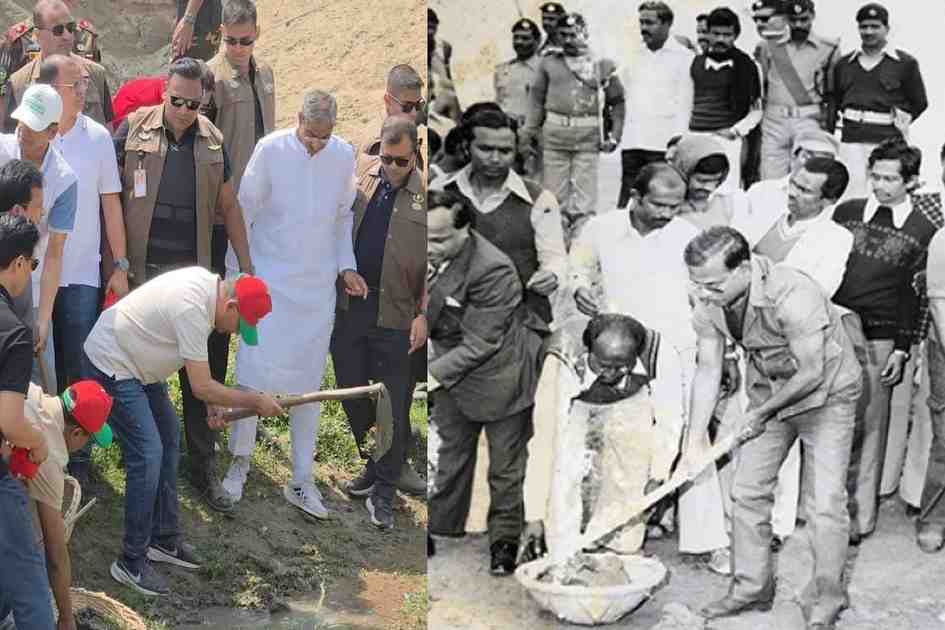
Less than a month after taking office, Prime Minister Tarique Rahman inaugurated the initiative, reviving a programme first introduced by his father, late President Ziaur Rahman, in 1976. Over the next five years, nearly 20,000 kilometers of canals are planned nationwide to capture monsoon water, reduce flooding and provide irrigation during dry seasons.
While widely welcomed by political leaders, civil society and development experts, specialists warn that the programme’s success depends on scientific planning, governance reforms and integration with broader water management strategies. Without these measures, the initiative risks becoming a temporary solution rather than a long-term safeguard for millions of Bangladeshis.
The canal and river excavation programme is not new in Bangladesh. It began in November 1976 in Jashore, initially focusing on rivers rather than canals. At that time, few dams, sluice gates or bridges existed and rivers flowed naturally, supporting irrigation, fisheries and groundwater recharge. By 1977, the programme expanded nationwide under President Ziaur Rahman to boost agriculture and consolidate political support.
“Back then, the initiative positively impacted fish production, irrigation and groundwater, even though no formal scientific assessment was conducted,” said Sheikh Rokon, river researcher and secretary general of Riverine People. “Today, political benefits may also exist but environmental and agricultural gains require scientific oversight.”
However, technical flaws and governance issues have historically undermined such projects. Rivers were often deepened without widening, excavated soil left on banks and floodplains and fish habitats damaged. Contractors frequently removed soil arbitrarily or used it to fill wetlands and farmland, worsening environmental harm. “Excavated soil should not fill agricultural land or wetlands,” Rokon emphasized. “Rivers are the trunk, canals the branches. You cannot save one without the other.”
Bangladesh faces a complex legal landscape for water management. There are around 31 laws related to rivers, yet none clearly define what a river is. Agencies report vastly different figures: the Water Development Board lists 1,415 rivers today, up from 230 in previous decades, while LGED records over 10,600 canals. These discrepancies make planning, monitoring and maintenance extremely challenging, often leading to institutional conflicts.
Local projects such as the Shahpara Canal in Dinajpur exist, but experts note the absence of a coordinated nationwide strategy or central master plan detailing scientific, technical and ecological criteria for excavation.
Bangladesh’s water crisis is intensified by structural and geopolitical factors. Major rivers originate in neighboring countries and are increasingly controlled through dams and barrages, reducing natural flows downstream. During the dry season, many rivers are nearly lifeless, while monsoon rains often trigger sudden floods due to abnormal upstream releases. “This abnormal flow makes it difficult for canals to retain sufficient water unless upstream flows are restored,” Rokon said. “Deepening canals can store rainwater during dry periods but it cannot replace the ecological functions of rivers.”
Salinity intrusion in coastal regions and excessive groundwater extraction in northern areas add further complexity. Overreliance on groundwater has lowered water tables and increased exposure to arsenic and other minerals, creating serious public health risks. In this context, canal excavation alone cannot resolve Bangladesh’s water challenges. It must be part of a broader, integrated approach addressing rivers, wetlands and groundwater simultaneously.
Dhaka city illustrates the importance of urban water management. Canals are primarily used for drainage but pollution sources remain uncontrolled. Even World Bank-funded restoration projects struggle to improve water flow. Restored canals could enhance urban drainage, support water transport, ease traffic congestion and create tourism opportunities, Rokon explained. “Globally, urban canals are used successfully for transport, recreation and environmental improvement. Bangladesh could adopt similar models but only if waste sources are managed alongside excavation.”
Large infrastructure projects often intersect with politics and local power structures. Without oversight, excavation efforts risk benefiting contractors or influential groups rather than communities. Past projects show that canals excavated only a few years prior were often re-excavated at much higher costs.
Writer and researcher Charu Haque added, “Bangladesh’s canal excavation programme can achieve its environmental and agricultural goals only if linked to broader river restoration and international water diplomacy. Otherwise, it risks becoming a political showcase rather than a sustainable solution.”
Experts stress that the programme’s success depends on integrating it into a comprehensive water management framework. This includes coordinating canal excavation with river restoration, protecting wetlands and floodplains, enforcing legal clarity on river and canal definitions, aligning with regional water diplomacy and incorporating climate adaptation measures such as salinity control and groundwater recharge.
Models like the Tista Mega Plan demonstrate that combining river management, reservoir construction and modern irrigation under a single framework improves water security and agricultural productivity while reducing environmental risks. Applying similar principles nationwide could transform Bangladesh’s canal excavation programme from a short-term project into a sustainable, climate-resilient water management system.
Sohanur Rahman, Executive Coordinator of YouthNet Global, warned, “Canal excavation can be transformative if integrated with science-based water management and regional cooperation. Otherwise, it risks becoming a temporary solution to a long-term crisis.”
Bangladesh’s canal excavation programme represents a critical effort to address water scarcity, flooding and climate vulnerability. While it has political support and potential benefits for agriculture, fisheries and urban drainage, its long-term success depends on scientific planning, governance reforms and regional cooperation.
Without these measures, the initiative risks becoming a temporary intervention rather than a lasting solution. As the country navigates both internal water management and international river diplomacy, the canal excavation programme offers hope but only if it moves beyond being a political showcase to a technically sound, ecologically responsible and sustainable solution.




