

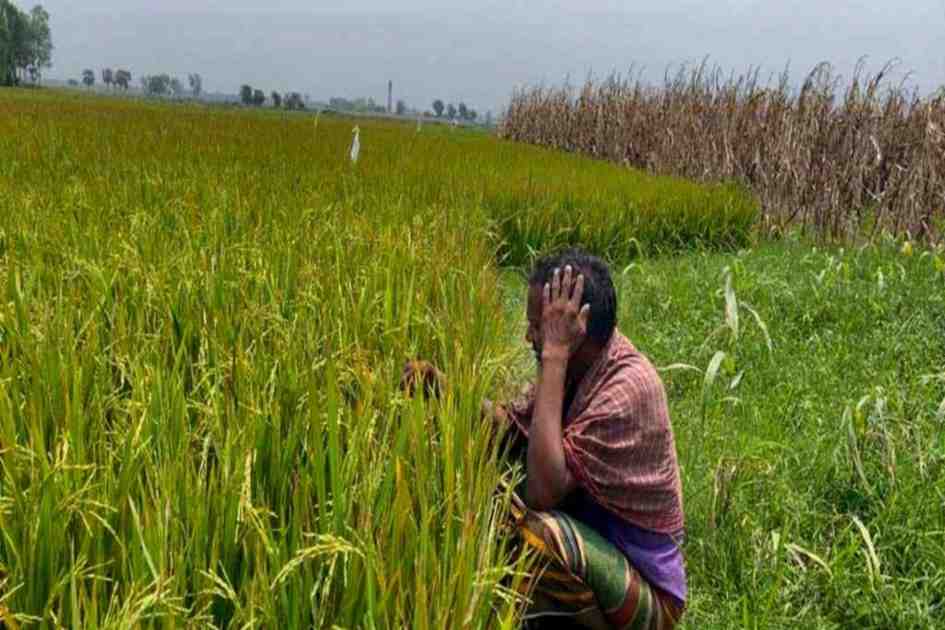



Toxic fumes from brick kilns scorched 25 hectares of boro rice in Dhamrai, affecting over 100 farmers who now face severe losses and demand urgent compensation and accountability.
Toxic smoke and intense heat from brick kilns have destroyed boro rice on nearly 25 hectares of farmland in Dhaka’s Dhamrai in Bangladesh, leaving more than 100 marginal farmers from at least five villages facing severe losses and demanding compensation.
The damage was found on Tuesday morning in Amta union of the upazila, where affected farmers said kiln operators released gas in violation of rules, triggering the destruction of standing crops.
Many of those hit had cultivated the land with borrowed money or on leased plots, hoping the harvest would supply food for their families for the entire year. Instead, the sudden loss has pushed them into deep uncertainty.
According to local sources, Alif Bricks and Tiger Bricks were built beside triple-crop farmland in the Nandeshwari area of Amta union. Farmers said the intense heat and smoke from the kilns burned and ruined rice on nearby agricultural land.
The worst-hit areas include the villages of Baukhanda, Nandeshwari, Chala, Narayanpur and Bhobonhati in Amta union. Farmers said they suffer losses regularly because of the kilns and called for a prompt and fair investigation to ensure compensation.
Among the affected farmers, Abdul Mannan Mia said he had cultivated rice on 70 century of land after spending heavily on the crop, only to see it burned by kiln smoke.
“I cultivated rice on 70 percent of land. I spent money to grow the crop. Now all our rice has been burned and destroyed by brick kiln smoke,” he said.
“This rice is what feeds our family throughout the year. Now what will we eat? We will have to live without food with our family. We want justice and we want proper compensation.”
Another farmer, Khalil, said he had planted rice on 100 percentage of land after buying fertilizer on instalments and had just begun to expect a yield when the crop was destroyed.
“I had planted rice on 100 percent of land. I bought fertilizer through instalments and the yield had started to come. Today I came to the field and saw all my rice had been burned and destroyed,” he said.
“I have no way to survive now. I pay for my children’s education by selling this rice.”
Dhamrai upazila agriculture officer Arifur Rahman, who inspected the damaged fields, said the crop loss had primarily been caused by the brick kilns.
“We have informed the upazila administration about the matter. Compensation for the farmers will be arranged very soon,” he said.
Dhamrai upazila officer Al Mamun said the agriculture officer’s investigation had found the allegation to be true.
“Necessary steps will be taken by bringing together the kiln owners and the farmers so that the affected farmers receive proper compensation,” he said.
Complaints over farmland damage caused by brick kilns surface every year in Dhamrai, according to the report. Local residents said effective steps were urgently needed to prevent such losses and to ensure fair compensation for affected farmers.




